New Zealand moved 1,152 seabird chicks to a predator-free island over 24 years, and hundreds later returned as adults to form three breeding colonies | World News
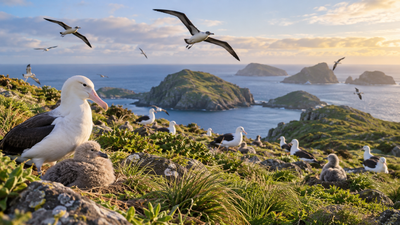
New Zealand’s long-running effort to restore seabird colonies on Mana Island is showing signs of success decades after the first chicks were moved there. Between 1997 and 2021, conservation teams transferred 1,152 chicks from four petrel species to the island, where they were hand-fed before being released to sea. At least 992 are thought to have fledged, and many later returned as adults, with some coming back just one year after leaving. The project has since helped establish well-established, though still small and growing, colonies of three species. Recent surveys have also uncovered natural breeding burrows, suggesting the restoration is continuing to develop.
How did translocated seabird chicks return to Mana Island as adults
According to a Friends of Mana Island seabird survey report, titled ‘Report on a conservaƟon dog-survey for breeding petrels on Mana Island, December 2024’, the restoration effort was designed around the behaviour of seabirds that return to their birthplace or established breeding sites when they become adults. The survey report states that many of the translocated chicks returned to Mana Island as adults one to eight years later. Their return provided evidence that the birds were using the island as a place to return to, helping the conservation project move from simply releasing chicks towards establishing breeding populations.The results were particularly notable for fluttering shearwaters. During the December 2024 survey, conservation dog Miro located ten natural burrows or cavities interpreted as fluttering shearwater burrows, and four contained chicks. Two of the adults attending the first two chicks had themselves been banded as chicks on Mana Island in 2017–18 and 2018–19. They were six and seven years old when they were recorded in 2024.
Three seabird species established growing colonies on Mana Island
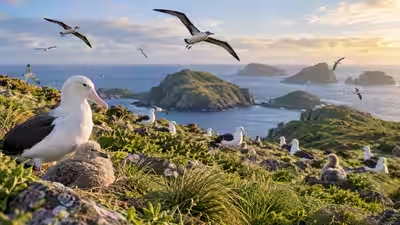
Image AI generated
The long-term project has produced a significant change on Mana Island. The report states that three of the four translocated species now have well-established colonies, although the colonies remain small and are still growing. Common diving petrels are described as well established, with breeding burrows scattered along at least 1.7 kilometres of the western slopes, while fairy prions and fluttering shearwaters have also established breeding populations around their translocation sites.The 2024 survey also found evidence that some fluttering shearwaters are beginning to breed outside the artificial burrows originally used for the translocations. Four natural burrows containing chicks were found, including two located about 45 metres from the nearest known fluttering shearwater burrow. The report says this confirmed that a few fluttering shearwaters had excavated natural burrows away from the monitored artificial burrows and were producing chicks there.
Seabirds began breeding in natural burrows on Mana Island
The discovery of natural breeding burrows is an important part of the island’s continuing restoration story. Until the latest survey, fairy prions and fluttering shearwaters were not known to have established breeding burrows much beyond the areas where they had been translocated. As of November 2024, all 13 known fairy prion breeding burrows were artificial, while 48 of 49 known fluttering shearwater breeding burrows were also artificial.Researchers recommended monitoring the four confirmed and six suspected fluttering shearwater burrows during the following breeding season and banding chicks produced there. They also noted that the slope directly west of the artificial burrows was not monitored because of time constraints, and that more fluttering shearwater burrows existed in that area.