Only 25 scimitar-horned oryx returned to Chad in 2016 after vanishing from the wild, but the population has now grown to more than 600 | World News
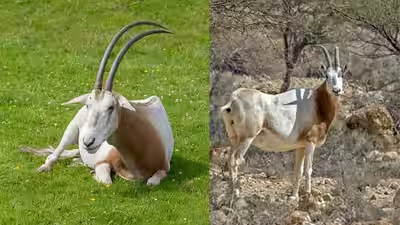
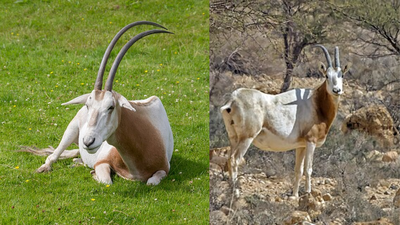
In 2016, just 25 scimitar-horned oryx were flown from Abu Dhabi to Chad, marking the first time the species had set foot in the wild since it vanished there in the 1980s. Since then, according to Sahara Conservation and the Environment Agency, Abu Dhabi, 285 oryx have been released into Chad’s Ouadi Rimé-Ouadi Achim Faunal Reserve, and the wild population has grown past 600 animals, prompting the IUCN to downlist the species from Extinct in the Wild to Endangered.
How the scimitar-horned oryx vanished from wild Africa
The scimitar-horned oryx, a desert antelope once widespread across North Africa, was declared Extinct in the Wild by the IUCN in 2000 after decades of overhunting and habitat loss stripped it from its native range. The last wild sighting in Chad came in the late 1980s. Surviving animals existed only in zoos and private collections worldwide, so the Environment Agency, Abu Dhabi, built a genetically diverse “World Herd” from more than 220 institutions to supply future reintroductions. In 2016, the first 25 oryx were flown from Abu Dhabi to Chad, landing at Abéché airport before being released into the Ouadi Rimé-Ouadi Achim Faunal Reserve.
Inside the scimitar-horned oryx reintroduction program in Chad
The Scimitar-Horned Oryx Reintroduction Project launched in 2014, led by the Environment Agency, Abu Dhabi, in partnership with the Government of Chad and Sahara Conservation, with support from the Smithsonian’s National Zoo and Conservation Biology Institute, the Zoological Society of London, Saint Louis Zoo, and others. The first oryx calf born in the wild arrived in December 2016, just months after release. According to the Abu Dhabi Media Office, From that initial group of 25, the program went on to translocate 285 scimitar-horned oryx into Chad’s reserve over the following years, using satellite collars and field monitoring to track survival, movement, and reproduction across the herd.
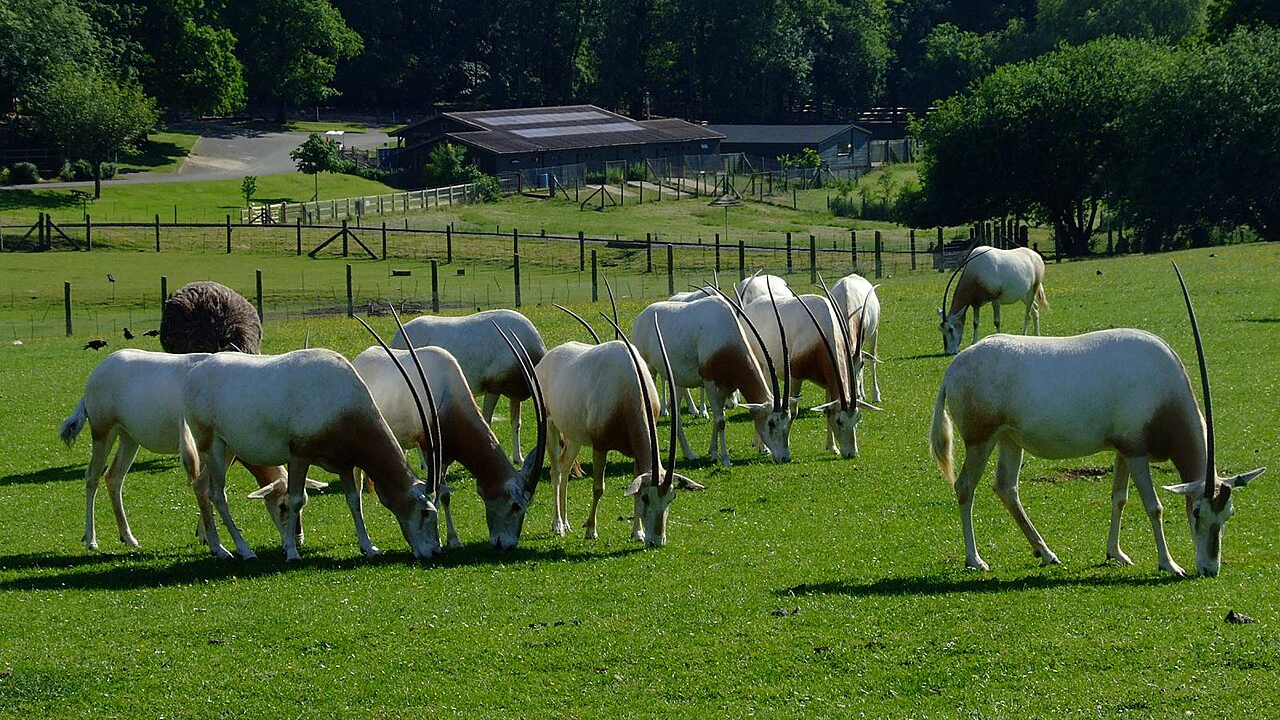
Captive scimitar oryxes grazing in a paddock (Image: Charles Miller)
Why Chad’s oryx population passed 600 and its status improved
By 2023, more than 500 calves had been born to the reintroduced oryx in the wild, pushing the total wild population past 600 individuals, well beyond the project’s original target of 500 animals. On 11 December 2023, the IUCN reclassified the scimitar-horned oryx from Extinct in the Wild to Endangered, a milestone for one of the most ambitious large-mammal conservation programs ever undertaken. Officials noted that one released female had given birth to nine calves since 2016, and that the overall survival rate for reintroduced oryx in the wild now exceeds 85 per cent.
What the oryx’s recovery means for Chad’s wider ecosystem
The oryx’s recovery has had knock-on benefits for the wider Ouadi Rimé-Ouadi Achim Faunal Reserve, one of the largest protected areas in the world, where the project has expanded to support addax, dama gazelle, and North African ostrich populations as well. Sahara Conservation continues to oversee day-to-day management of the release site, while the Government of Chad enforces wildlife protections across the reserve. Officials from Sahara Conservation and its partners have said the milestone shows that species written off as extinct in the wild can still be restored through sustained international collaboration, though continued monitoring remains essential to the population’s long-term survival.