Are we still walking on the path of justice and brotherhood?
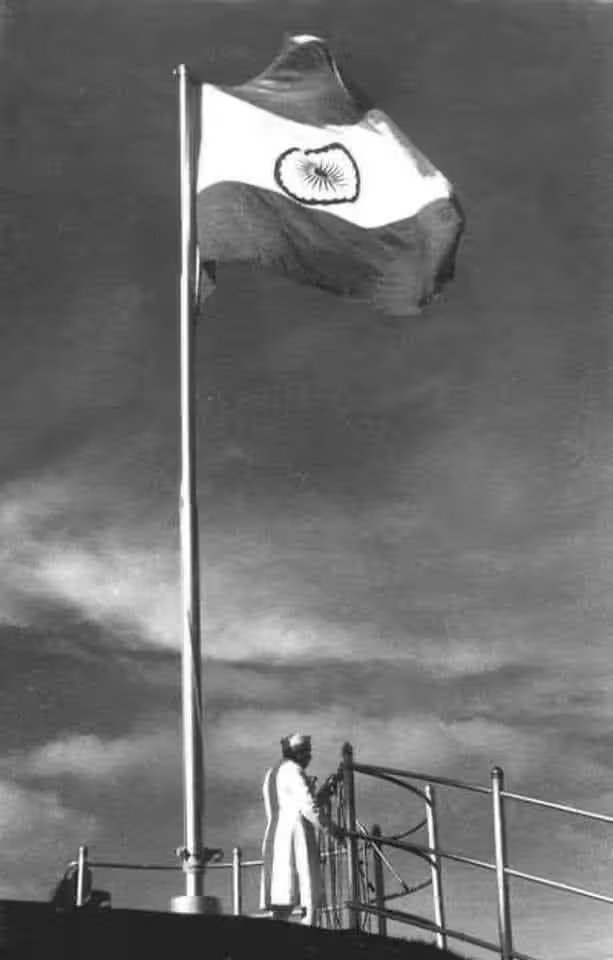
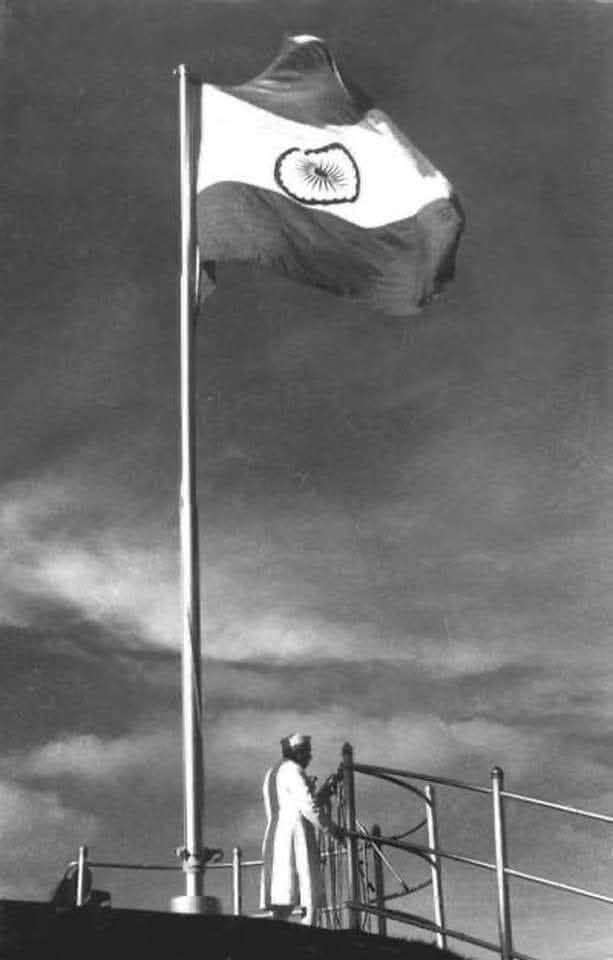

When Pandit Jawaharlal Nehru rose to deliver his Independence Day speech in 1957, a decade after India won freedom from the British Empire, he began with two lines by an anonymous poet:
Is tarah tay ki hain humne manzilein,
Gir pade, gir kar uthe, uth kar chale.
These two lines perhaps captured not only the long and arduous journey of India’s freedom struggle, during which countless people sacrificed their lives regardless of their names, religions, and culture, but also the challenges confronting a young nation that had just begun to find its feet.
As India celebrates its 80th Independence Day, these words deserve to be revisited. Independence Day cannot merely be about unfurling the Tricolour, celebrating our achievements and listening to political speeches. The anniversaries of a country’s independence or its founding should also be moments of introspection. They should make us ask whether we have remained faithful to the values and principles on which the nation was built, as well as the dreams of the nation’s founding fathers, who didn’t want us to hate each other.
There is no doubt that India has made remarkable progress in several spheres. We have achieved milestones in science, technology, infrastructure, space exploration and the economy. But these, in my view, cannot be the only parameters by which a republic should measure its success.
The real test of a nation is how its people treat one another.
Brotherhood among citizens, irrespective of their religion, caste, language, region or community, is something on which no republic can ever afford to compromise. Justice and equality are equally fundamental to an ideal nation-state.

If an individual or a community begins to feel that it is being discriminated against because of its faith, caste, race, food habits or clothing, and if the state, instead of reassuring such people, contributes to their alienation, it is time for society to pause and ask where it has gone wrong.
One song that never fails to make me reflect on this is Shakeel Badayuni’s “Insaaf Ki Dagar Pe”:
Insaaf ki dagar pe, bachchon dikhao chal ke,
Yeh desh hai tumhara, neta tumhin ho kal ke.
The song, written in an India that was still finding its identity as a young republic, carried an uncomplicated message: justice should be the guiding path, and the future should belong to a generation that understands its responsibilities towards the country.
Another couplet from the song says:
Apne hon ya paraye, sab ke liye ho nyay,
Dekho qadam tumhara hargiz na dagmagaye.
The ideas of “insaaf ki dagar” and “sab ke liye nyay” appear to be losing some of their meaning when almost every day brings news of people being assaulted or lynched over their religion, caste or food habits. It is equally disturbing when political leaders use venomous language, sometimes apparently to retain power and sometimes to acquire it by exploiting social and religious divisions and riding on the wave of hate.
Anyone who deliberately makes people hate one another, turns neighbours into enemies and fractures brotherhood for political gain can never be a friend of the country. The nation and its symbols should never become instruments for personal or political ambition.
The idea of India was, above all, an idea of togetherness — of people of different faiths, languages, cultures and communities standing together and facing adversity together. That idea seems increasingly difficult to recognise amid the growing tendency to “other” sections of our own population.
There is another uncomfortable reality that we must confront: inequality.
India has produced extraordinary wealth, but a disproportionately large share of it is concentrated in the hands of a very small section of society, while millions continue to struggle to meet their basic needs.
Look at Delhi. Every winter, homeless people die on the streets from the cold. In summer, many are forced to endure unbearable heat on pavements and under flyovers. Rehabilitation and social security for them rarely receive the urgency they deserve. Perhaps one reason is brutally simple: many of these people are neither vote banks nor people with enough wealth to command attention.
Delhi and Mumbai, the country’s political and economic capitals, also depend heavily on migrant workers. They build our homes, roads, offices and skyscrapers. They work in our factories, restaurants, markets and construction sites. Without their labour, the two cities would struggle to function.
Yet these very workers are often among the most humiliated and vulnerable sections of society.
The Covid-19 pandemic exposed this contradiction sharply. When the country came to a standstill, millions of migrant workers were suddenly left without work, income, transport or, in many cases, even food. Many had no option but to undertake arduous journeys home on foot or by whatever means they could find. The episode should have forced us to rethink how we treat those whose labour keeps our cities running.
We, as a nation, used to speak on global issues concerning humanity and human values, but that stand seems to have shaken, or perhaps we have lost our voice. We can’t even speak against injustices the world is talking about.
When political rhetoric itself begins to normalise hostility, prejudice and even violence, the question becomes even more urgent: what kind of India are we building?
This is why those lines from Nehru’s 1957 Independence Day speech remain relevant.
Gir pade, gir kar uthe, uth kar chale.
A nation, like an individual, can stumble. It can make mistakes. It can lose its way. But the measure of its character lies in its ability to recognise those mistakes, rise again and correct its course.
Are we teaching our children that disagreement does not have to become hatred and that diversity is not a weakness but India’s greatest strength?
And, most importantly, are we still capable of seeing the person next to us as a fellow citizen before seeing them as a member of another community?
The India envisioned by the freedom movement was never merely about replacing British rulers with Indians. It was about creating a society founded on dignity, equality, justice, and fraternity.
On Independence Day, perhaps the most patriotic thing we can do is to ask ourselves how faithfully we have kept that promise. And if we have stumbled, perhaps it is time to rise, dust ourselves off and start walking again — together.
I always listen to the song “Dekho Veer Jawano” from the 1975 movie Aakraman, in which the line “Abdul uske bachchon ko paale, jo ghar wapas Ram na aaye” says everything about what we should be and makes us ponder why we have lost our way.
A democracy should not only be judged by the laws it makes and the institutions that enforce them, but by how it treats those who live under them.
Disclaimer
Views expressed above are the author’s own.