
Challenges, choices and opportunities for Bangladesh

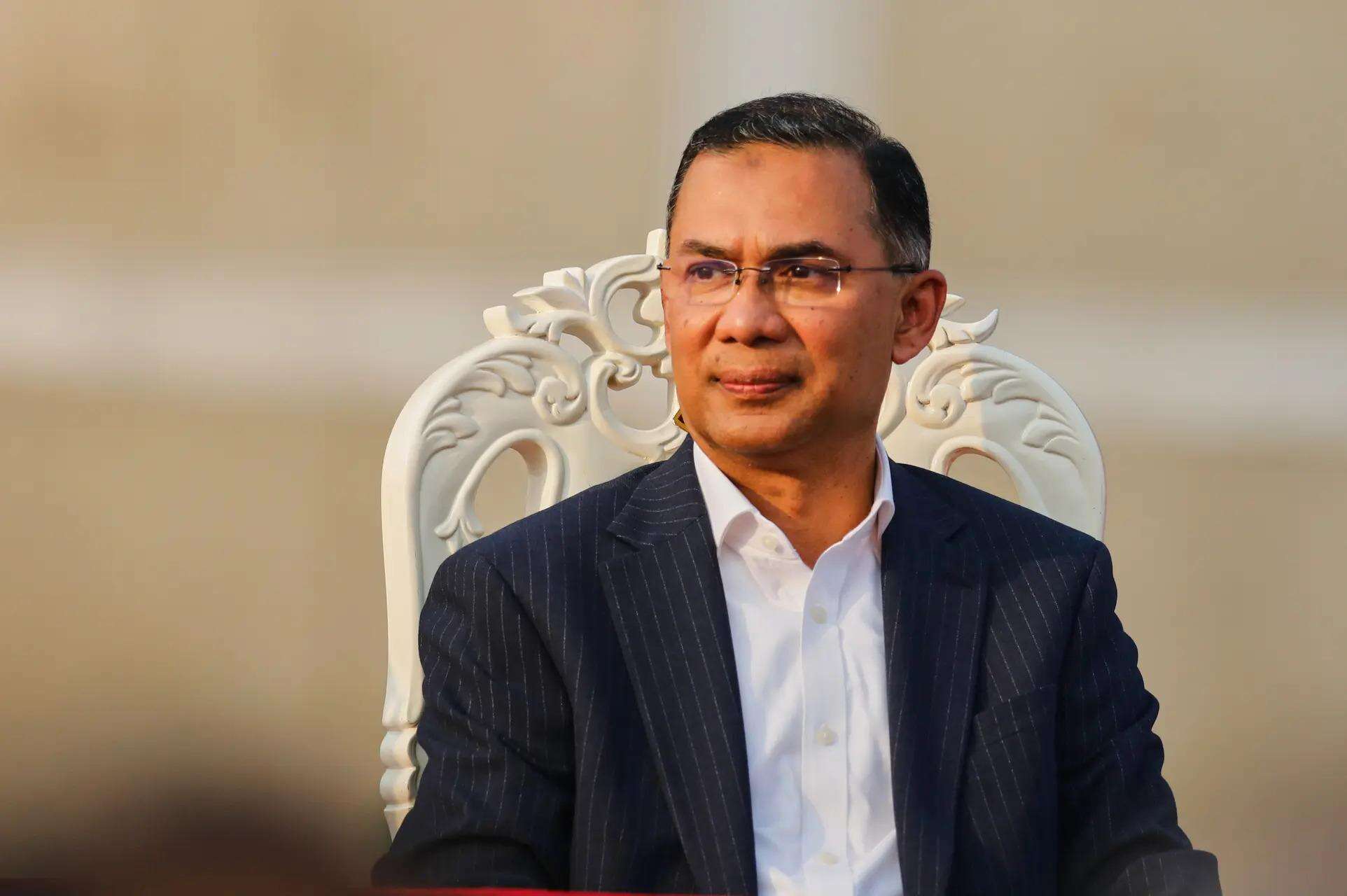
As a BRICS chair, India is hosting the 18th BRICS Summit on 12-13 September in New Delhi. Prime Minister Narendra Modi has invited Bangladesh’s counterpart Tarique Rahman to the Outreach Session of the summit. Bangladesh has been in top priority of India’s “Neighbourhood First Policy.” Earlier in 2023, erstwhile Prime Minister of Bangladesh Sheikh Hasina had participated in New Delhi’s G-20 summit on India’s invitation. Bangladesh is presently chairing BIMSTEC. For Dhaka, the BRICS invitation offers a global opportunity beyond its immediate regional role in South Asia. Otherwise also, New Delhi has invited Tarique Rahman second time to India for a bilateral visit, first being in February, 2026.

BRICS: A seat at a bigger table
Bangladesh is at a delicate point in its development trajectory. The country was scheduled to graduate from the ‘LDC’ status to ‘Developing Country’ status in November 2026, a transition that is tied to its Vision 2041. However, it now seeks a three-year deferment from UN Committee for Development Policy to strengthen its trade and investment, protect export competitiveness and stabilise its economy. It has chosen strategic consolidation over immediate graduation. The final decision is expected as UN General Assembly session begins this month where the USA’s support is vital. Bangladesh currently holds the UNGA presidency and Foreign Minister Khalilur Rahman is presiding over its 88st session.
At this moment, Bangladesh needs continued and trusted engagement, diversified economic markets and no isolation. BRICS has eleven members which account for about 49.5 per cent of the world’s population, around 40 per cent of the global GDP and approximately 26 per cent of the global trade. Bangladesh has been the part of this economic network through its membership of the New Development Bank since 2021, one of the first countries admitted after the bank’s original five founding members.
Three of BRICS’s big members- Russia, China and India are already Bangladesh’s closest and largest infrastructure development partners. Russia’s Rosatom is building Bangladesh’s first nuclear facility, the Rooppur Nuclear Power Plant in Ishwardi. The project is expected to supply about 10-12 per cent of Bangladesh’s electricity demand when it is fully operational. China has financed and supported the Karnaphuli Tunnel, Payra power project, Padma Bridge Rail Link, Dasherkandi sewage treatment plant and several others. India also has its own long-standing Line of Credits with Bangladesh, a soft loan amounting about $10b, associated with the connectivity projects such as Akhaura-Agartala rail link, Khulna-Mongla Port rail line, energy projects as Maitree Super Thermal Power Project at Rampal and many more.
BRICS offers Bangladesh a closer and coordinated access to them through one platform. It is more than symbolic; it is a practical opportunity to be at the table and negotiate from within the bloc rather than as a mere recipient from the outside. Bangladesh can directly put forward its interests, discuss its differences, and advance its own development policy on trade, investments, technology, connectivity, both bilaterally and at the multilateral level.
Why high politics
Domestic political calculations and external geo-political factors are at play. One possible reason could be a scheduling overlap with the UNGA session, but the second factor appears stronger, as Tarique wants to establish its own foreign policy posture distinct from that of Sheikh Hasina. Her extradition along with her public address from India, could be an immediate issue, but the traditional foreign policy approaches of the BNP; distancing from India and pursuing closer ties with China and Islamic world may be preventing him from visiting India. Thus, Rahman is in a dilemma in calibrating how close and how visibly, he should engage with India. In the post-Hasina period, the USA has significantly influenced the country’s domestic and foreign policy from Muhammad Yunus to present government of Tarique Rahman. Here, BRICS is often read as a ‘non-Western’ and, at times, an ‘anti-Western’ formation. Thus, Tarique Rahman’s foreign-policy choices face complications in trying to balance relations with Washington, New Delhi and Beijing. This could be the strongest reason for avoiding him to participate in BRICS summit in New Delhi.
However, Tarique Rahman’s uncertainity over attending the New Delhi summit reflects that he is also prioritising ‘High Politics’ over ‘Low Politics’. The political calculations are dominating developmental approaches, which include economic and infrastructural gains. Thus, Bangladesh would lose a bigger opportunity to present itself to a major part of the global economy and global space precisely at the moment when it is preparing for a new stage of development.
India-Bangladesh impasse
India and Bangladesh are part of a common ecological organic system with complex socio-economic interdependencies. Both countries provide opportunities to each other. The geography of both countries serves as a land bridge connecting India’s northeastern states and Bangladesh with rest of South Asia. Their rivers, human resources, energy and border-security are all woven together. However, this interdependence is tested by geopolitical pressures time and again, with China offering huge investments in the Teesta River project and securing the Mongla Port modernisation deal during Tarique’s first foreign visit to China in June, 2026. India is facing strategic competition in its own sphere, particularly the highly sensitive Siliguri Corridor.
The contestations between the two countries viz. the extradition question, Teesta water-sharing, renewal of the Ganga Water Treaty, border management, and halted infrastructure projects could be resolved through dialogue and deliberation. Thus, this trust deficit at political and social levels since the 2024 transition could only be restored with political maturity and will.
India has repeatedly shown its positive intent through reopening of visas, talks on restarting railway and connectivity projects, appointment of a political leader as new High Commissioner. The BRICS invitation is another such opening in line for Bangladesh. It need not necessarily mean an ‘alignment’; it provides a bigger room for negotiation. It is a multilateral platform where both India and China can be negotiated with, rather than choosing one at the expense of the other. Bangladesh should utilise this agency.
On India’s side, with the same political party in government at the Centre and in West Bengal, there is a greater scope to resolve the water-sharing issue and achieve better cooperation on other contentious issues as well. Nevertheless, after Tarique Rahman’s election to government, Bangladesh has hesitantly signalled a willingness to revive the relationship.
Conclusion
The question is not whether the two countries need each other, as they do and will. India and Bangladesh cannot be separated by a single summit decision. New Delhi has already signalled very clearly that it is willing to engage with the political leadership in Dhaka. Tarique Rahman should use the BRICS opening to advance Bangladesh’s interests. Missing BRICS may make a domestic political point, but the larger cost is borne by Bangladesh’s development itself. Tarique must not miss the bus to meet the expectations of Bangladesh’s people.
Disclaimer
Views expressed above are the author’s own.


