Why PM Modi turned to a selfie video
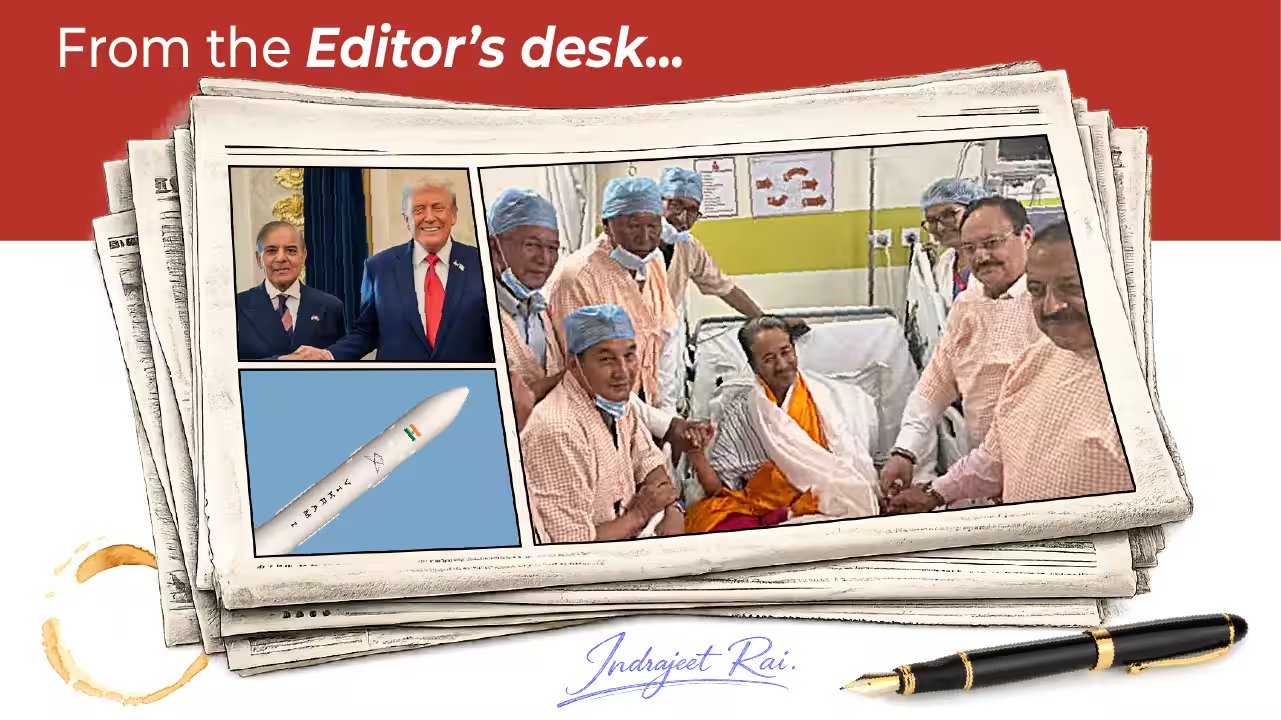
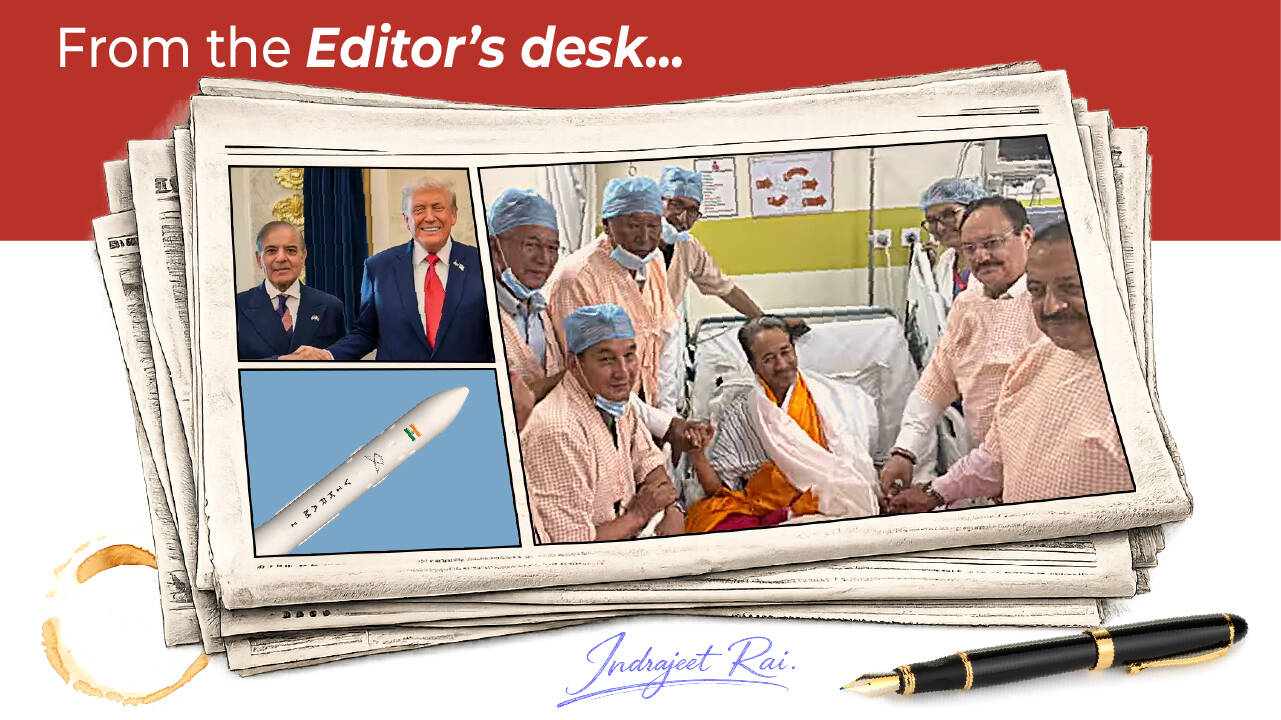

This week, we are tracking:
- Talking to the Instagram generation: Why PM Modi went selfie-style
- Houston, we have a rocket: India’s SpaceX moment
- Hindi-Chini buy-buy: The $100-billion paradox in India’s China policy
- Asim Munir bets Pakistan’s Iran diplomacy is worth $10 billion to Trump
CJP protests: Why PM Modi turned to a selfie video
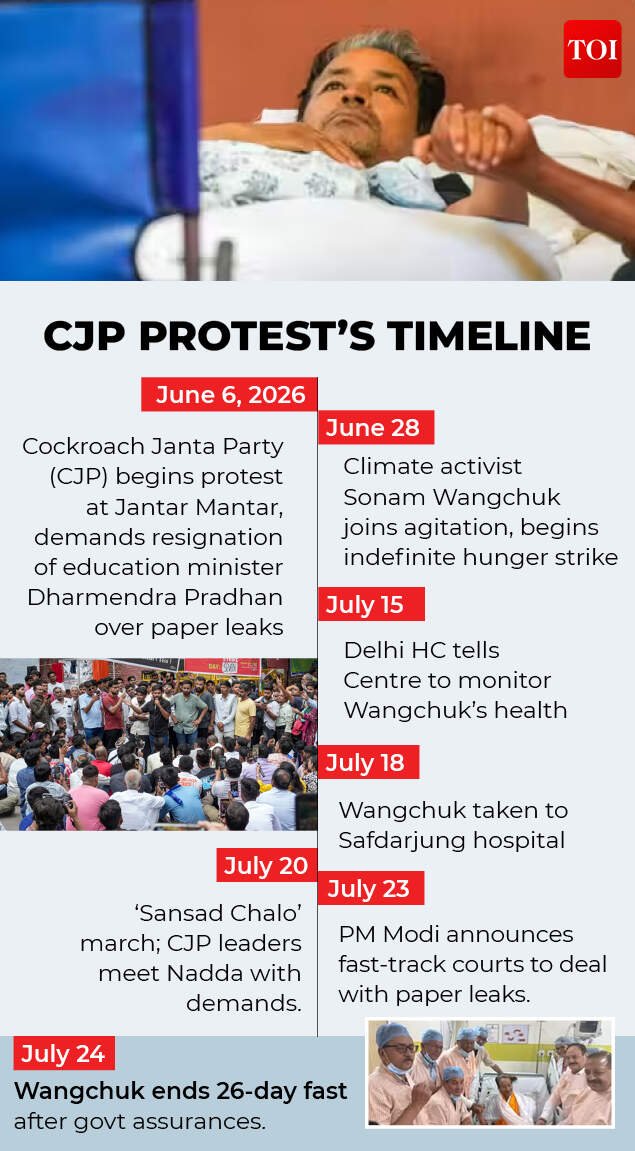
Sonam Wangchuk has ended his 26-day hunger strike after the government gave assurances on examination reforms and accountability. Around the same time, PM Narendra Modi wished Wangchuk a quick recovery and issued a rare, late-night selfie-style video addressing the paper-leak controversy.
“Friends, I know that paper leak is not a minor issue. It has caused immense pain to lakhs of students and their parents,” PM Modi said. He announced that a draft containing provisions for fast-track courts and stringent punishment would be discussed by the Cabinet before being taken to Parliament.

Why the video is unusual
PM Modi regularly speaks at rallies, public events and official programmes. He also uses social media extensively. However, a standalone, front-camera video responding directly to an ongoing protest movement is totally new.
But, why he went selfie-style? Well, if you look at who the PM was trying to reach, the medium was precisely the message.
It’s about speaking the language of the aggrieved. The CJP mobilized through social media, turning digital momentum into a formidable offline movement. By dropping a direct-to-camera video online, It was a calculated attempt to look accessible, earnest, and directly engaged with the youth on their own digital turf.
Its late-night release also conveyed that the government was responding to developments in real time.
Houston, Hyderabad has a rocket: What Vikram-1 changes for India
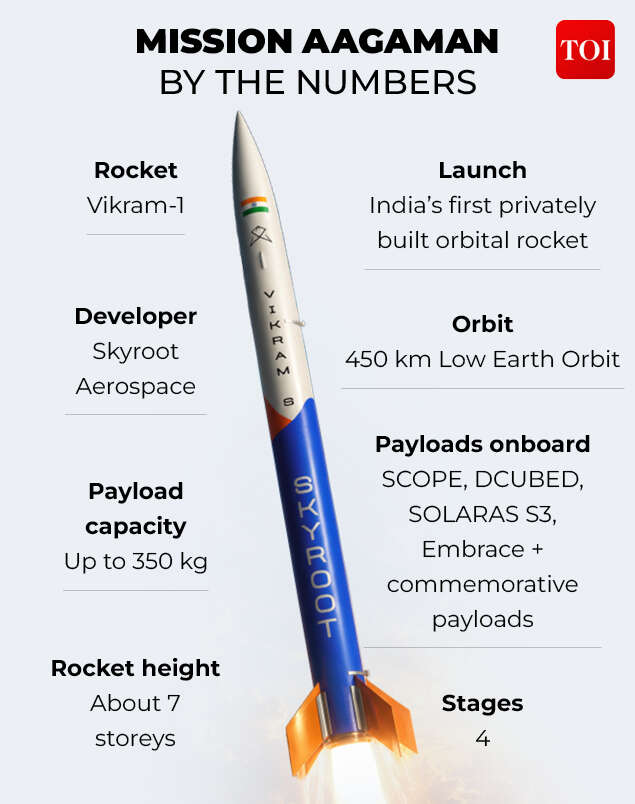
Forget Houston, the call this time came from Hyderabad and it wasn’t a problem, it was a payload. On July 18, Skyroot Aerospace’s Vikram-1 lifted off from Sriharikota and placed 6 payloads into a 450km orbit, becoming the first privately built Indian rocket to reach orbit.
Only two other countries have managed that through private enterprise rather than a government programme; an eight-year-old Hyderabad startup just made it three.
So, what actually happened?
Vikram-1 is a 22-metre, 45,000kg rocket that can carry up to 350kg to low-Earth orbit .Three solid-fuel stages and a liquid-fuel stage with a 3D-printed engine carried Mission Aagaman: Indian and overseas customer payloads, plus a lab-grown diamond called “Cosmos Bloom” that caught sunlight over Earth in orbit.
Reaching orbit is fundamentally harder than reaching space. Reaching orbit demands the sideways velocity to keep circling the planet instead of falling back into it. Vikram-1 had to nail propulsion, staging, guidance and insertion all at once, on a debut flight, and it did.
The taxi service to space
Vikram-1 is tiny compared with SpaceX’s Falcon 9 or Isro’s heavy launchers. But think of those larger rockets as buses: They carry many satellites cheaply, but passengers must accept the operator’s route and timetable.
A small launcher is a taxi. It costs more, but customers get greater control over the date, destination and orbit.
That matters to small-satellite companies, research institutions, defence agencies and Earth-observation businesses that cannot always wait for a convenient rideshare mission.
One launch is not a business
This is where the difficult part begins. One successful flight proves a rocket can work. Repeated successful launches prove customers can trust and build their businesses around it.
Skyroot must now manufacture rockets consistently, secure enough orders and compete with SpaceX’s aggressively priced rideshare service. It also needs a stronger domestic market for satellites, data and space-based services. Rockets are spectacular, but much of the money in space lies in what those satellites do after reaching orbit.
Isro remains the scaffolding
Vikram-1 flew from an Isro launch pad and benefited from public infrastructure, testing facilities and decades of accumulated expertise.

India, therefore, should avoid turning this into an Isro-versus-startups contest. Nasa did not have to shrink for SpaceX to grow; its expertise and contracts helped create SpaceX.
Mission Aagaman—appropriately meaning “arrival”—has earned its celebration. But whether July 18 becomes the start of an Indian space industry or merely one glorious day will depend on what happens after Skyroot returns to the launch pad.
The thaw with a $100-billion catch: Can India trust China without depending on it?
India-China relations are easy to describe: “It’s complicated”. This has been the status, at least since 2020 Galwan clashes. The politics is thawing, though. Flights have resumed, visas move faster, and border trade restarts August 1 after a six-year gap.
Meeting China’s foreign minister Wang Yi in Manila this week, EAM S Jaishankar pushed on market access and the trade imbalance, noting that “peace and tranquility in the border areas is obviously the prerequisite for normal ties.”
Diplomacy is warming. But, trade never really cooled.
The number New Delhi can’t ignore
India imported nearly $132 billion in goods from China in 2025-26, more than from any other country. Total bilateral trade hit $151 billion, leaving a deficit topping $100 billion. For every dollar of goods India sold China, it bought back roughly seven.
That’s the paradox: A geopolitical rival that’s also India’s biggest industrial supplier. It’s not about cheap toys: India buys machinery, electronics and solar cells its manufacturers need to keep running. A deficit isn’t automatically a failure; the real risk is concentration, when one supplier is dominant enough that a border flare-up or export curb can stall entire industries.
From keeping China out to inviting it in
Which is why India has quietly eased curbs on Chinese investment this year. Electronics, capital goods and solar projects now get faster approval if an Indian resident holds majority ownership; stakes up to 10% Chinese can use the automatic route. The logic: India can’t wean itself off Chinese imports without absorbing some of the capital and know-how behind China’s dominance. Security screening should stay tight in telecom and critical infrastructure, but treating a solar-cell plant like a strategic network is self-defeating.
De-risk, don’t fantasise about decoupling
The honest answer isn’t dependence or theatrical decoupling. It’s diversification: Supply chains built with Japan, Taiwan, South Korea and Europe, cheaper power and logistics at home, and harder pushes for Indian pharma and services to get real access into China. Selling more matters as much as buying less.
Reopened flights and border trade are welcome, but they don’t fix the imbalance. The real test is whether Beijing offers fairer access and whether India uses the window to build its industrial base, not just talk about it.
For now: India distrusts China strategically but depends on it economically and that’s why “it’s complicated”.
Broker, borrower, back in business: Pakistan demands $10 billion ‘hafta’ from Trump
Pakistan is at it again: Extracting “hafta” from US for its new-found geopolitical relevance. Pakistan has repeatedly converted strategic location into economic assistance: During the Cold War, the anti-Soviet campaign in Afghanistan and the post-9/11 “war on terror”.
Its present role as a channel between Iran and the US fits that familiar pattern. No surprises here as Pakistan is trying to turn diplomacy into dollars again.
Catch up quick
Soon after helping facilitate contacts between Washington and Tehran, Islamabad approached the Trump administration with an ambitious proposal: A $10 billion facility to support its currency and foreign-exchange reserves.
Finance minister Muhammad Aurangzeb reportedly handed the request to US treasury secretary Scott Bessent during their meeting in Washington, a Reuters report said.
Not quite a $10bn cheque
Pakistan is not simply asking Washington to transfer $10 billion into its account. The proposed five-year exchange-stabilisation facility would function more like an emergency financial safety net, potentially providing dollars, currency swaps or guarantees when pressure builds on the rupee.
But such arrangements are rare. US has had this arrangement with only 2 nations: Argentina and Uruguay. That makes Pakistan’s demand exceptional.
Monetising the moment
There is no evidence of an explicit bargain linking mediation to money. Yet Islamabad clearly believes its newly enhanced standing gives it leverage. The Iran conflict has also increased its vulnerability by raising energy costs and threatening the Gulf-based remittances and financial support on which Pakistan depends.
“The timing reflects Pakistan’s attempt to convert recent diplomatic role into economic gains after it played mediator in facilitating contacts between Washington and Tehran, prompting jibes in Indian quarters about extracting brokerage fee or “hafta” (extortion),” Chidanand Rajghatta wrote in his report from Washington.
Washington’s dilemma
There is also a broader strategic angle. If Washington underwrites Pakistan’s reserves, it gains leverage over a nuclear-armed state that has drifted steadily into Beijing’s economic orbit. If it declines, it risks pushing an already dependent partner even closer to China and the Gulf monarchies. The decision will be read in Islamabad, New Delhi, Beijing and Tehran not just as a financial call but as a marker of where Pakistan fits in Trump’s reordered world.
Pakistan’s growing dealings with Trump-linked World Liberty Financial will add another layer of scrutiny, even if they establish no improper connection to the request.
Ultimately, the question is not whether Pakistan can turn diplomacy into dollars. It probably can. The question is whether those dollars will finance genuine reform or merely carry the economy safely to its next rescue.
Editor’s picks: Some of our most and must-read articles
An offer they can’t refuse: Don’s protection racket in the Middle East & Europe
Who decides what is great cinema and what isn’t?
‘Hello space, we’ve arrived’: How Vikram-1 spells India’s ‘Aagaman’ in elite club
TOI’s XI: The stars who lit up the FIFA World Cup 2026
Disclaimer
Views expressed above are the author’s own.