Who had called for the social boycott of Maulana Salman Nadwi
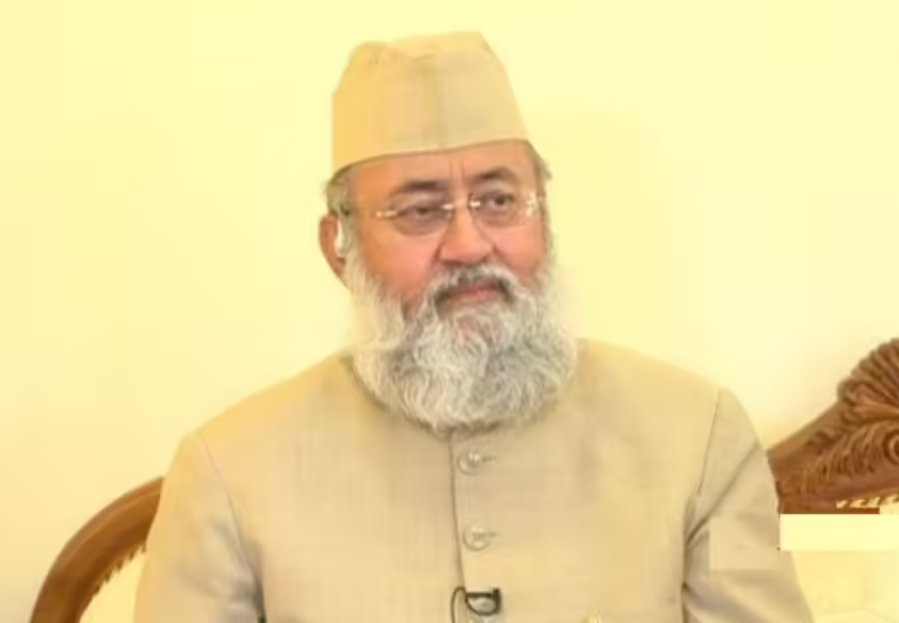
Nadwi was sacked from the executive committee of the Personal Law Board just the other day for his dialogue with Art of Living founder and spiritual guru Sri Sri Ravi Shankar where they proposed an out-of-court settlement to the Babri Masjid-Ram Janambhoomi dispute in Ayodhya. Without pulling the punches, Owaisi directed his diatribe against Maulana Salman Nadwi who was not among the battery of senior clerics and members of the Board attending the public meeting.
Among many things that Owaisi said, his call to the community for the “social boycott” of those who acted on the behest of the Prime Minister to sell the Babri Masjid, sounded crude. Owaisi’s outburst hit the headlines.
No Muslim leader had ever taken such a strong stance against Maulana Nadwi who was not just a famous scholar and an orator par excellence but also carried a respected pedigree. He was a close relative of an internationally acclaimed Islamic scholar, justifiably called the aabroo or honour of the Muslim Ummah, late Maulana Ali Mian Nadwi. Ali Mian was also one of the founding members and a former president of the Muslim Personal Law Board.
Following in the footsteps of his forebears, Maulana Salman Nadwi invested in knowledge acquisition, endowing himself with Quranic knowledge and ahadith (traditions of the Prophet’s sayings) understanding. For the uninitiated, the divinely revealed Quran and ahadith make the core of Islam. Stop believing either of the two and you are out of the fold of Islam.
His strident advocacy for “social boycott” of Maulana Salman Nadwi still ringing in my head, I heard Asaduddin Owaisi paying glowing tributes to Maulana Nadwi who died of a heart attack on Monday in Lucknow. He was 72.
“Never say a bad thing about the departed” is an old tradition of the civilized society. Still, while listening to Owaisi mouthing so many good things about Maulana Nadwi, one was reminded of a poetic line in Urdu:
Badalta hai rang aasman kaise kaise
(How the sky changes its colour).
Maulana Nadwi neither needed a character certificate nor a validation from anyone, least from a politician.
That Maulana Nadwi ventured to do mediation, along with Sri Sri Ravi Shankar, on behalf of their respective communities was guided by just one concern: winning the peace.
Even after his expulsion from the Board, Maulana Nadwi was assertive, combative, intelligent and convincing in his arguments as he spoke to me and a news channel.
“I did not make any deal for my personal gains. I want Hindus and Muslims to bury this Mandir-Masjid debate and move on,” he told me. He added that, according to the formula, Muslims would quit their claims on the disputed land in Ayodhya, the majority community would give a guarantee in the Supreme Court that no Islamic institutions in India would be interfered with and the government would give a piece of land and a handsome amount to Muslims to build a mosque and an Islamic university.
“You loved him or hated him, but you couldn’t ignore Maulana Salman Nadwi. He was sincere in his efforts and wanted the welfare of the community and the country,” observed businessman Owais Sareshwala who was present at the Nadwi-Sri Sri meet in Bangalore.
In hindsight, I think Maulana Salman Nadwi aimed for an unattainable goal. It was not the first time that an out-of-court settlement of the Ayodhya dispute was tried. Maulana Ali Mian Nadwi and an eminent Shankaracharya too had attempted such a solution decades ago, but in vain. All such attempts were stonewalled because of lack of mutual trust. Perhaps Maulana Salman Nadwi was guided by an old dictum: there is no harm in giving it yet another push.
A section of Muslim leaders argued that who would guarantee that there would be no further demand to handover other disputed places of worship if they handed over the Babri Masjid to the Hindus. They agreed to abide by the Supreme Court verdict which came in November 2019, giving the disputed side to the Hindu side and awarding 5 acres to the Muslims to build a mosque. A grand Ram Mandir has come up even as the construction of a mosque lies in a limbo since the majority of Muslims do not show interest in such a mosque.
Former CJI D Y Chandrachud’s May 2022 oral remarks during the Gyanvapi case permitted historical and archaeological surveys. It opened a pandora’s box, encouraging lower courts to allow surveys of many disputed places of worship. The fears of those who opposed an out-of-the court settlement to Ayodhya dispute seem to have come true. The Places of Worship (1991) Act, legal eagles maintain, prevents such meddling as the Act says that the status quo of all places of worship in the country will be maintained as they stood on August 15, 1947.
Perhaps we were destined to remain entangled in the mandir-masjid issue perpetually. Perhaps the forces of division have won and the voices of peace and reconciliation have failed.
Maulana Salman Nadwi tried his best to deliver India out of the needless and dangerous communal discord it has knotted itself.
Yes, some of his pronouncements regarding certain Islamic practices and personalities were controversial. Yes he would at times flare up, sound aggressive. But, as Aligarh Muslim University academic-author Professor Rashid Shaaz, said in his heartfelt condolence, “Maulana Nadwi was not a small man.” If he got angry over something or against someone, he also adopted the Prophetic way of forgiveness.
Given the huge work of scholarship and the number of institutions, students, friends and students Maulana Nadwi has left behind, one can only beseech the creator to forgive his latches and grant him the divine abode. Ameen!