Urban Heat Island Effect: In 2024, Philadelphia coated one of its hottest neighbourhood roads with lighter colour coating to reduce the “urban heat island effect”; the pavement cooled down, but the people standing on it may not have felt it
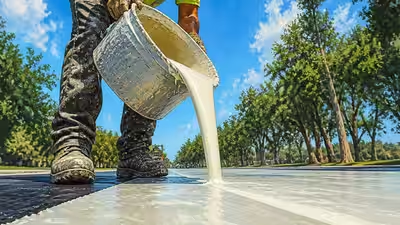
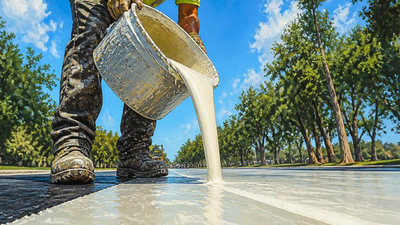
The sun’s scorching heat often transforms the roads and pavements into no less than a brick kiln, and to tackle this extreme heat, some researchers have taken on a novel approach.In some parts of Philadelphia, streets can reach temperatures as high as nearly 30°F hotter than in others, mostly because of dark asphalt, dense buildings, and a lack of trees or green cover.It’s a problem cities everywhere are grappling with as summers get longer and more intense, and few solutions are as simple, or as visible, as changing the colour of the road itself!That’s exactly what Philadelphia decided to test.
A few years ago, Philadelphia began coating sections of roads with lighter colours; what researchers found out a few years later was a surprise
In 2024, the city began coating sections of pavement in Hunting Park, one of its hottest and most heat-vulnerable neighbourhoods, with a light-coloured, reflective sealant instead of traditional black asphalt.According to the official website of the City of Philadelphia government, the Office of Sustainability and Streets Department partnered with CoolSeal by GuardTop to coat a stretch of pavement in the area to find out whether swapping surface materials could actually cool down city streets and reduce the “urban heat island effect,” or the phenomenon where dense, paved neighbourhoods with little greenery stay hotter than their surroundings for longer.
What the first year actually showed
The coated pavement in Hunting Park did take longer to heat up than untreated asphalt, and it stayed quite cool from morning through afternoon. But the bigger question, whether this actually cooled the air people breathe and feel, didn’t have a clear answer.The city noted there was no significant difference in air temperature above the coated pavement compared to regular asphalt, calling the sealant’s effect on lowering air temperatures “inconclusive” and in need of further study.Researchers are digging deeper, and the coating didn’t remain intact perfectlyA team from the University of Pennsylvania’s Composto Research Group and Thermal Architecture Lab has been monitoring the project for durability and temperature impact.Philadelphia’s version of this test is also important for being the first to evaluate the coating’s performance in a humid climate, according to Russell Composto, a Penn engineering professor involved in the research, whose team is also studying how the material holds up through the region’s freeze-thaw winters.Durability has already been an issue, as the members of Composto’s team found that the first, single coat of sealant had worn off in places and cracked within just a few months.
What is awaited next?
The city has not given up on the initiative yet. In August 2025, the Streets Department applied a second, thicker layer, two coats instead of one, on pavement in Hunting Park to see whether increasing the thickness of the coating improves durability and cooling performance.Andrew Dodd, the city’s place-based heat resilience program manager, said, “We just want to make residents feel cool and comfortable in their neighborhoods… What success looks like is just figuring out whether or not we can use this CoolSeal pavement in our toolbox as we expand our heat resilience efforts citywide.”, according to a Whyy report.For now, cool pavement remains a promising idea rather than a proven fix. But with Philadelphia’s hottest neighbourhoods facing heat gaps, even a partial answer could be a plausible solution.