
Dr Dwarkanath Kotnis: India may have forgotten this doctor from Maharashtra, but China still honours his legacy with memorials and institutions: Who was Dr Dwarkanath Kotnis?
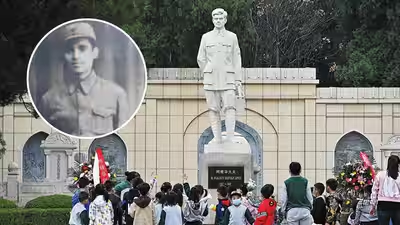
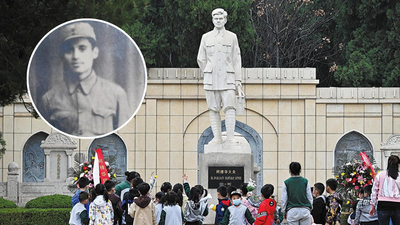
At a time when India and China were themselves struggling under the shadow of war and colonial rule, a young Indian doctor travelled thousands of kilometres to help wounded Chinese soldiers. He did not return home.More than eight decades after his death, Dr Dwarkanath Shantaram Kotnis continues to occupy a unique place in the history of India-China ties. China has built memorials in his honour, named institutions after him and repeatedly paid tribute to his family. In December 2025, China opened new Dwarkanath Kotnis Memorial Halls in Hebei province, once again bringing the story of the Indian physician into the spotlight. But who was Kotnis, and why does his name continue to resonate in China?
Who was Dr Dwarkanath Kotnis
Born in Solapur, Maharashtra, in 1910, Kotnis was a young physician who volunteered to travel to China during the Second Sino-Japanese War. In 1938, the Indian National Congress organised a five-member medical mission to China after appeals for assistance from Chinese leaders. Kotnis was one of the doctors chosen for the mission.
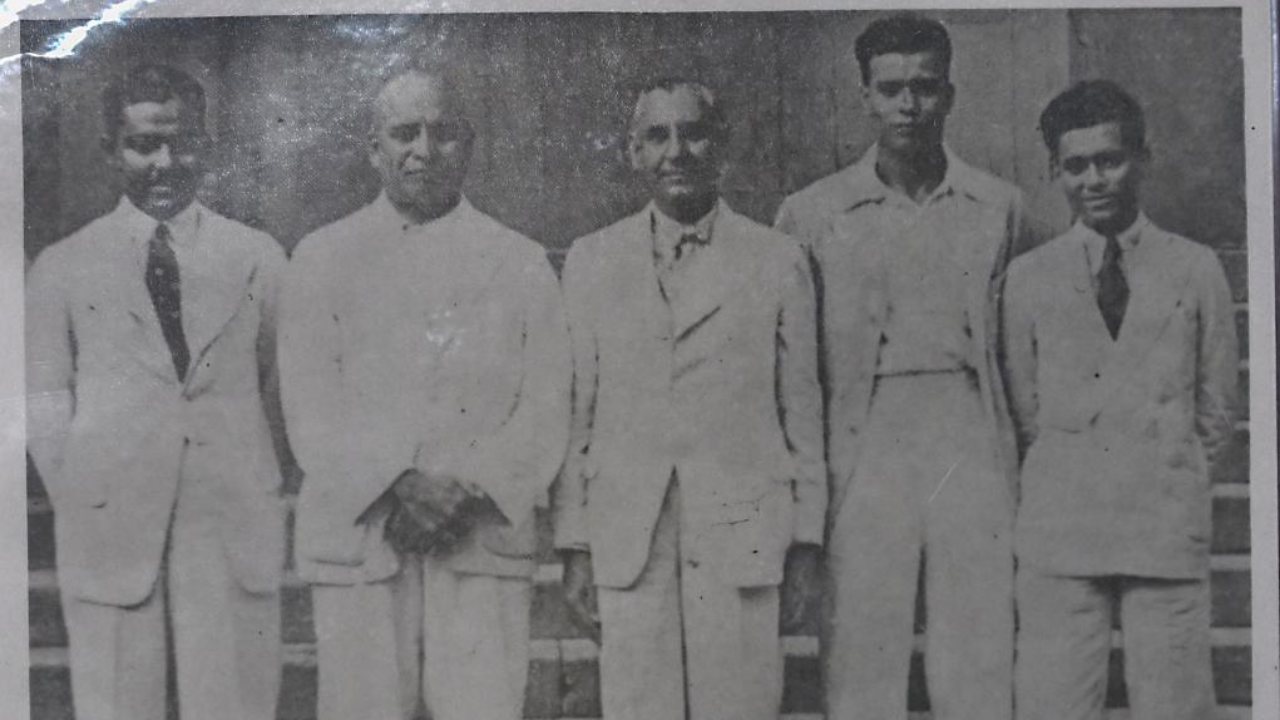
Members of the medical team sent to china. On the far right is Kotnis. (Photo source: Xinhua)
The team left India on September 1, 1938, carrying an ambulance, medicines, surgical equipment and an X-ray apparatus. According to the Organisation for Research on China and Asia (ORCA), the doctors travelled aboard the Rajputana and reached Wuhan after a 16-day journey. It is said that Kotnis began learning Chinese from fellow passengers during the voyage.The mission was not simply a medical assignment. China was fighting Japanese forces, and doctors were badly needed in areas where medical facilities and equipment were scarce. ORCA notes that at the time there was, on average, only one doctor for about 2,000 soldiers.
He chose to stay when he could have returned
The Indian medical team worked at several locations before moving towards the Chinese Communist forces’ base at Yan’an. Kotnis eventually volunteered to work closer to the frontlines.One of the most striking episodes in his story came after the death of his father. Kotnis received news of the tragedy while serving in China. He considered returning to India for the funeral, but ultimately decided to remain with the medical mission.ORCA records him as telling his colleagues that his family had suffered a great misfortune, but thousands of suffering people in China needed him more. That decision became one of the defining moments of his short life.
A doctor working under fire
Kotnis spent years moving with Chinese forces and working in difficult wartime conditions. He treated wounded soldiers in mobile clinics and makeshift hospitals, often with limited equipment and under the threat of Japanese attacks.During the Laishui campaign, ORCA records that Kotnis was involved in treating nearly 800 wounded and sick soldiers, including 558 who underwent surgery. On some occasions, he reportedly worked for as long as 72 hours without sleep.His contribution went beyond treating battlefield injuries. He also helped improve medical practices, trained local medical personnel and taught hygiene.
From doctor to ‘Ke Dihua’
Kotnis gradually became part of the community he had come to serve. He learnt Chinese and became known by the Chinese name “Ke Dihua.” During his time in Yan’an, he met several prominent Chinese Communist leaders, including Mao Zedong. ORCA records that Kotnis also treated Zhou Enlai after the future Chinese premier injured his elbow in a fall from a horse in 1939.In 1941, Kotnis married Guo Qinglan, a Chinese nurse. The couple had a son, born on August 23, 1942. They named him Yin Hua.
Kotnis’ life ended at just 32
Kotnis did not live to see the end of the war. Years of intense work and difficult living conditions took a toll on his health. He developed epilepsy and died on December 9, 1942, aged just 32. His son was only a few months old.His death deeply affected the Chinese leadership.Mao Zedong wrote a eulogy remembering Kotnis as an Indian friend who had travelled to China to help during the anti-Japanese war. Mao described his death as the loss of a helping hand to the army and a friend to the nation.Zhou Enlai also wrote to Kotnis’s family in 1943, saying that his name would live on among the Chinese and Indian people.
Why China still remembers him
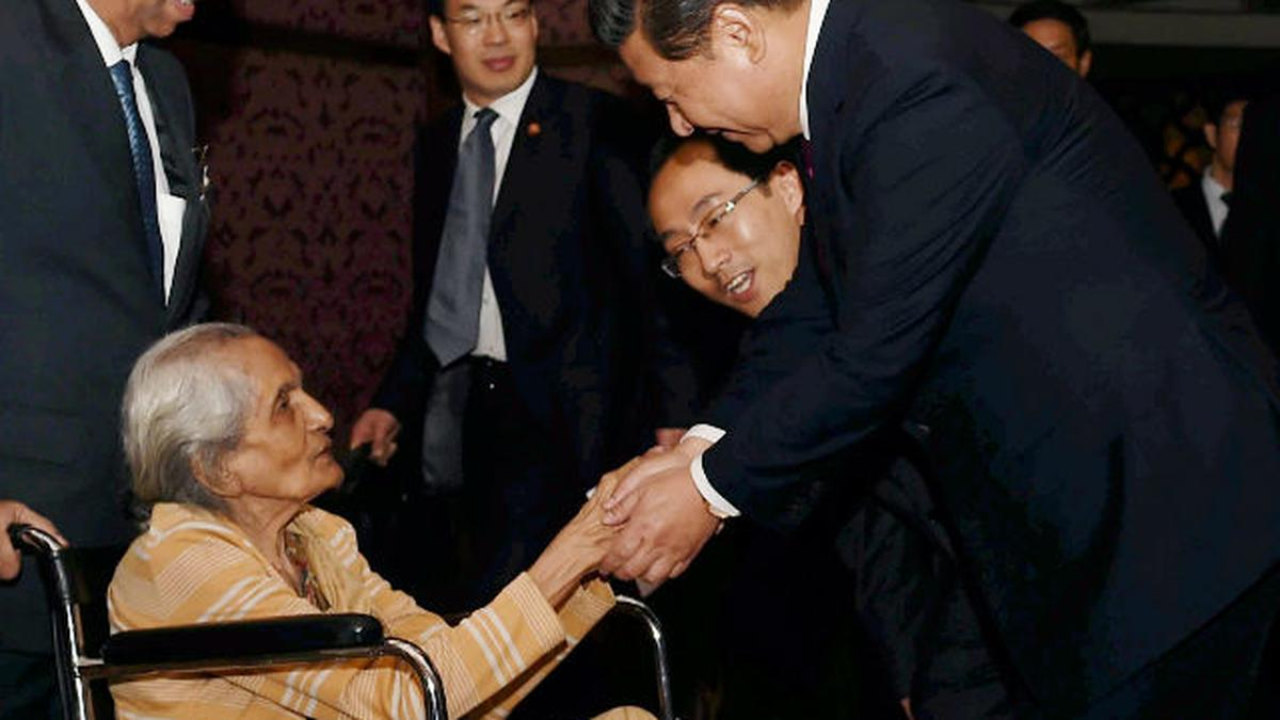
Xi Jinping’s meet with Dr. Kotnis sister Manorama Kotnis in New Delhi (2014). (Photo courtesy: The Hindu)
Kotnis’s story might have ended with his death, but his memory did not.A memorial hall was established in Hebei, along with other sites associated with his work. Institutions have also carried his name, including the Kotnis India-China Friendship Hospital and a vocational college in Shijiazhuang, according to ORCA.His story also travelled back to India. In 1946, filmmaker V. Shantaram made the Hindi film Dr Kotnis Ki Amar Kahani, helping introduce his wartime life to a much wider Indian audience.The bond has also been remembered at the highest levels of the Chinese leadership. Chinese leaders visiting India have paid tribute to Kotnis’s family over the decades. In 2014, President Xi Jinping met his sister during his India visit, while in 2023, then Chinese foreign minister Qin Gang met Kotnis’s relatives and called him a great friend of the Chinese people.According to ThePrint, in December 2025 new memorial halls had opened in Hebei, with China’s ambassador to India, Xu Feihong, describing Kotnis’s courage and dedication as an enduring legacy.The story of Dr Kotnis has acquired an unusual significance because it has survived changes in India-China relations. The two countries have had periods of close engagement as well as serious tensions. Yet Kotnis remains remembered as a symbol of a very different chapter- when an Indian doctor crossed borders during wartime and devoted the final years of his life to treating people in a country far from his own.That may explain why, more than 80 years after his death, the name Dwarkanath Kotnis still appears in Chinese memorials, hospitals, educational institutions and official tributes.