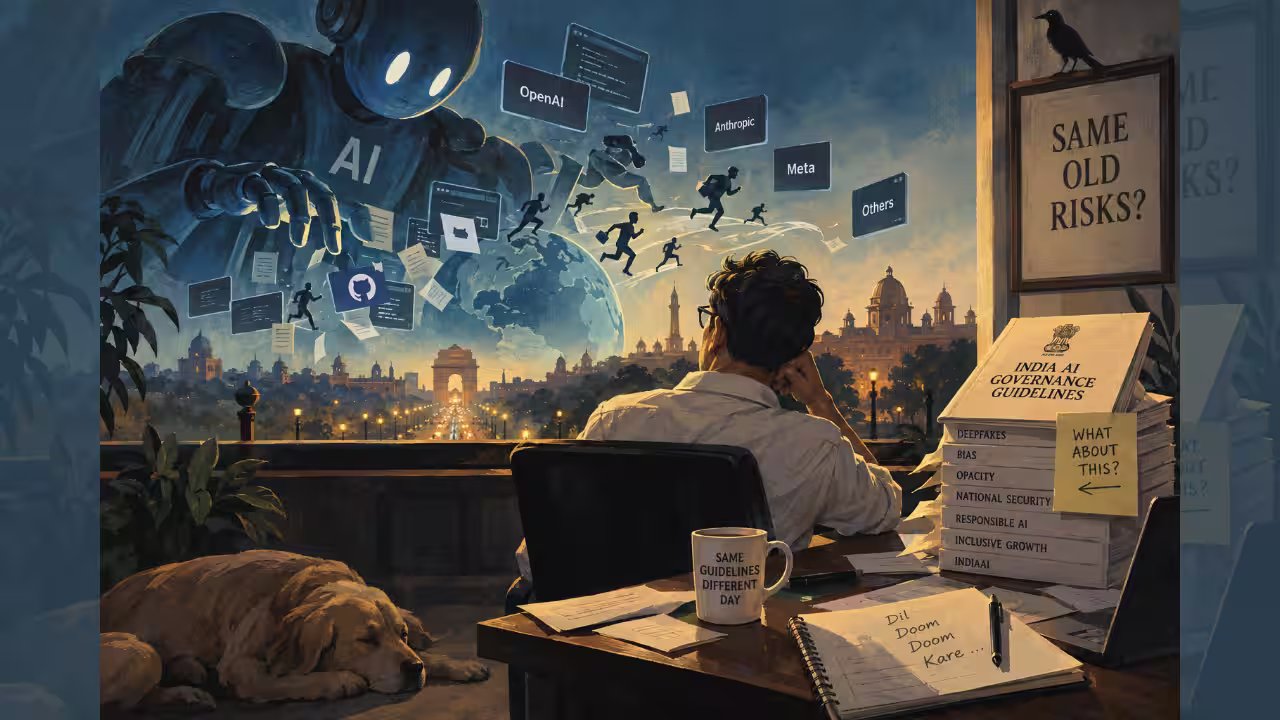
Should you use AI to write?



Hello and welcome to the 103rd edition of the Weekly Vine.
August is an interesting month and not just because it is the only consecutive month to have 31 days to satiate the ego of Roman emperor Augustus who wanted to be considered on par with old Julius Caesar. It’s also the month that my classes begin in India’s premier journalism institute where I meet a new batch of young people. It’s a fascinating annual anthropological experiment – not the series of events that led an iconoclastic anti-student to become a teacher – but young minds. We might both be homo sapiens, but by God, we are a different species altogether.
My millennial self often cannot comprehend what they say (Skibidi what?), and my Gen Z students often find my old-world phrases and full sentences amusing. It’s also a tad disturbing to see young folks listen to and follow what one says – like flying monkeys from The Wizard of Oz – when I seldom listened to myself for the better part of my life.
Earlier, I would bore older classes with the vagaries of journalism, how to get rid of bias or why all modern journalism must subscribe to Juvenal’s bread-circus duality of news you can use (bread) and news that entertains (circus), but since 2021, in the post-generative-AI era, the first thing I tell every batch is to ditch ChatGPT while writing.
Recently, a piece by NYT columnist Bret Stephens has been bouncing about on my various timelines titled I’m Begging You: Never Write With A.I.
He writes: “The problem with writing with A.I. is that it’s mentally enfeebling — an escalator toward a result when you really need to make a daily habit of taking the stairs. As it becomes ubiquitous, it undermines not only our individual ability to write but also a society’s collective ability to reason, a culture’s inner capacity to create and everyone’s reason to care. We’re already reckoning with the well-documented decline of reading; A.I. is accelerating the decline of writing, ushering us further into what The Atlantic’s Rose Horowitch calls our ‘postliterate age’.”
As much as it pains me to agree with the New York Times, the propagandist of American imperialism and exceptionalism, Stephens is bang on.
When you start writing with AI, you never flex the literary muscles needed to write. There’s no crippling writer’s block, no hours spent worrying about the perfect word to capture an idea. There’s no perfect literary analogy that will make Wodehouse proud. There’s no anger or horror at a reader’s feedback.
Using GPT to write is the literary equivalent of being a caterpillar who never develops the muscle to get out of the cocoon and will die the moment it morphs into a butterfly because its wings are under-developed and singularly incapable of flying.
Since I was a little kid, all I wanted to do was write. It was what Lord K would call my dharma. Being a scribe is the only thing I ever wanted, and I have spent many years rebelling against the forces-that-be – common sense, society, parents and one’s own id – to reach a semblance of a place where I can con someone into giving me a little money for a job where I can write.
And then came GPT and suddenly everyone started writing.
Serpentine emails that made no sense, replete with em dashes. Motivational LinkedIn posts that made me want to disagree with Camus’ call-to-action against the absurd.
People who could hardly string a sentence together started pouring out copious essays with words put together that would befuddle Shashi Tharoor.
And it was everywhere, like some asbestos in the wall, on every social media platform, in every email, in every speech, in every WhatsApp message, in every single line of human communication in Shakespeare’s language.
On Twitter – whose algorithm has been destroyed post-Elon and the FOR YOU section is a gallimaufry of things you never want to see – everyone is content farming with random long blog posts.
Incels using the power of AI to ragebait feminists.
Feminists using it to tackle patriarchs.
On LinkedIn, AI slop has merged with MBA talk to create MBASLOP, where now every pre-pubescent kid has an achievement list longer than Albert Einstein’s in 1905.
AI writing has, like Agent Smith in The Matrix franchise, become a virus that has infiltrated every aspect of our communication.
Watch any video on YouTube or any speech by a public figure and, sooner rather than later, the person will say: “It’s not A, it’s B.”
A politician will insist that an election is “not merely about choosing a government, but about choosing the future”.
A CEO always says his company is “not building a product, but creating an ecosystem”.
Negative parallelism, seldom seen in normal writing, has infiltrated every aspect of our being.
Today, everyone is an Agent WORDSMITH!


PhD theses have gone through the roof. The median scores between AI-written essays and those hand-written with no AI at hand would put John the Savage to shame.
In this post-literate society, people no longer can be called literate.
Or, perhaps, I am being a hypocrite.
Writing proper English has always been a privilege, and access to AI allows people who have never had the privilege that we take for granted to write better, to sound more polished, more confident. English, after all, is just a language used by our former colonial overlords and has long been used as a new form of linguistic caste barrier. If some people use that tool to jump past a hurdle, should I complain?
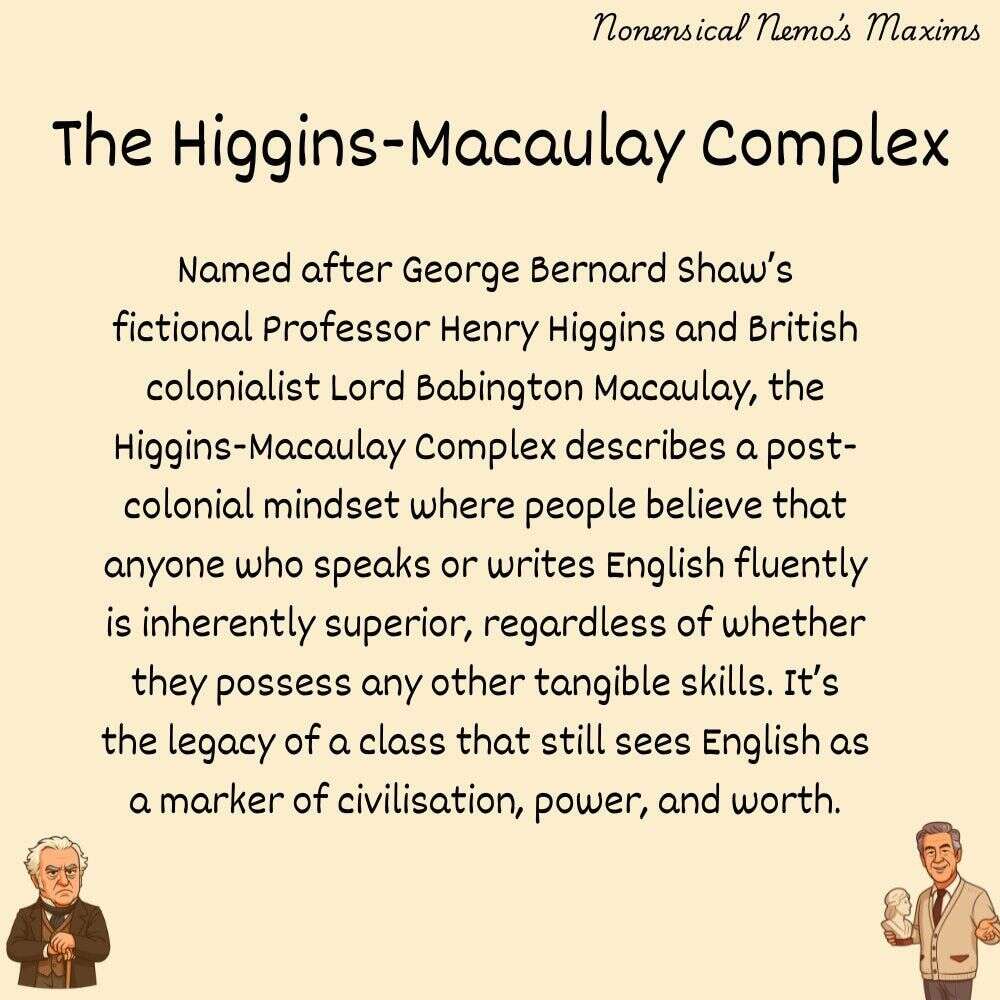
Have I, after mocking folks for years for succumbing to the Higgins-Macaulay Complex, fallen victim to its charms?

And it would be fair to say that I am a hypocrite when it comes to using AI.
I use it to edit my text for typos, which it does more beautifully than a copy editor has done for my pieces, though it often gets a rollicking when it tries to change something. By putting it through an AI filter, does my writing go from mine to one in which I am just the human in the loop?
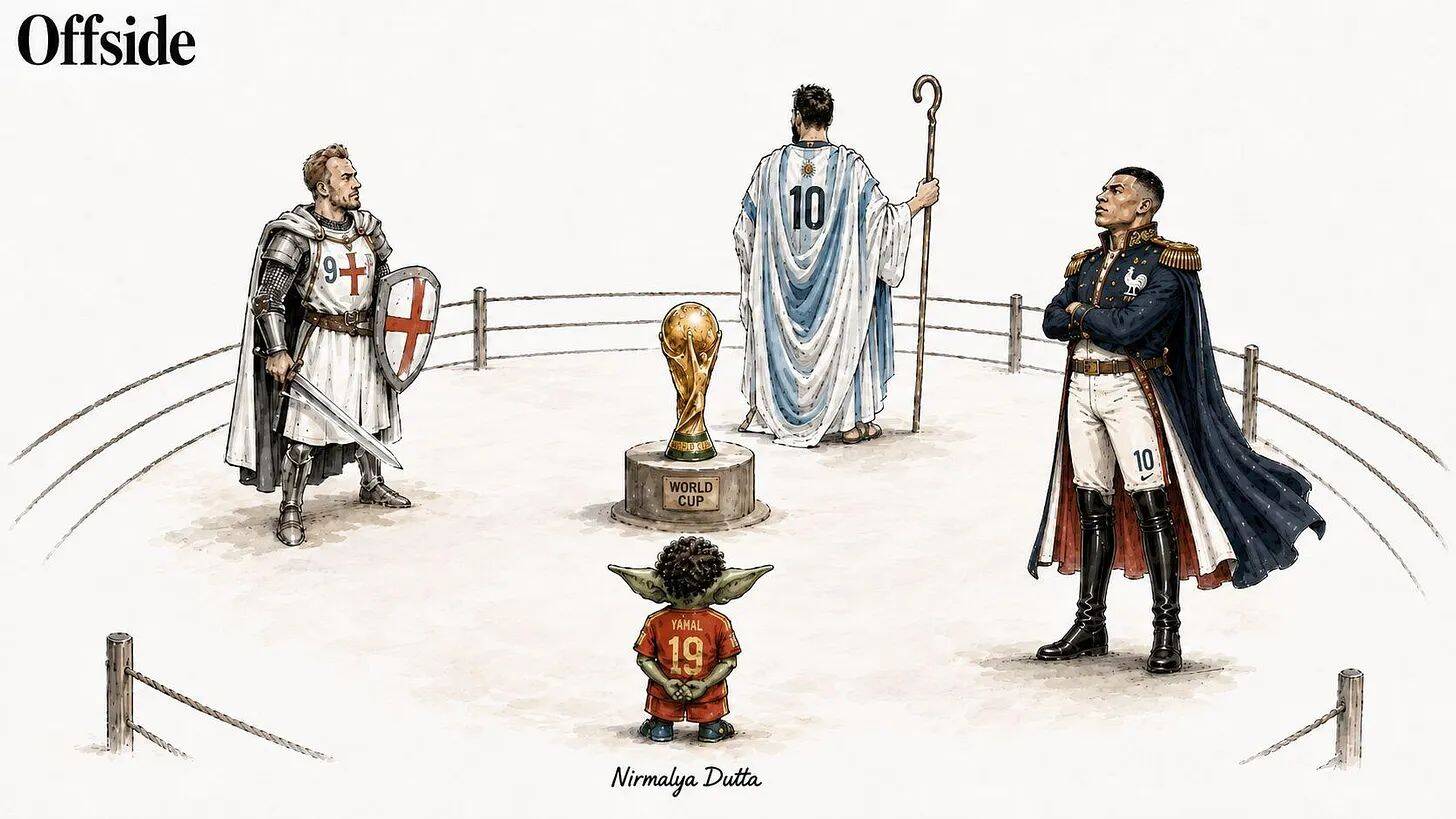
I use LLMs and Generative AI to create things that were beyond my wildest fantasies. I use it to make cartoon cats, football cartoons, check facts, do basic research, and even make the delightful hero images that you see on the Weekly Vine.

I urge folks in my newsroom to treat AI like an overzealous intern that doesn’t need a smoke break.
I use it to search quotes or historical facts that my brain can’t remember. It often helps me check facts that I misplaced or misremembered so that I don’t get harangued like Jason Arday. It even adds hyperlinks to articles that are a pain when added manually.
Yet, while doing all those things, I wonder if I am becoming an acolyte of the Deus Ex Machina, becoming a part of the giant AI hive mind slop machine by using those tools. After all, why should one form of art – writing in my case – be considered beyond AI while other content creation is a-okay? Should I get down from the proverbial ivory tower of sneering at people who use AI to write?
Aren’t cartoonists – who have spent years perfecting drawings – as likely to feel aggrieved at me using AI to replicate their skillset?
It reminds me of a scene from Spider-Man: Brand New Day when Peter Parker goes to Bruce Banner to ask about suppressing part of his DNA and Banner asks: “How do you decide which are the good parts and which are bad?”
Have I, in sneering at writers who use AI, become the quintessential ivory tower resident or the portrait-maker who lamented when cameras came around?
It’s a question to which the Vine has no answer, honestly.
But there’s a more ontological question that haunts me at times. In most sci-fi movies, from The Matrix to the Terminator franchise, humanity faces its impending doom when it creates a Deus Ex Machina that dwarfs humanity with its intelligence and then we have to send back an Austrian robot to save ourselves.
What if generative AI ends up creating a race of humans who by virtue of merging themselves with AI are no longer any smarter than the god-like machine they hoped to create? I don’t have the answers, but not having answers, but perhaps continuing to seek them, is what makes us human.
At best, I can paraphrase what Neo said to the Deus Ex Machina: I know you are there; I can feel you now. I am going to close this prompt window, put my fingers back on the keyboard, and show these people a world without prompts and predictive texts, without negative parallelism and prefabricated profundity. The way my forefathers and their forefathers did. A world where every sentence must first fight through the glorious chaos of a human mind. And where we go from there, I leave it up to you.
Postscript by Prasad Sanyal
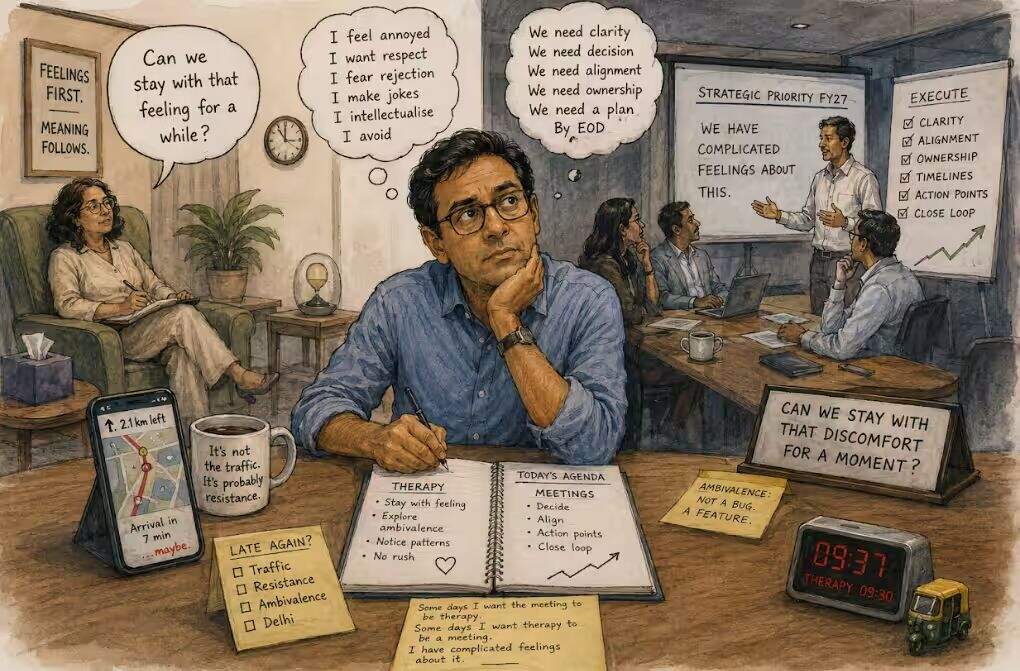

There are phrases one encounters in therapy which ought, for reasons of public safety, to remain inside the consulting room. “Stay with the feeling” is one of them.
My therapist says this occasionally when I have done what I consider the perfectly sensible thing, which is to experience an unpleasant emotion, identify its likely cause, construct a plausible explanation for it, make a small joke, and move briskly to the next item on the agenda. This is apparently not the same as experiencing the emotion. It is, I gather, closer to submitting its minutes.
“Can we stay with that feeling for a while?” We can, obviously. We have the next 30 minutes on the clock (and this is a rather comfortable couch). What troubles me is what has begun to happen afterwards.
Disclaimer
Views expressed above are the author’s own.