MU struggles to run self-financed courses amid staff crunch, delay in affiliation | Patna News
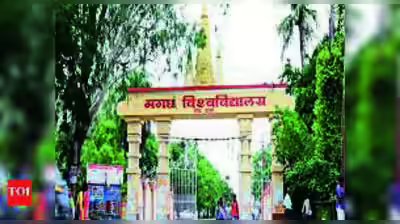
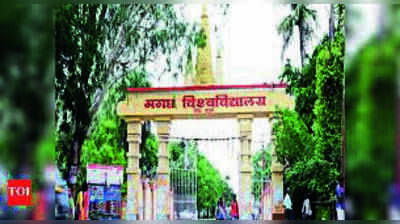
Gaya: Several job-oriented technical courses introduced by Magadh University (MU) under the self-financed mode are facing uncertainty due to delays in admissions and the conduct of regular classes. The situation has arisen mainly because of delays in granting affiliation approvals and the lack of sanction for creating teaching and non-teaching posts. As a result, both the admission process and academic activities have been affected, despite high demand for these courses in the job market.In a bid to ensure smooth functioning of these courses, the MU administration got permanent posts approved at a meeting of the post creation committee and sent the proposal to the higher education director’s office in March this year. The approval is still pending.The self-financed courses, including biotechnology, biochemistry, environmental science, library science, postgraduate and undergraduate programmes in information technology and computer science, hotel management, tourism management, foreign languages and yoga studies, require permanent professors and associate professors as well as laboratory assistants, data entry operators and library staff to ensure academic quality and institutional growth.Nearly 5,000 students are enrolled in technical courses running in colleges under MU, including Gaya College, Jag Jeevan College, Gautam Buddha College and Mirza Ghalib College in Gaya, SN Sinha College in Aurangabad, and Sheodeni Sao College, Kaler.The issue of post creation is not limited to MU headquarters but also affects constituent, affiliated and the lone minority college under the varsity. While some colleges have sent their requirements to the university, others are yet to do so. Once all colleges submit their requirements, the proposals will be forwarded to the higher education department for final approval.MU coordinator of the college development council (CCDC), Sanjay Kumar Tiwari, said, “Academic approval to run these courses under self-finance mode has been obtained from the chancellor’s office. However, in the absence of permanent faculty, the university is losing good teachers and has to compromise on student intake. Since the courses run on a self-financed model, lower intake affects revenue generation and may create survival issues.”MU Janata Dal (United) student wing president Uttam Kushwaha said, “Regular appointments will integrate faculty into the university structure and ensure job security and structured pay scales. As the courses are self-financed, neither the government nor the university budget will have to bear salary expenses.”Highlighting another issue, Kushwaha said, “The higher education department grants provisional affiliation for one academic session. Approval has been granted for 2025-26, but for 2026-27 it is still pending. The department should grant affiliation for at least three to five years to ensure stability. The university should also ensure tie-ups with job-providing companies and organise placements for passout students.”