Life lessons for embracing the divine
(A Tribute on International Day of Yoga)
Every year on 21 June, people across continents gather to celebrate the International Day of Yoga. Parks, schools, community centres, and spiritual institutions resonate with the living practice of yoga, reminding humanity of India’s timeless gift to the world. While yoga is commonly associated today with physical well-being, flexibility, and stress management, its true purpose extends far beyond the body. At its deepest, yoga is a science of self-transformation—a path to inner peace, self-mastery, and conscious union with the Divine.
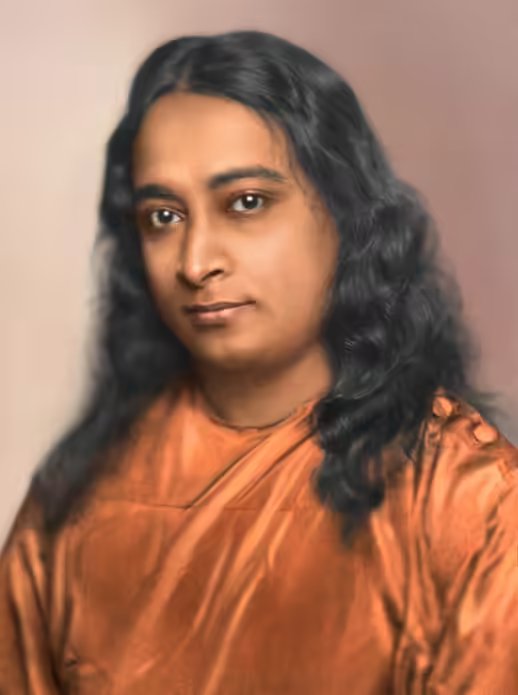
Among the spiritual luminaries who carried this message to the modern world, Sri Sri Paramahansa Yogananda (1893–1952) occupies a singular and honoured place. Through his life and teachings, he became one of the foremost ambassadors of India’s spiritual heritage, revealing the deeper dimensions of yoga and meditation to a global audience. He presented Kriya Yoga—an ancient meditation technique—as a precise inner science accessible to sincere seekers everywhere, regardless of nationality or religious background.
A Childhood Marked by Spiritual Longing
Paramahansa Yogananda was born as Mukunda Lal Ghosh on 5 January 1893 in Gorakhpur, Uttar Pradesh. From his earliest years, he displayed an intense longing for God and a deep attraction toward saints and spiritual practices. While other children pursued ordinary interests, Mukunda was drawn to meditation and the search for higher truth.
A defining event of his childhood was the blessing he received from the householder-yogi Lahiri Mahasaya. When Mukunda’s mother brought him before the saint, Lahiri Mahasaya foretold that the child would become a great yogi and lead countless souls toward spiritual awakening—a prophecy that would later unfold in extraordinary ways.
Formative Experiences: Anecdotes from a Spiritual Childhood
The spiritual life of Paramahansa Yogananda was shaped from his earliest years by a series of vivid, instructive experiences. These episodes — recounted in his own words in his classic book, Autobiography of a Yogi, which has since its publication in 1946, become one of the most influential spiritual works of modern times — reveal both the depth of his inner longing and the divine hand that quietly guided him long before he found his guru.
The Silver Amulet: A Sign of Divine Grace
Before her passing, Mukunda’s mother entrusted him with a mysterious silver amulet, telling him that a holy man had prophesied it would appear and disappear according to his spiritual readiness. True to this foretelling, the amulet materialized in Mukunda’s hands at a moment of deep inner need, conferring a profound sense of peace. In time, it vanished as silently as it had come. This episode taught young Mukunda a lesson that would shape his entire spiritual outlook: physical objects, however sacred, are but temporary instruments. Lasting refuge lies not in any charm or relic, but in the formless grace of the Divine that dwells within every heart. 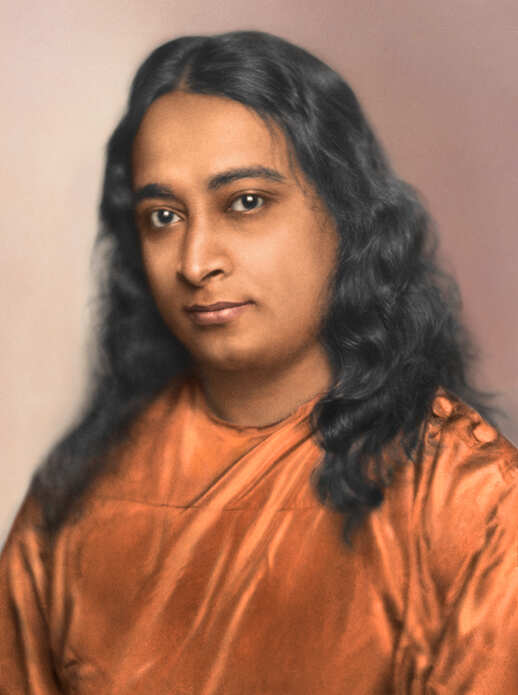

Photo courtesy: Yogoda Satsanga Society of India
Visions of the Divine Mother: Grief Transformed into Devotion
The sudden death of his mother plunged young Mukunda into inconsolable grief. In his anguish, he turned inward, crying out to the Divine Mother—the cosmic feminine aspect of God revered in India’s spiritual tradition. His prayers were answered. A luminous form appeared before him, enveloping him in a love so vast that it eclipsed all human sorrow, assuring him that she would be his eternal mother. From that night of tears, Mukunda emerged transformed, understanding that human relationships, however tender, are transient reflections of a boundless divine love—and that God responds with immediacy to the sincere, desperate cry of a devotee.
The Cobra Encounter: Ahimsa as a Living Force
As a young boy, Mukunda came face to face with a large cobra in the garden at his guru, Swami Sri Yukteshwar ji’s Puri hermitage. Rather than fleeing or striking out in panic, he stood still and consciously radiated love and fearlessness toward the creature. The serpent’s raised hood slowly lowered, and it slithered away without harm. This episode was a living demonstration of the yogic principle of Ahimsa (non-injury): when a person is fully established in non-violence, all living beings in their presence lose their hostility. Mukunda learned early what he would later teach to millions — fear invites danger, while unconditional love, rooted in the awareness of the divine in all beings, is its own protection.
The Runaway Attempt to the Himalayas: Where is God Truly Found?
So intense was young Mukunda’s longing for God that he and a group of friends secretly planned to flee to the Himalayas, seeking a cave where they might meditate uninterrupted. Their ardour outpaced their wisdom. Before they could board their train, Mukunda’s elder brother Ananta intercepted the group and, through logic,and affectionate authority, persuaded them to return home. The episode planted a seed of discernment in Mukunda — the geography of God is not in a distant mountain. The cave of the heart is the true Himalaya. Authentic spiritual discipline must be built from within, in the very circumstances of daily life, rather than fleeing from them.
The Meeting with Sri Yukteswar: A Soul Recognises Its Master
Indian spiritual tradition emphasizes the importance of a true guru in guiding the seeker toward Self-realization. From a young age, Mukunda searched for the master destined to guide him. His quest culminated in his meeting with Swami Sri Yukteswar Giri, a saint renowned for wisdom, discipline, and God-realization.
For years, Mukunda moved restlessly from saint to saint, sensing in each an element of greatness but never the complete resonance of a destined master. The moment of recognition came unexpectedly in the lanes of Benares. Walking through a crowded marketplace, he glimpsed a tall, commanding monk in saffron robes and felt an inexplicable tremor of recognition, one that seemed to transcend a single lifetime. This was Swami Sri Yukteswar Giri. The master turned, met his eyes, and spoke words that seemed drawn from across time: “O my own, you have come to me.” From that encounter, Mukunda understood what he later taught so often—that the guru-disciple relationship is not a matter of chance. It is ordained by God, fulfilled only through absolute surrender and trust.
Under Sri Yukteswar’s guidance, Mukunda underwent rigorous spiritual training. In 1915 he entered the Swami Order and received the name Yogananda, meaning “bliss through divine union.” His guru deepened his spiritual realization and prepared him for a global mission that would bridge East and West.
The Guru’s Crucible: Sri Yukteswar’s Methods of Spiritual Training
Swami Sri Yukteswar Giri was no ordinary teacher. A Jnana yogi of razor-sharp intellect, he combined the warmth of a father with the precision of a scientist. His methods for shaping the young Yogananda were unconventional, often demanding, yet profoundly loving—designed not to instruct the mind but to dismantle the ego.
Discipline as Destruction of the Ego: Sri Yukteswar subjected Yogananda to rigorous correction, often public and pointed, whenever the disciple displayed pride, emotionalism, or laziness of thought. He found fault in the smallest things—a word misspoken, a task left half-done—not from harshness, but from the understanding that the ego is the greatest obstacle on the spiritual path. Yogananda later wrote that these episodes, though painful at the time, were among the most precious gifts his guru gave him. The master was not breaking him; he was freeing him.
Practical Service as Inner Training: Sri Yukteswar believed profoundly in practical action as a vehicle for inner purification. The ashram in Serampore buzzed with purposeful activity. Disciples were expected to tend the grounds, prepare food, attend to guests, manage finances, and engage in meaningful work—all while maintaining their meditation practices. Sri Yukteswar taught by example that karma yoga, selfless action without attachment to its fruits, is inseparable from the deepest meditation. A mind trained in service becomes effortlessly still in prayer.
Wisdom Over Emotionalism: The Scientific Temperament: One of Sri Yukteswar’s most distinctive qualities was his insistence on discriminative wisdom (viveka) over sentimental piety. He challenged his students to think clearly and distinguish between feeling and truth. Emotionalism—weeping profusely, dramatic demonstrations of devotion—he treated with gentle scepticism, while genuine inner experience he honoured deeply. This scientific temper became a cornerstone of how Yogananda later presented Kriya Yoga to the world — not as blind faith, but as a verifiable inner science.
Direct Transmission and Cosmic Consciousness: Beyond intellectual instruction, Sri Yukteswar communicated the highest spiritual truths in ways that transcended words. On multiple occasions, described in the Autobiography of a Yogi with breathtaking clarity, the guru transmitted to Yogananda direct experiences of cosmic consciousness—states of boundless awareness in which the walls of the ego dissolve and the unity of all creation becomes a living reality. He understood that the purpose of all technique, discipline, and service was to prepare the vessel for this ultimate gift—the direct knowing of God.
The years at Sri Yukteswar’s feet were, by Yogananda’s own account, the most formative of his life. They forged in him not only the ability to meditate deeply but also the character to carry a world-changing mission with humility, clarity, and love. The guru did not merely teach—he sculpted a soul.
A Visionary Approach to Education
Long before “holistic education” became a popular term, Yogananda recognized the need to develop the whole human being—body, mind, heart, and soul. In 1917 he founded a small school at Dihika in Bengal with a handful of students, combining academic learning with yoga, meditation, moral values, physical development and character formation.
The institution later moved to Ranchi and expanded into what became the Yogoda Satsanga Society of India (YSS). Generations of students benefited from an educational system that sought not merely to impart information but to awaken wisdom, self-discipline, and spiritual awareness.
Carrying Yoga to the West
The year 1920 marked a turning point in Yogananda’s life and in the global history of yoga. Invited to serve as India’s delegate to the International Congress of Religious Liberals in Boston, he sailed to the United States.
At that time, the West knew little about India’s spiritual traditions; yoga was largely misunderstood as exotic gymnastics or obscure mysticism. Yet Yogananda’s message resonated because he presented yoga not as a belief system requiring blind faith, but as a universal science of inner experience, whose results could be personally verified by any dedicated practitioner.
His lectures attracted large audiences across America, who were inspired by his combination of spiritual depth, practical wisdom, and scientific clarity. He emphasised that the truths taught by the great religions could be personally experienced through meditation.
To support this mission, he founded the Self-Realization Fellowship (SRF), which became the principal vehicle for disseminating his teachings throughout the world.
Kriya Yoga: The Science of God-Realization
Among Yogananda’s most enduring contributions was the worldwide dissemination of Kriya Yoga—an ancient meditation technique revitalised in modern times through the sacred lineage of Mahavatar Babaji, Lahiri Mahasaya, Sri Yukteswar Giri, and Yogananda himself. This transmission represented the revival of a complete inner science that had largely remained hidden within esoteric traditions for centuries.
Yogananda described Kriya Yoga as a precise method that accelerates spiritual evolution by consciously harmonising the body, mind, and life force (prana). While the physical postures of Hatha Yoga help purify the bodily instrument, Kriya Yoga directs awareness inward along the spine—the subtle axis of human consciousness— enabling the practitioner to experience progressive states of inner stillness, concentrated awareness, and ultimately, divine communion. He often compared it to a spiritual “airplane route” to God, in contrast to slower paths of intellectual study or external ritual alone.
Yogananda consistently insisted that spiritual truths must be verified through personal practice rather than accepted on faith alone. He taught that meditation is not a withdrawal from the world but a means of bringing greater clarity, wisdom, compassion, and equipoise into every dimension of daily living. For him, Kriya Yoga was not a sect or religion but a universal methodology, one that complemented any sincere spiritual tradition a person might already follow.
Kriya Yoga as a Meditation Tool and Spiritual Framework
One of Yogananda’s most significant contributions was his articulation of Kriya Yoga as a complete, structured framework for inner transformation. He drew upon Patanjali’s Yoga Sutras—particularly the eight-limbed path (Ashtanga Yoga)—and demonstrated how Kriya Yoga fulfils and integrates all eight limbs in a single, coherent meditative discipline: ethical self-discipline (yama and niyama), regulation of life-force through pranayama, withdrawal of the senses (pratyahara), concentration (dharana), meditation (dhyana), and absorption into transcendent awareness (samadhi).
Central to this framework is the role of prana, the vital life-force, as the bridge between body, mind, and spirit. Yogananda taught that the human nervous system, particularly the cerebrospinal axis with its network of chakras, constitutes the true “laboratory” of spiritual realisation. Through systematic practice of Kriya pranayama, the practitioner learns to draw life-energy away from outward sensory engagement and redirect it upward along the spine toward the brain and the spiritual eye (Ajna chakra). This withdrawal and interiorisation of energy is the core mechanism by which deep meditation is achieved and sustained.
Yogananda also introduced a graduated system of preliminary meditation practices, making Kriya Yoga accessible to householders and working professionals rather than only renunciants. Practices such as Energisation Exercises (his system for recharging the body with cosmic energy through will and breath), the Hong-Sau concentration technique, and the Om technique of meditation were taught as preparatory disciplines, each stage deepening the practitioner’s capacity for stillness, interiorisation, and ultimately, Self-realization.
Equally significant was Yogananda’s insistence on aligning the Kriya Yoga framework with the universal principles found in both Eastern and Western spiritual traditions. He drew illuminating parallels between the Kriya path and the teachings of Christ, the mystical traditions of the Bhagavad Gita, and the investigations of modern science. By demonstrating that the same underlying spiritual laws of consciousness are reflected across traditions, he elevated Kriya Yoga from a culturally specific practice into a universal spiritual methodology—a “definite science of God-contact,” as he expressed it, that any earnest seeker could systematically verify through inner experience. In this way, he not only preserved an ancient wisdom lineage but profoundly modernised and universalised it for the contemporary world.
The Inner Meaning of Yoga
Yogananda consistently reminded people that yoga is much more than physical exercise. The Sanskrit root of the word yoga means “union”—the union of the individual soul with the Infinite Spirit.
He taught that human beings instinctively seek happiness because their true nature is bliss itself. Lasting happiness, however, cannot be found in external possessions or achievements alone. Through meditation, self-discipline, devotion, and right living, one discovers the inexhaustible source of joy within.
His message was universal and practical: “The purpose of life is to find God and to express His love in all our activities.” For Yogananda, spirituality was not confined to monasteries or meditation halls. He encouraged people to perform their worldly duties with sincerity and excellence while maintaining inner communion with the Divine.
A Messenger of Universal Brotherhood
At a time when divisions of race, nationality, and religion often separated people, Yogananda emphasised the underlying unity of humanity. He taught that all genuine spiritual paths lead toward the same ultimate truth, and that lasting peace can arise only from recognising our shared divine nature.
His vision of universal brotherhood remains profoundly relevant today. In an age marked by stress, conflict, and rapid change, his teachings offer a pathway toward inner stability, compassion, and mutual understanding.
The Continuity of the Soul’s Journey
Yogananda spoke of entering this life with clear memories of previous incarnations, among them a Himalayan yogi whose discipline foreshadowed future lives of deeper realization. This reminds us that our spiritual quest is not new. We are pilgrims continuing a journey that spans many lifetimes; every sincere effort made in this life is added to a treasury of inner growth that no death can erase. Just as a musician picks up an instrument after years of silence and finds the hands remember, the soul remembers its direction toward God. The path is not strange to us—we are simply returning home.
The Sacred Power of Speech
One illuminating episode from Yogananda’s childhood involves his sister Uma and a small dispute that became a lesson in the power of human speech. When Uma dismissed his claim with a sharp “You little liar!”, young Mukunda responded with quiet, resolute will: “By the power of will in me, I say that tomorrow I shall have a fairly large boil in this exact place on my arm; and your boil shall swell to twice its present size!” By morning, both predictions had come to pass. When his mother heard of it, she gravely warned him never to use the power of words for harm. The lesson is timeless — words carry the force of consciousness behind them. Words uttered with concentrated will and divine love can bring extraordinary benefit, while words spoken in anger leave invisible wounds. Yogananda taught—and this episode embodied—that the disciplined use of speech is a true spiritual practice.
The Blessing of Satsanga: Seeking Uplifting Company
Throughout his formative years, Yogananda was drawn to the company of saints and advanced souls; every encounter added wisdom and renewed energy to his own spiritual life. This reflects one of the most practical teachings of the yoga tradition — second only to having a true guru is the gift of satsanga, the fellowship of sincere truth-seekers. The quality of our inner environment is shaped by those we spend time with. To associate with cynical or spiritually indifferent minds is to introduce turbulence into the calm waters of one’s consciousness; to spend time with souls who are earnest and devotional is to be lifted without effort. Yogananda’s life is a testimony to this truth — the companions we choose on the inner path matter profoundly.
Embracing Tests as Gifts of the Guru
Yogananda described Sri Yukteswar’s training as “drastic,” far exceeding the discipline of home or family. The master made clear that his demands were never personal: “If you don’t like my words, you are at liberty to leave at any time. I want nothing from you but your own improvement.” This acceptance of difficult training is itself a teaching for every seeker. The tests that come to us through relationships, circumstances, health, loss, or failure are not obstacles to the path—they are the path. Great souls, whether in the body or beyond it, are not bound by time and space; they continue to guide and shape their disciples through the precise instrument of life’s challenges. The spiritual aspirant who can greet difficulty with equanimity, even gratitude, has understood something profound about the nature of grace.
Divine Love as the Foundation of All
In the closing pages of the Autobiography, Yogananda offers his most distilled teaching: “God is Love; His plan for creation can be rooted only in love.” Every realized saint who has penetrated to the heart of Reality has confirmed the same: the universe is not a cold mechanism but a drama of divine love unfolding toward joy. The prophet Isaiah’s ancient words—that we shall go out with joy and be led forth in peace—are not a remote promise but a living possibility, realizable by any devotee who strives sincerely to reclaim their divine heritage through meditation and right living. Our spiritual quest, Yogananda reminded us, is a service to all of humanity. Every soul that finds inner peace adds something real and permanent to the light of the world.
Paramahansa Yogananda left his mortal body on 7 March 1952, but his influence continues to grow. Through the work of Yogoda Satsanga Society of India and Self-Realization Fellowship, his teachings are studied and practiced by millions around the world.
More than a century after his birth, the seeds he planted have blossomed into a global appreciation of yoga and meditation. The widespread acceptance of yoga today owes much to pioneers like him, who courageously shared India’s spiritual treasures with the world.
A Message for International Day of Yoga
As we celebrate the International Day of Yoga, let us remember that yoga is not merely a practice for physical health but a complete way of life. It harmonises body, mind, and spirit; fosters inner peace and self-mastery; and ultimately leads the seeker toward direct experience of the Divine.
The life of Paramahansa Yogananda stands as a luminous example of this ideal. Through his devotion, wisdom, and tireless service, he helped millions discover that the deepest purpose of yoga, and of Kriya meditation in particular, is to awaken the infinite joy, peace, and love that already reside within every human heart. His legacy of Kriya Yoga as a living, practical inner science continues to guide seekers across the globe toward that ultimate realisation.
His life continues to remind us that the highest goal of yoga is not merely to improve life, but to transform it.
Disclaimer
Views expressed above are the author’s own.