Football is life. This World Cup looks lifeless
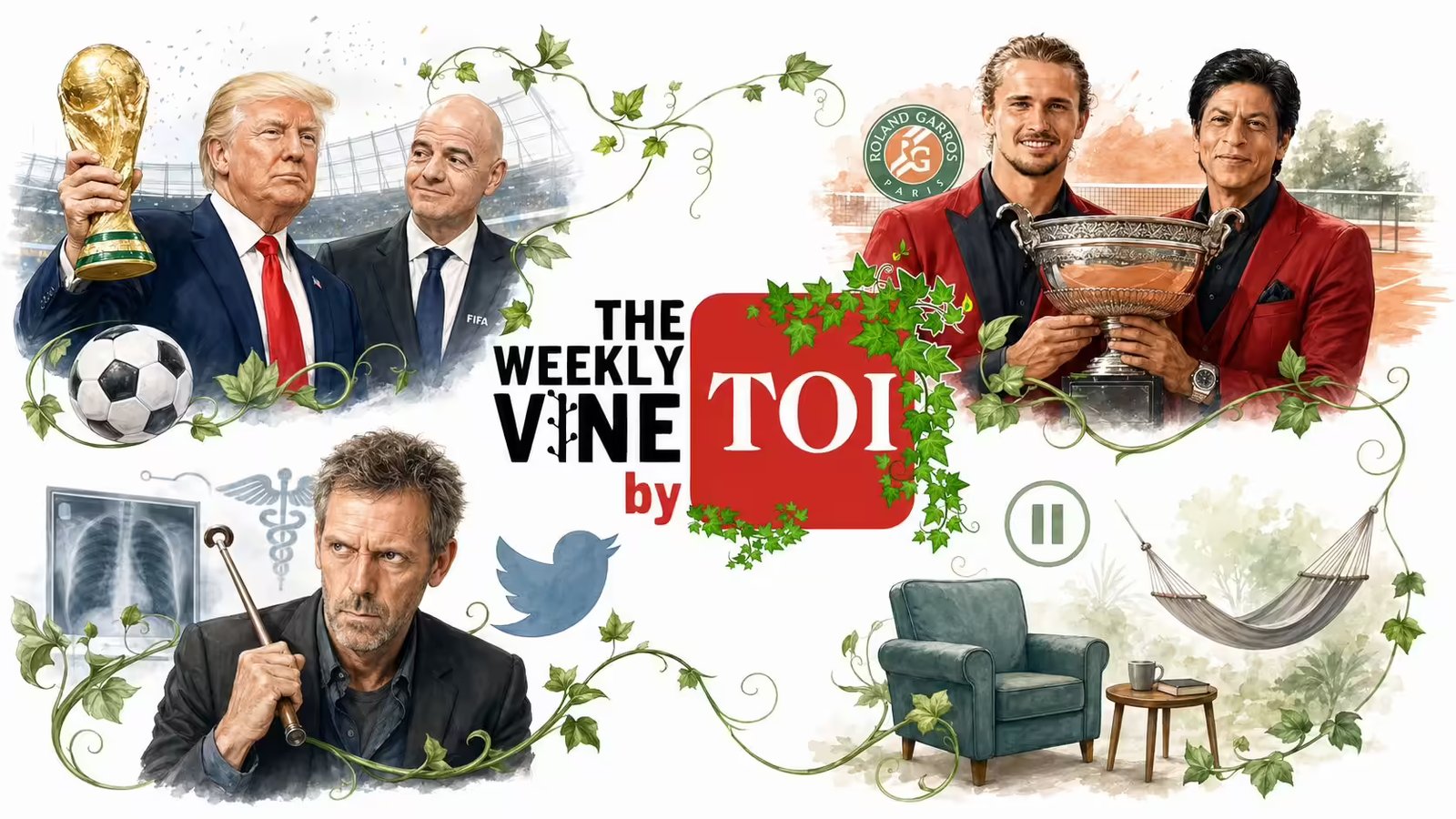
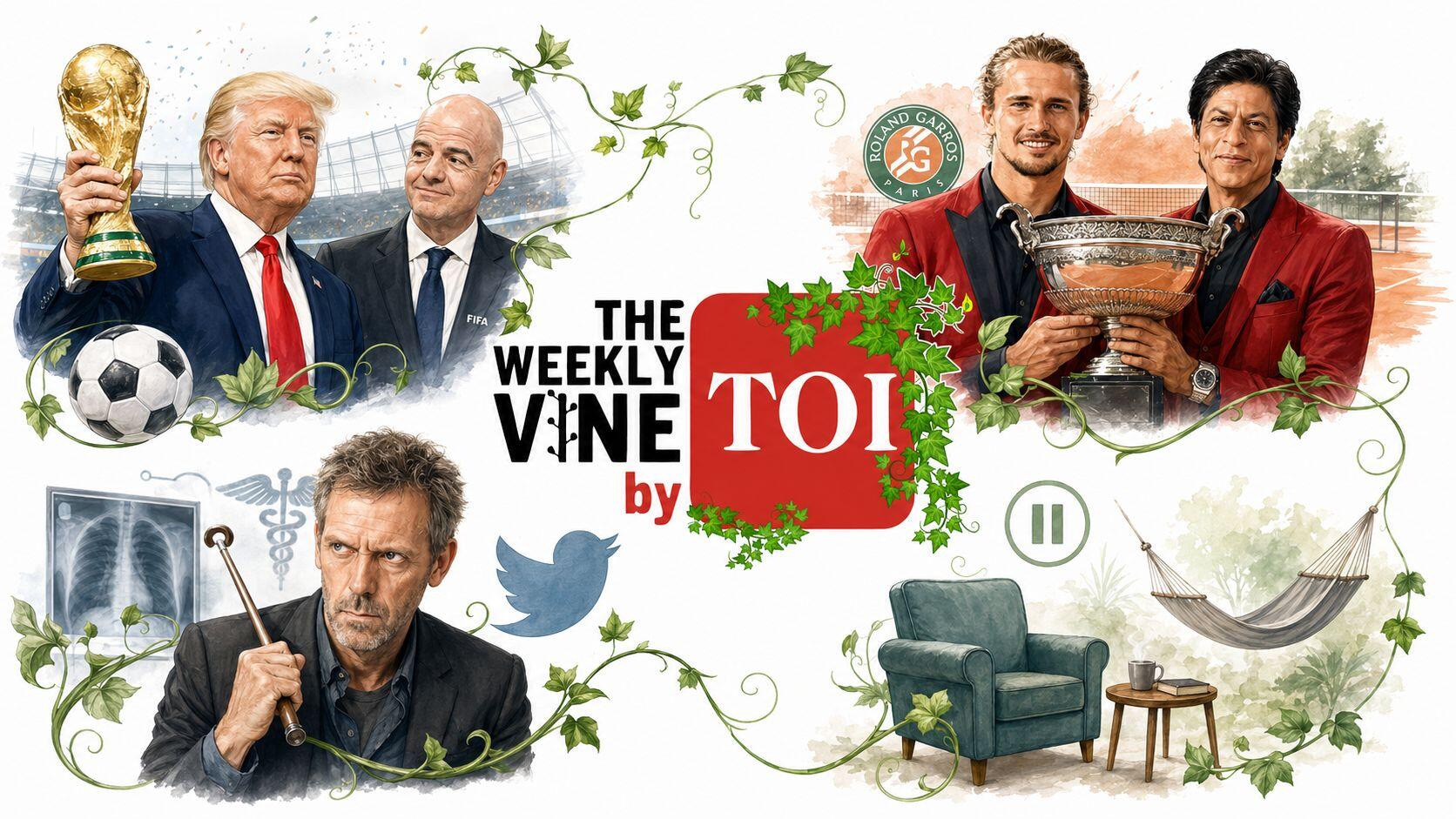

Hello and welcome to the 95th edition of the Weekly Vine. In this week’s edition, we wonder why no one seems properly hyped about the World Cup, explain why Zverev’s French Open win would have SRK’s approval, unravel why Hugh Laurie suddenly turned into Dr House on Twitter, and consider the importance of doing nothing.
Football is Life?
Dani Rojas, the human version of a labrador, would always say: football is life. For many of us across the world, that was the gospel truth. Whether you support Mohun Bagan or Manchester United, football casts a huge shadow over everything we do. As my wife often jokes, she has to compete with Bruno Fernandes for a place in my heart.
And nothing in football is greater than the World Cup.
My first memory of one is 1998, when David Beckham was sent off for kicking Diego Simeone in the Round of 16 between England and Argentina and I was condemned, by some cruel joke of the footballing gods, to support the team of my former colonial overlords. I remember sitting with my father in 2002, watching Ronaldinho’s chip drop like a leaf into David Seaman’s goal. I was in Kota in 2006, watching in a cobbler’s shop, when Wayne Rooney was sent off for trampling on Ricardo Carvalho’s family jewels, a World Cup that will always be remembered for the maestro Zinedine Zidane giving Marco Materazzi some head.
I was… the point is you get it. Football is indeed life, and we measured it in four-year intervals. And yet, I find it very difficult to get excited about this year’s World Cup.
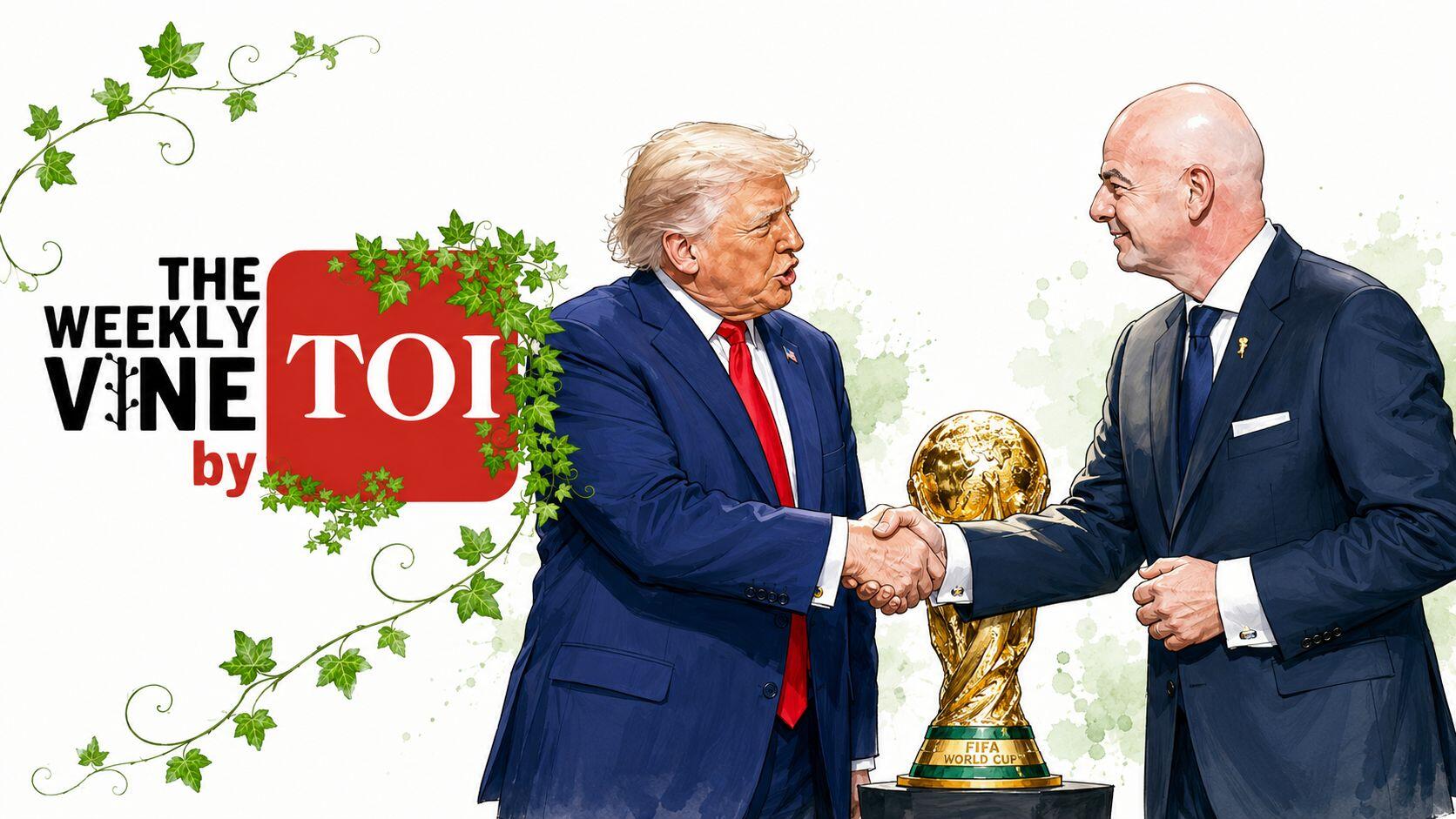
Maybe it is because it is being held in the United States of Trump against the backdrop of ICE agents clashing with suburban moms. Also, FIFA has bent over backwards so much for the current administration that this could be a Prison Break episode, including coming up with a fake peace prize once Trump was denied the one by the Nobel Peace Committee.
The point of the World Cup has always been that for a few days, we could keep all our petty geopolitical rivalries and tiresome think-tank talk aside to enjoy the beautiful game, irrespective of whether we lived in a democracy or were ruled by an orange autocrat. As FIFA often likes to brag, it has more members than the United Nations, but this year that magic is gone.
Before its current boss Gianni Infantino took over, FIFA was not exactly a Franciscan monastery with a football department. It had its fair share of scandals, much like a Franciscan monastery. Under João Havelange and then Sepp Blatter, FIFA perfected a particular model of global power: distribute money and patronage to national associations, collect loyalty in return, and preside over the World Cup like a private kingdom that happened to use flags, anthems and children holding hands with players to make money.
The rot became impossible to ignore in 2015, when US prosecutors unsealed a sweeping corruption case against FIFA officials and sports-marketing executives. That was a time when FIFA officials were actually scared of going to the US lest they be put in pinstripes. These allegations included kickbacks for South Africa 2010, Russia 2018, and Qatar 2022.
Sepp Blatter, the last president, was eventually banned, and Michel Platini also followed suit. This cleared the way for an Italian boy from a small Swiss village to become the most important man in the most important sport in the world: Gianni Infantino. The man who was supposed to clean up the rot instead took corruption to the next level.
It has moved on from the comic-book villainy of the Blatter era to giving authoritarians across the world the rights to the beautiful game to sportswash their regimes. This World Cup is the perfect Infantino product: 48 teams, 104 matches, more broadcast slots, sponsors, hospitality packages and photo-ops.
FIFA will call it inclusion, and to be fair, there is a point there. The World Cup should not be a European-South American gated colony where the rest of humanity turns up every four years to be beaten by France. But there is a difference between inclusion and whatever this is. The old group stage had fear. One bad night and you were gone. This one has 12 groups, third-placed teams qualifying, and enough escape routes to make mediocrity look like destiny. It is football’s CBSE grace-marks system.

Then there is the American muscle-flexing. FIFA stripped Indonesia of the 2023 U-20 World Cup after local opposition to Israel’s participation, effectively saying a host must guarantee entry to qualified teams. Fair enough. But when the host is America, FIFA suddenly goes mute.
Somali referee Omar Abdulkadir Artan was denied entry despite being selected for the tournament. Iranian officials have faced visa issues. Iran has had to base itself in Mexico, with US authorities later clarifying that its players could enter the US the day before matches. Iraq striker Aymen Hussein was reportedly questioned for hours, an Iraqi photographer was denied entry, South African paperwork was delayed, and some Scottish fans reportedly had approved ESTAs revoked. When Indonesia cannot guarantee entry, FIFA removes the tournament. When America meddles, FIFA looks the other way.
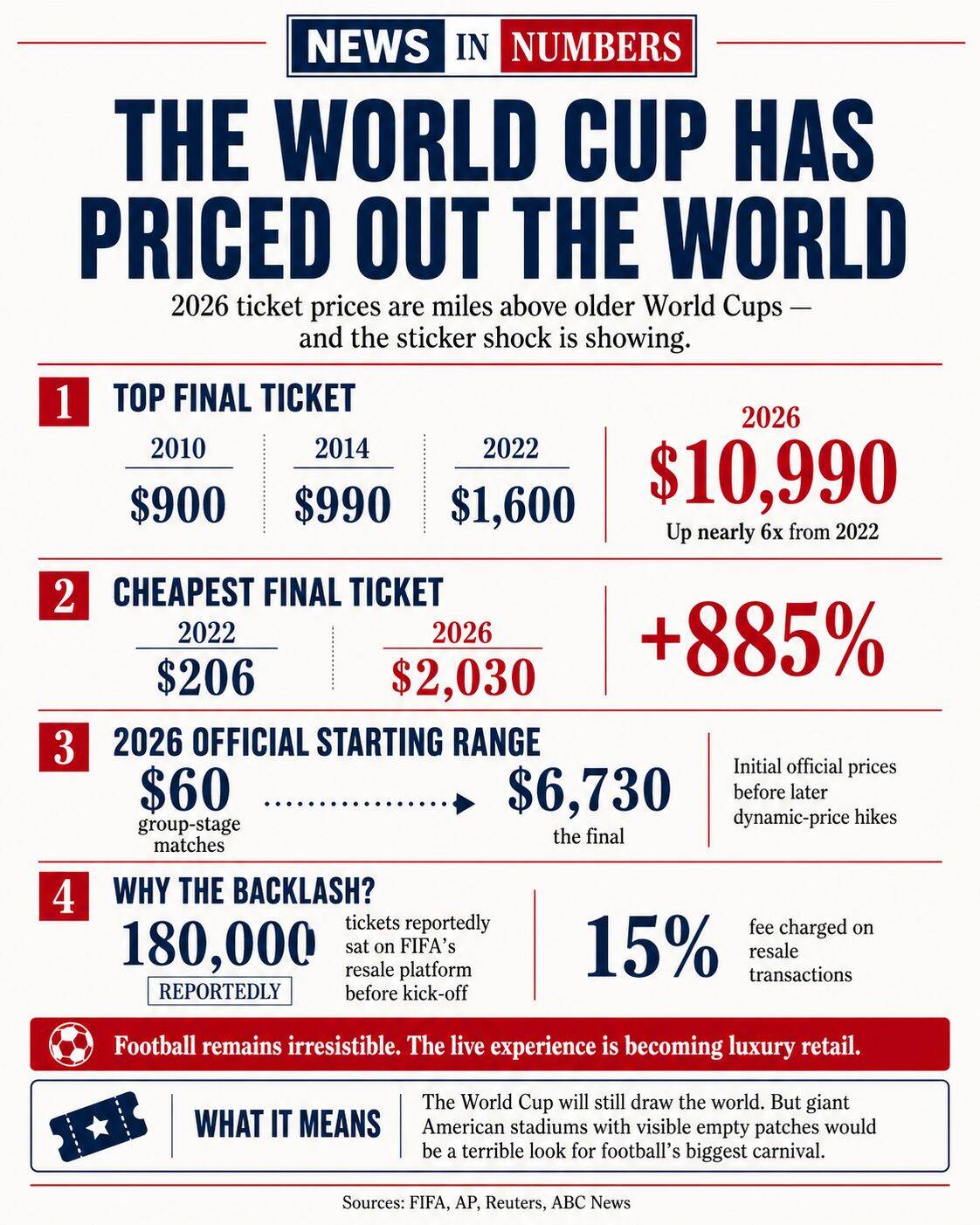
Ticket prices are off the charts. Around 180,000 tickets were reportedly sitting on FIFA’s resale platform days before kick-off, mostly for group-stage games. That does not mean the World Cup will flop. Football is too addictive for that. But giant American stadiums with empty patches are a terrible look for a tournament sold as the biggest carnival in sporting history.
And finally, the timings.
For hordes of fans in India, matches will land at 12.30am, 3.30am and 6.30am, which means the tournament is perfectly scheduled for insomniacs, call-centre workers, new parents and men going through a divorce. Everyone else will have to choose between football, employment and sleep, which is unfair because most of us already make that choice every Premier League weekend.
This was reflected in the reluctance to even purchase broadcast rights, which were reportedly picked up at the eleventh hour because no one thinks most Indians are going to stay up late or wake up at dawn to watch group-stage games.
Dani Rojas was right. Football will always be life, but this World Cup has been scheduled for people who do not have one.
The Universe Conspiracy
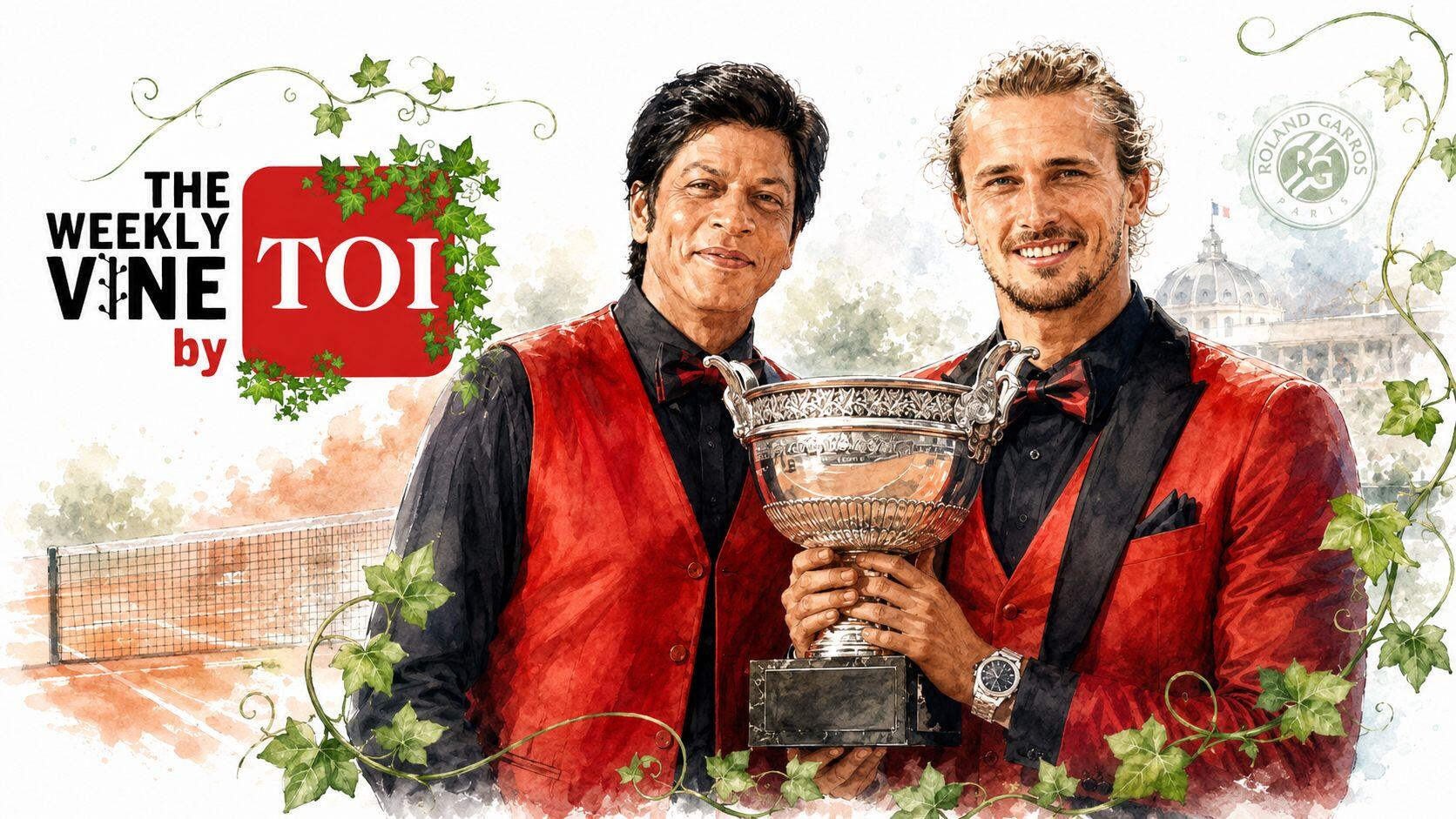
If Shah Rukh Khan fans were being objective, which is a hard ask given they are SRK fans and think Pathaan was a great movie, they would admit that Om Shanti Om was the last time King Khan was on top of his game. The movie was both a Bollywood classic and revolutionary in the sense that it had the first crossover of Bollywood stars long before Avengers existed and even prophesied desis taking over the five Dard-e-Disco cities, of which desis have two.
In the movie, Shah Rukh Khan’s character states: “Kehte hain agar kisi cheez ko dil se chaho, toh poori kainaat usse tumse milane ki koshish mein lag jaati hai” (“They say that if you desire something with all your heart, the entire universe tries to bring it to you”). It’s the same philosophical leitmotif of Paulo Coelho’s The Alchemist: “When you want something, the universe conspires to ensure you get it.”
And the universe finally conspired to hand Alexander Zverev his first Grand Slam title as he triumphed over Flavio Cobolli in the 2026 French Open.
Zverev’s nickname is Sascha, a Russian-language diminutive for Alexander, and he might have wondered if he was suffering from some sort of reverse nomen omen. In his prime, Alexander conquered much of the landmass known to the ancient Greeks, which was still only 3-4% of the actual landmass of the world, and supposedly wept that there was no land left to conquer. His namesake, on the other hand, had another reason to weep: his inability to conquer the one territory that had kept defeating him, a Grand Slam.
Dr House on Twitter
There are two kinds of people in the English-speaking world. Those who haven’t watched House MD and those who know it’s never lupus. Those who think that The Pitt is a good show and those who know that if you could reason with religious people, there would be no religious people. Those who think House is a medical drama and those who know you can’t always get what you want, but if you try hard enough you might get what you need.
Those of us who worship at the altar of Hugh Laurie’s greatest creation can never get over the show that’s perhaps the greatest Sherlock adaptation ever created, including the BBC one.
For the uninitiated, House is a synonym of Holmes, and Arthur Conan Doyle based his definitive detective’s portrayal on Joseph Bell, a Scottish surgeon and diagnostician who came up with The Method. As Arthur Conan Doyle, who served as his outpatient clerk, noted: “Dr Bell would diagnose people as they came in, before they even opened their mouths. He would tell them their symptoms and even give them details of their past life, and hardly ever would he make a mistake.”
Postscript by Prasad Sanyal: The art of doing nothing
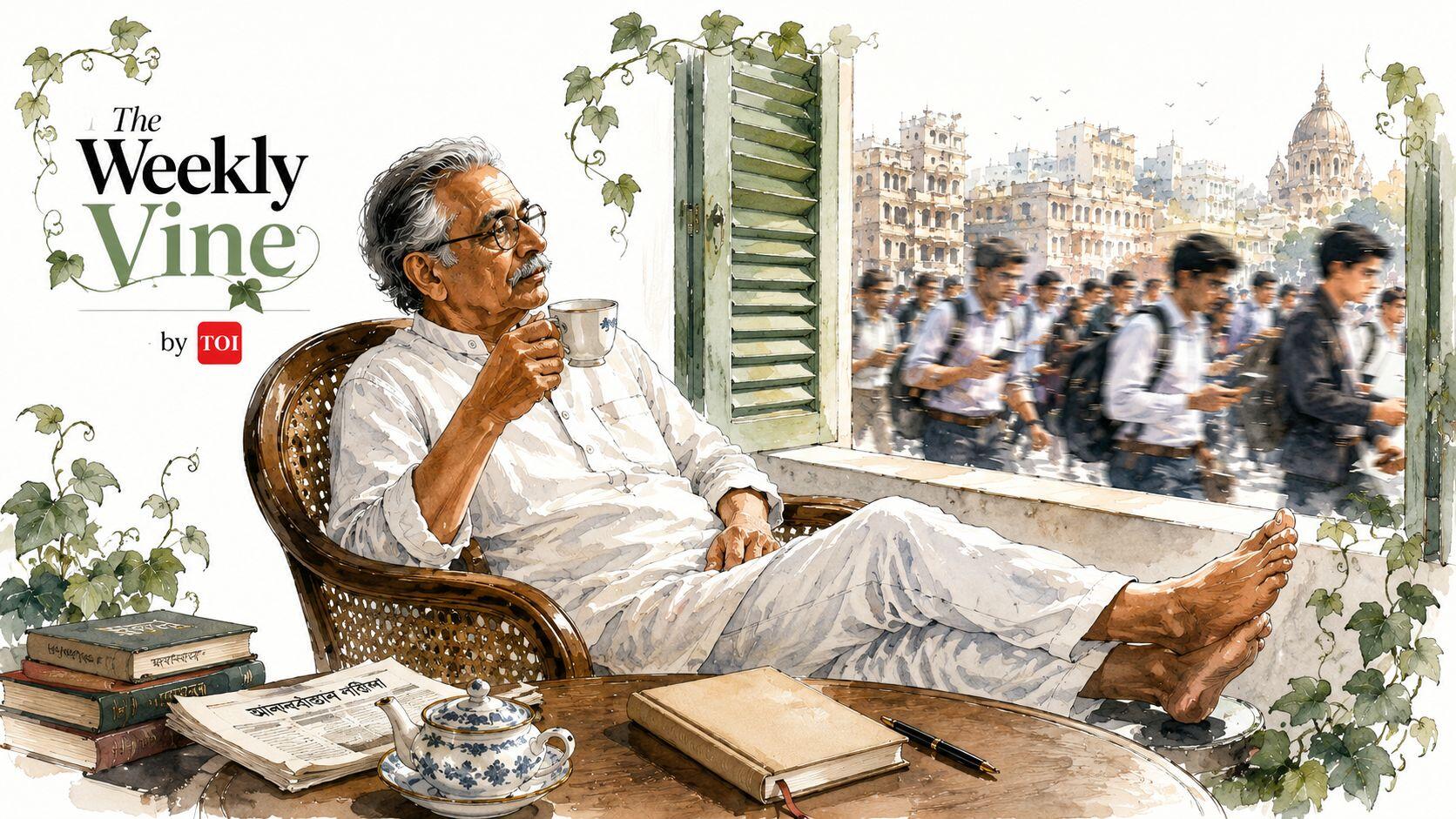
There was a time when a midlife crisis possessed a certain dignity. A gentleman bought a sports car he could not afford, developed strong opinions about single malts, took up golf with more enthusiasm than talent, and spent long afternoons gazing into the middle distance while claiming to be “thinking things through.”
Today he buys a journal.
Not a notebook, of course. A notebook is a humble object designed for taking notes. A journal arrives wrapped in aspiration. It is usually bound in linen, accompanied by testimonials, and costs enough to suggest that self-knowledge itself has been moved into the premium category. Somewhere between mindfulness and marketing, we appear to have concluded that wisdom can be acquired through imported paper.

Post Postscript
Word of the Week: Revolutionary
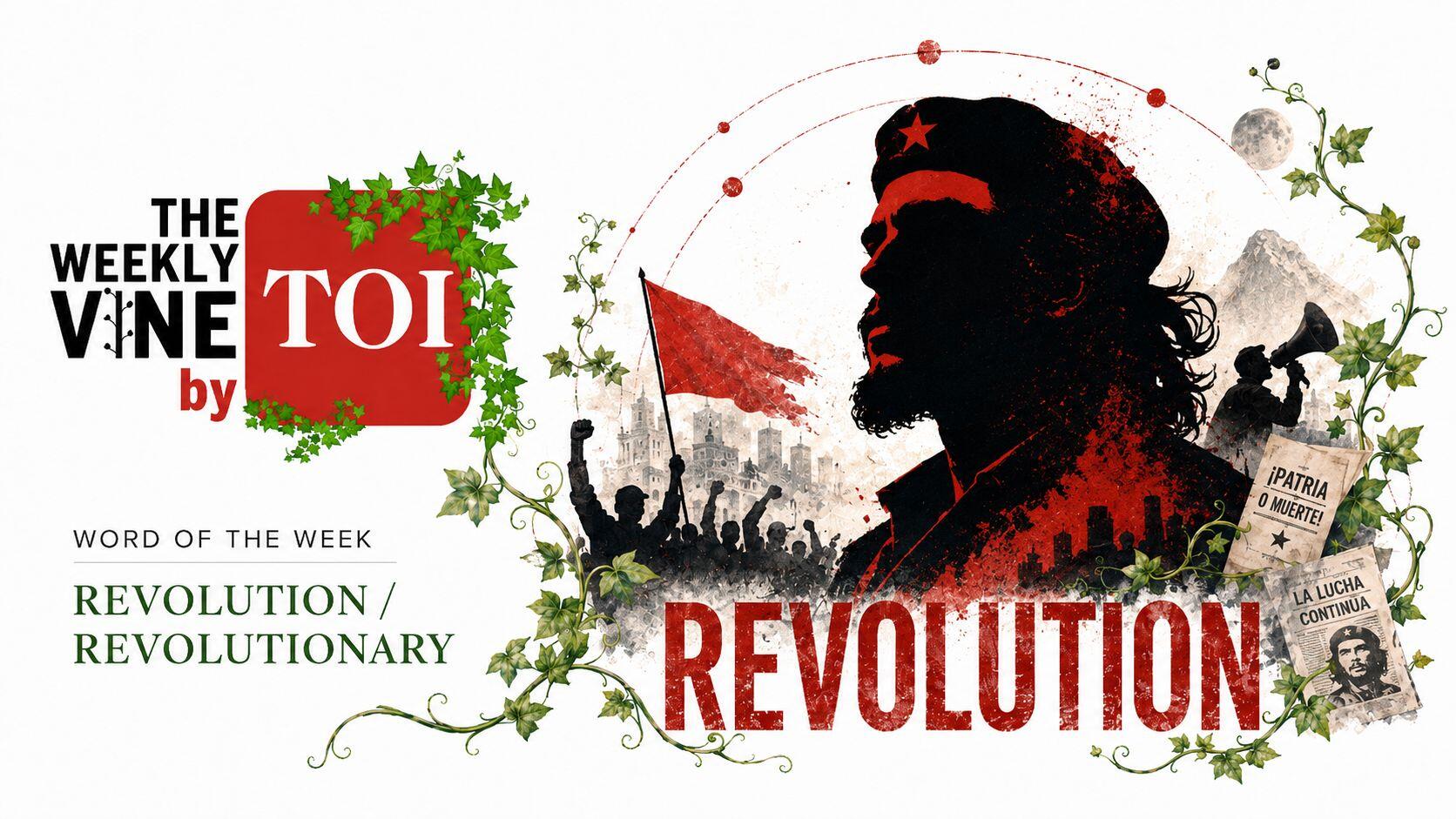
The word revolutionary comes from revolution, which comes from the Latin revolvere, meaning to roll back, turn again, or return. It first belonged to astronomy, describing planets and stars going round the heavens, which means the original revolutionary was not a man with a manifesto but Saturn completing an orbit.
That is the great cosmic joke. A word that once meant order, rhythm, and return eventually came to mean rupture, overthrow, and the remaking of history. Copernicus made the joke even better: his De revolutionibus was about heavenly revolutions, but it helped trigger the revolution that told mankind the Earth did not revolve around us.
In India, the word found its fiercest life in kranti, krantikari, and inquilab, where the revolutionary was not a shampoo, app, or startup pitch, but a young man walking to the gallows with a slogan. Today, of course, every generation gets the revolution it deserves. The old saying was that the revolution will not be televised. The modern version is that the revolution will be on Instagram Reels — assuming the revolutionaries can survive a few hours without air-conditioning, Wi-Fi, and a charging cable.
Every revolution promises to break the wheel; etymology quietly reminds us that it may simply be turning it.
Book of the Week
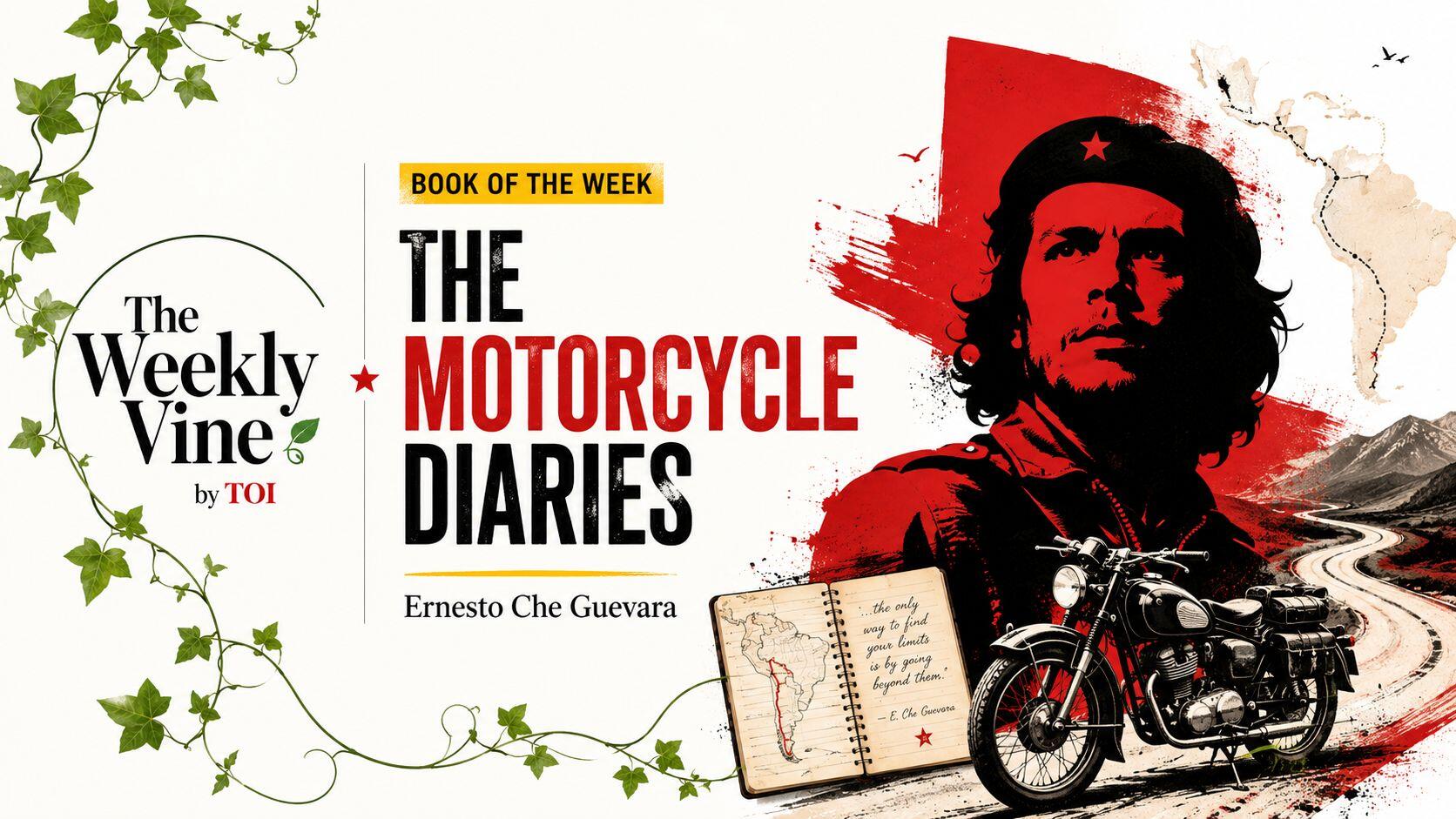
Speaking of revolutionaries, this week’s book of the week is The Motorcycle Diaries, Ernesto “Che” Guevara’s account of the 1952 journey he took across South America with his friend Alberto Granado.
Before Che became the poster on hostel walls, student rooms and revolutionary merchandise, he was a young medical student on a wheezing motorcycle, travelling through Argentina, Chile, Peru, Colombia and Venezuela. The journey exposed him to poverty, disease, inequality, indigenous dispossession and the hard geography of Latin American suffering. It is not yet the book of a hardened guerrilla. It is the notebook of a man slowly discovering that the world is arranged very badly.
That is what makes it compelling. The Motorcycle Diaries is less a revolutionary manifesto than the origin story of one. Somewhere between the road, the leper colonies, the mines and the mountains, Guevara begins to stop seeing Latin America as a collection of countries and starts seeing it as one wounded continent. The revolution does not arrive with a gunshot. It begins, fittingly, with a road trip — and usually ends in bankruptcy.
Disclaimer
Views expressed above are the author’s own.