
Did officials miss this? Why Bellingham’s England goal vs Norway should NOT have stood after bizarre camera cable incident | Football News

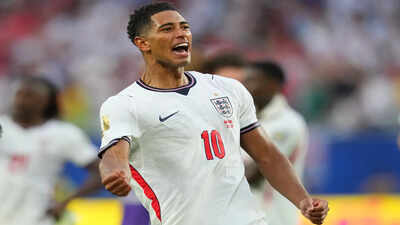
England’s FIFA World Cup 2026 quarter-final victory over Norway has been overshadowed by a controversial moment involving Jude Bellingham’s first-half equaliser. Footage circulating after the dramatic 2-1 extra-time win has sparked debate over a possible incident in the build-up to the goal, with questions now being raised over whether play should have been stopped under the IFAB Laws of the Game.
England fight back after Norway’s bright start
The quarter-final began with Norway carrying the momentum of their historic run to the last eight, and they were rewarded in the 36th minute. Andreas Schjelderup produced a superb finish from the left side of the penalty area to give Ståle Solbakken’s side a deserved 1-0 lead, putting England under pressure heading into the closing stages of the first half. The Three Lions thought they had found their response in first-half stoppage time. Goalkeeper Orjan Nyland launched a long goal kick towards midfield, where Harry Kane won possession before the move developed through Anthony Gordon. Gordon then slipped an excellent through ball into the path of Jude Bellingham, who took two touches before calmly finishing beyond Nyland to level the score at 1-1 in the 45+2nd minute.
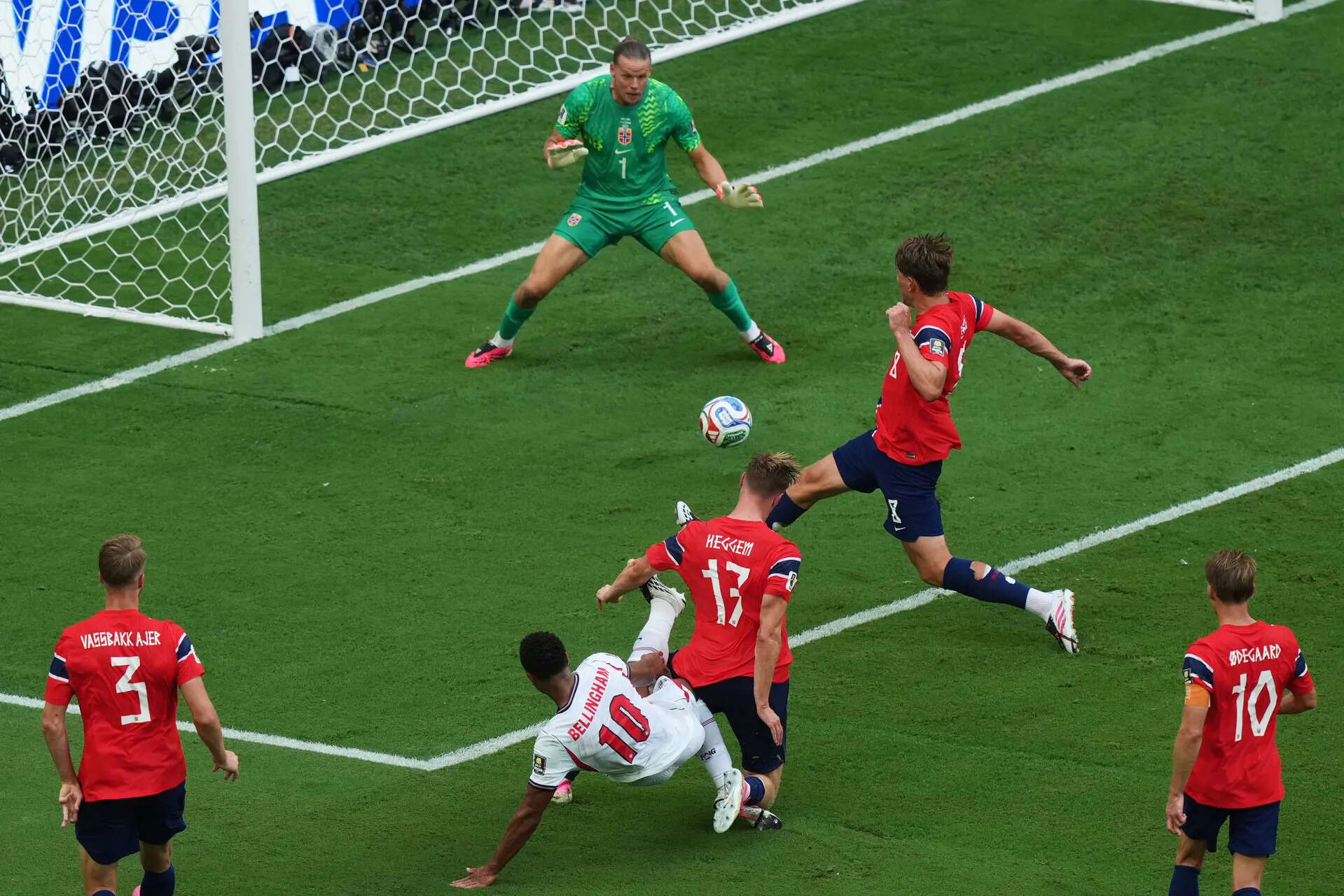
England’s Jude Bellingham (10) scores their first goal past Norway goalkeeper Oerjan Nyland (1) during the World Cup quarterfinal soccer match between Norway and England in Miami Gardens, Fla., Saturday, July 11, 2026. (AP Photo/Marta Lavandier)
At first glance, it appeared to be a brilliantly constructed equaliser. However, replays shown later raised a potentially significant question over the very beginning of the move.
The camera cable controversy
Footage broadcast by FOX Sports appeared to suggest that Nyland’s goal kick may have clipped one of the overhead Spidercam cables suspended above the pitch. The apparent contact seemed to alter the ball’s trajectory before it dropped into Harry Kane’s path, allowing England to regain possession and launch the attack that eventually resulted in Bellingham’s equaliser. Journalist Melissa Reddy later reposted the clip after the original FOX Sports video remained geolocked to viewers in the United States, bringing the incident to wider attention. Importantly, there remains no definitive evidence confirming that the ball actually struck the cable. Neither the match officials nor FIFA have officially stated that contact occurred. Nevertheless, the footage immediately became one of the biggest talking points of the match.
What do the Laws of the Game say?
According to the International Football Association Board (IFAB) Laws of the Game, if the ball strikes a ceiling or any fixture hanging over the field of play, including an overhead camera cable or wire, the referee must stop play. The correct restart in that situation is a dropped ball awarded to the team that last touched the ball at the point where contact with the fixture occurred. Former FIFA referee Mark Clattenburg, working as an analyst for FOX Sports during the World Cup, explained that if the ball had indeed struck the cable, the officials should have declared a dead ball and restarted play with a drop ball. However, such a decision would have depended on either the on-field officiating team or the VAR identifying the contact in real time. As no intervention occurred, play continued uninterrupted and Bellingham’s goal was allowed to stand.Norway’s frustration was evident after the incident. Manager Ståle Solbakken was seen engaged in a lengthy discussion with the match referee at half-time, while several Norway players appeared to point and gesture in protest as they reacted to the decision. However, neither Solbakken nor his players publicly confirmed the precise nature of their complaints.
Connected ball technology also comes into focus
The incident has also put the spotlight on the connected ball technology used at the 2026 FIFA World Cup. Each official match ball contains a microchip that sends real-time data to the VAR system, tracking movement, speed and touches to assist decision-making. The technology has already influenced major calls during the tournament, including Sweden’s goal against Tunisia and Croatia’s disallowed late equaliser against Portugal. Whether it detected any contact with the overhead cable in Miami remains unknown.
England march on despite the controversy
The debate over Bellingham’s equaliser did not end the drama. Norway thought they had reclaimed the lead in the 56th minute when Torbjørn Heggem found the net, only for VAR to disallow the goal after determining that Erling Haaland had fouled Elliot Anderson during the build-up.
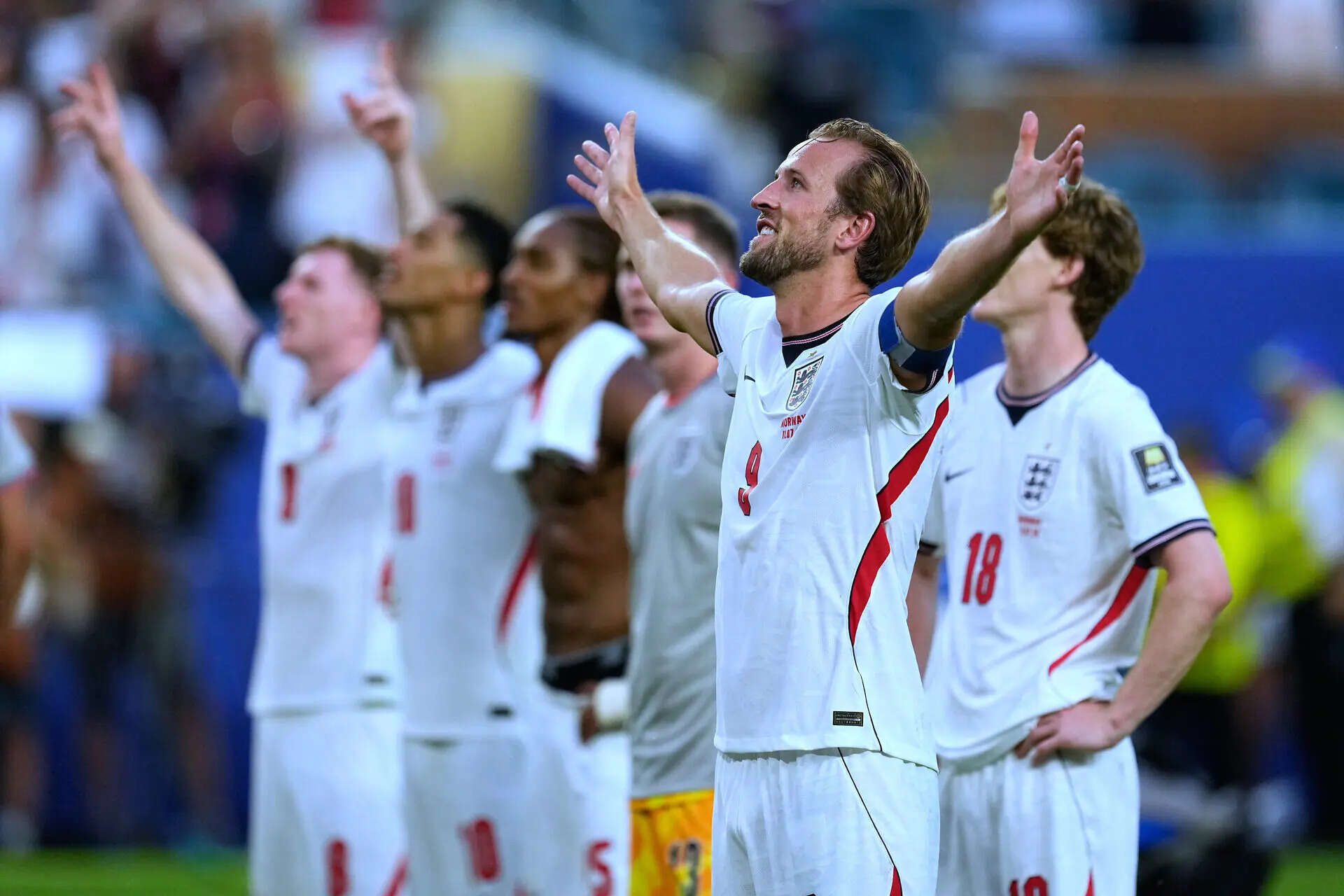
England’s Harry Kane (9) and other England players celebrate at the end of the World Cup quarterfinal soccer match between Norway and England in Miami Gardens, Fla., Saturday, July 11, 2026. (AP Photo/George Walker IV)
The match eventually went into extra time, where Bellingham struck again in the 93rd minute. Morgan Rogers’ long-range effort was parried into his path, allowing the Real Madrid midfielder to score his second goal of the night and seal a 2-1 victory. England’s win sends Thomas Tuchel’s side into the FIFA World Cup semi-finals, where they will face the winner of the remaining quarter-final between Argentina and Switzerland. Yet despite the result, much of the post-match discussion has centred on the controversial equaliser, with debate continuing over whether the apparent camera cable contact should have halted play before England’s leveller.