
China warns of extreme floods in desert regions due to early heatwave and heavy rainfall |
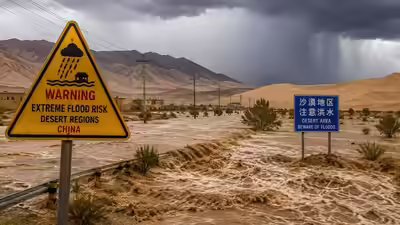
Across much of the world, deserts are associated with drought, dust, and an absence of water. Yet in China’s far western Xinjiang region, authorities are preparing for a very different challenge this summer. Areas better known for shifting dunes and dry riverbeds are now facing the prospect of significant flooding.The warning follows an unusually early flood event in the Taklamakan Desert, one of the largest deserts in Asia. Water has already spread into parts of the desert landscape weeks before such conditions would normally be expected. Officials say a combination of intense heat, heavier rainfall, and accelerated snowmelt in surrounding mountain ranges is altering the seasonal pattern that communities have become accustomed to.
Heatwave raises extreme flood risk in China’s desert regions
The timing has drawn attention. Flooding linked to snow and glacier melt is not unheard of in the region, but it usually develops later in the summer when temperatures reach their annual peak.This year, however, the heat has arrived much sooner. According to Reuters, temperatures in parts of Xinjiang were significantly above seasonal norms by mid-June, with some areas recording readings close to 38°C. Such conditions have increased the rate at which mountain snowfields and glaciers are melting.The region’s climate is naturally extreme, swinging between very cold winters and intensely hot summers. Even so, officials believe the speed at which temperatures have risen this year has played an important role in triggering the early flood conditions now being observed.
How glacier melt is driving flooding in the Taklamakan Desert
Although the Taklamakan is often pictured as a vast sea of sand, it is surrounded by major mountain systems. The Tianshan and Kunlun ranges act as important water sources, storing snow and ice during colder months before releasing meltwater into rivers and streams.According to a report by Reuters, rapid melting in these mountains has increased water flow into the Tarim River, China’s longest inland river. As volumes rose, water spread beyond its usual channels and moved into lower-lying desert areas.At the same time, parts of western and southern Xinjiang have experienced wetter conditions than normal. Some locations reportedly received rainfall totals far above their historical averages for early June, adding further pressure to river systems already carrying large amounts of meltwater.
Taklamakan Desert floods create short-lived water bodies
Images broadcast by Chinese media showed water moving across areas of desert terrain that are typically dry for most of the year. Such scenes can appear striking, particularly in a landscape known for its harsh and arid environment.Short-lived wetlands and patches of vegetation can emerge when floodwaters reach desert regions. Yet specialists caution against viewing these changes as permanent. As per Reuters, the Taklamakan’s location deep within the Asian continent means moisture is quickly lost through evaporation.The surrounding mountains also limit the movement of humid air into the basin. As a result, any newly formed water bodies are unlikely to remain for long once temperatures stay high and floodwaters begin to recede.
Extreme flood risks threaten infrastructure in western China
While additional water may briefly benefit some local ecosystems, authorities are focusing on the risks associated with large-scale flooding.According to Reuters, Chinese meteorological officials have warned that transport links and energy infrastructure could face disruption if flood conditions intensify. Roads, railway lines, and oil and gas facilities are among the assets considered vulnerable in remote parts of the region.Residents and travellers have been urged to monitor official forecasts and safety notices throughout the summer. The warning reflects growing concern that weather patterns in parts of western China are becoming less predictable, creating challenges for communities that depend on stable seasonal conditions.For now, officials remain focused on preparedness. In a region where water is often scarce, the prospect of too much arriving too quickly has become the unexpected concern of the season.