
Meet the Spinner Shark: This aerial hunter spins through the air while hunting fish |
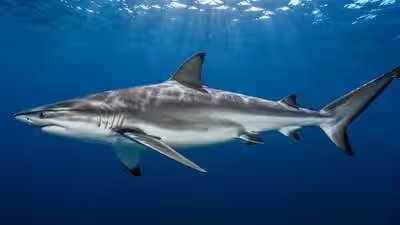
Spinner Sharks are among the most spectacular hunters in the ocean. Instead of overpowering prey, Spinner Sharks hunt by swimming quickly through groups of fish while spinning through the water. The momentum often takes them completely out of the water, where they continue spinning before crashing back into the water. This remarkable hunting display gave the species its name.Despite looking similar to the blacktip Shark, the Spinner Shark is a different species with its own distinctive features. Found in warm coastal waters across the world, it spends its life constantly in search of fish. According to the Florida Museum, there have been 16 recorded unprovoked attacks by spinner sharks on humans but no fatalities have been reported.
Spinner Shark: Size, habitat, diet and other remarkable adaptations
Key features and remarkable adaptations of the Spinner Shark
1. Hunting behaviour
Spinner Sharks earned their name from a remarkable hunting strategy. They swim rapidly through dense schools of fish while rotating along the length of their bodies. As they snap at prey, the speed often carries them completely above the surface, where they continue spinning before falling back into the sea. These aerial spins can reach around 20 feet above the water and remain one of the most spectacular feeding displays among sharks.
2. Size
An adult Spinner Shark usually grows to about 6.4 feet in length, although the largest recorded individuals have exceeded 9 feet. Females generally grow larger than males. Compared with many coastal sharks, the Spinner Shark has a slim, streamlined body.
3. Habitat
Spinner Sharks live in tropical, subtropical and temperate seas around the world. They are commonly found in shallow coastal waters, continental shelves and offshore regions down to about 100 metres. During spring and summer, many populations move closer to the coast to feed and reproduce before returning offshore.
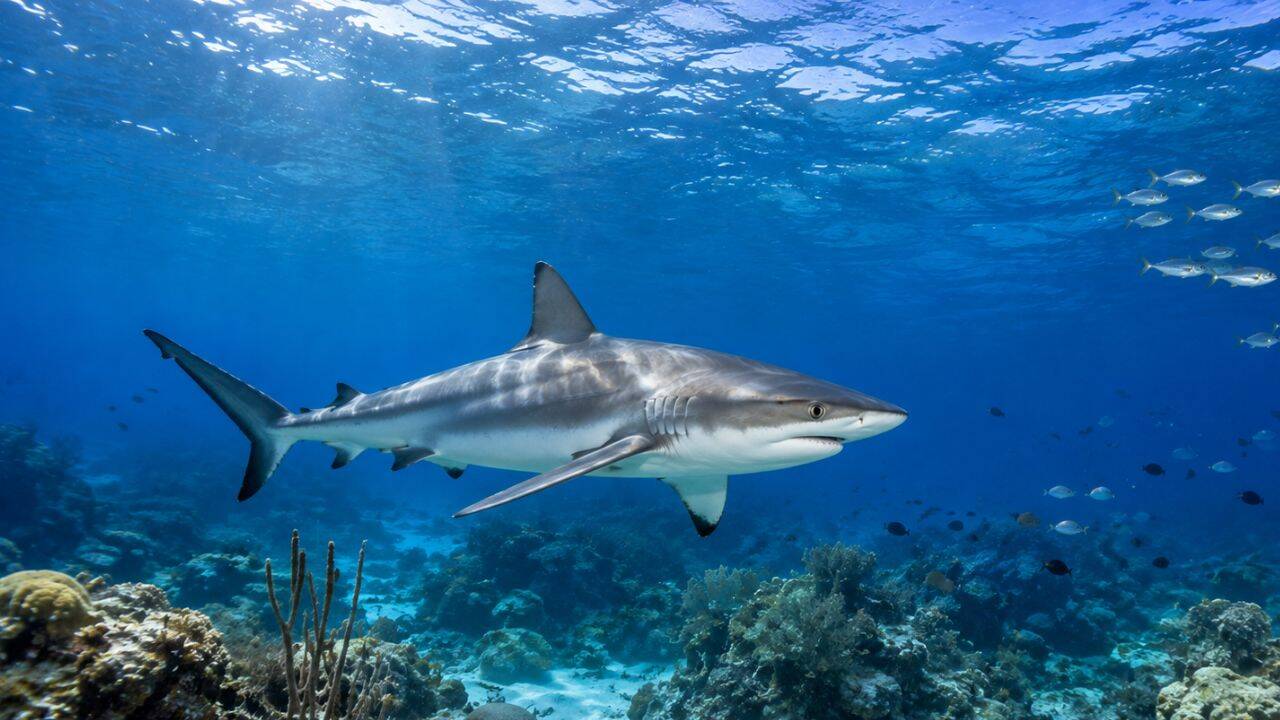
PC: AI Generated
4. Distribution
This species has one of the widest ranges. It occurs in the western Atlantic from the eastern United States to Brazil, across the Mediterranean and eastern Atlantic, across the Indo-Pacific, extending north to Japan and south to Australian waters.
5. Diet
Spinner Sharks mainly feed on small schooling fish such as sardines, anchovies, herrings, mullet, jacks and grunts. They also eat squid, cuttlefish, octopus and small rays when available. Their narrow teeth are designed for gripping slippery prey rather than tearing apart larger animals.
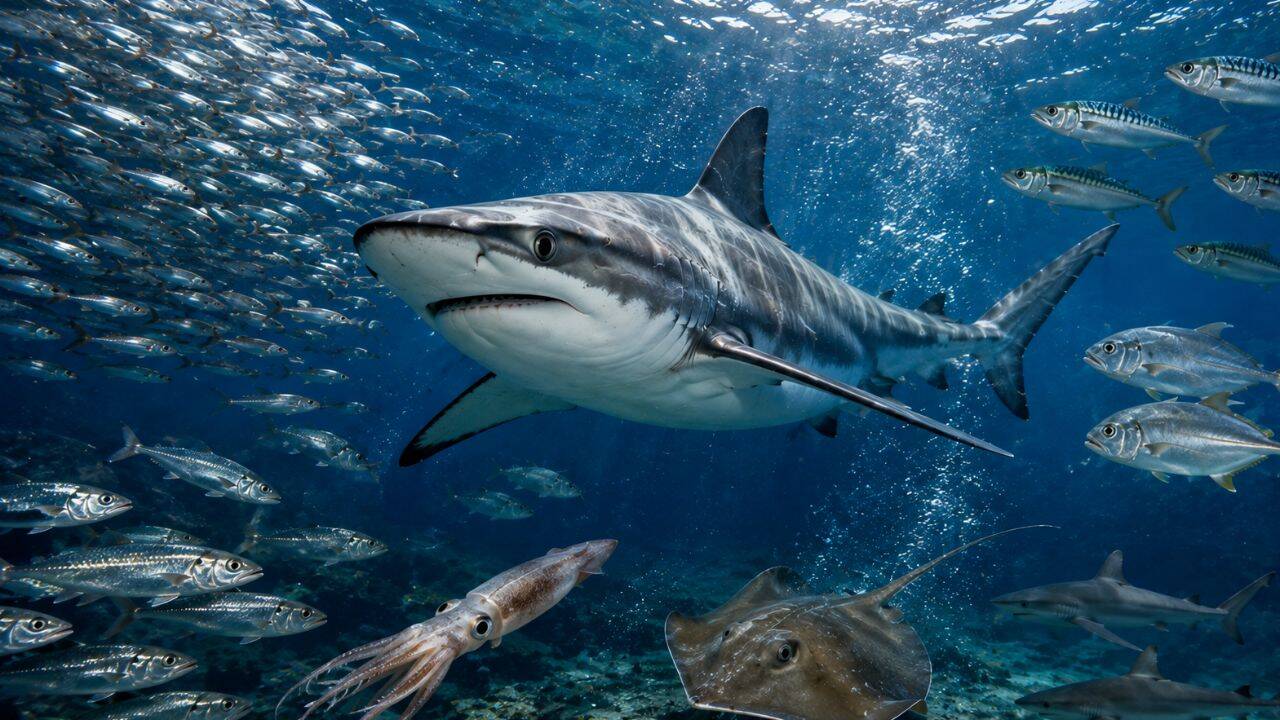
PC: AI Generated
6. Appearance
The Spinner Shark is often mistaken for the blacktip Shark because both have dark fin markings. Adults can usually be identified by the black tip on the anal fin, a feature absent in blacktip Sharks. It also has a longer, pointed snout and a slimmer body.
7. Reproduction
Spinner Sharks give birth to live young after a pregnancy lasting about 11 to 15 months. Females usually produce 3 to 20 pups, although litters of seven to eleven are more common. Newborn Sharks move into shallow coastal nursery areas where they remain until they become large enough to avoid many predators.
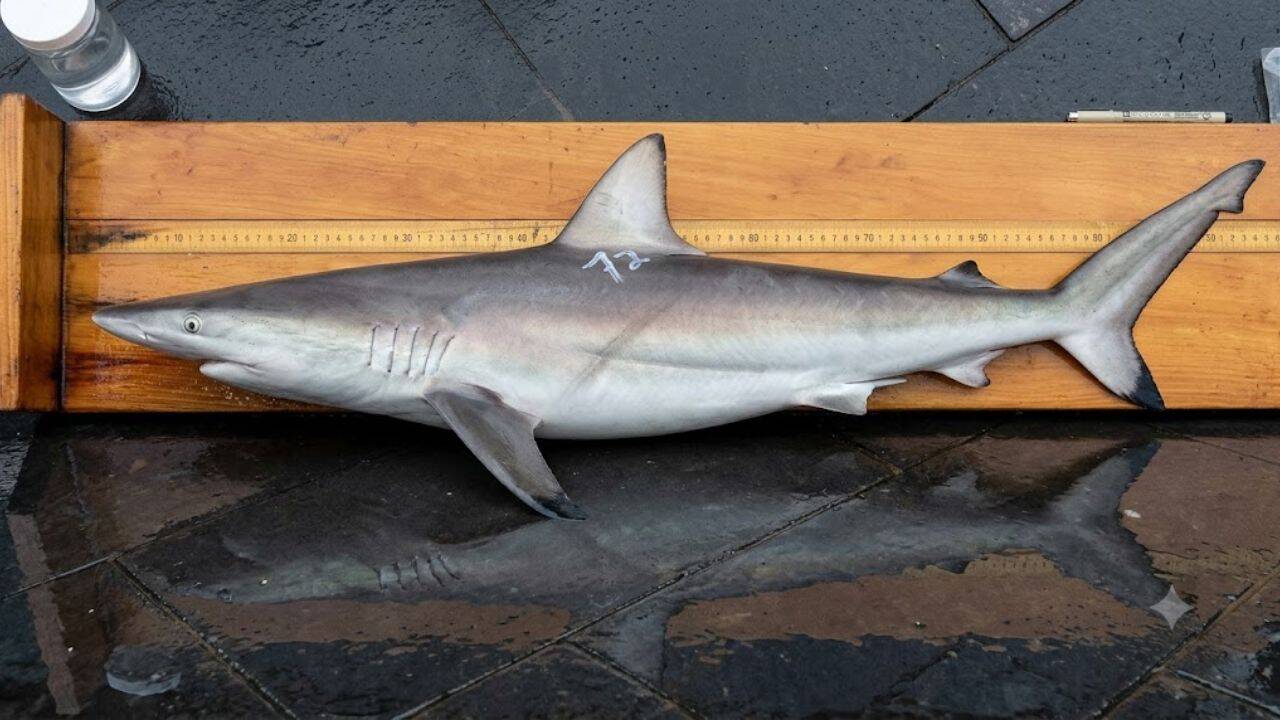
PC: SEFSC Pascagoula Laboratory
8. Conservation status
The International Union for Conservation of Nature (IUCN) lists the Spinner Shark as Vulnerable. It is regularly caught in commercial and recreational fisheries. Because juveniles depend on shallow coastal nursery grounds, habitat loss and increasing coastal development also place additional pressure on wild populations.