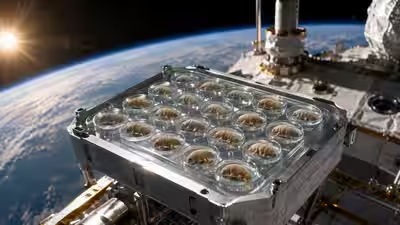
In 2007, ESA exposed 3,000 tardigrades to space vacuum and solar UV radiation in low Earth orbit; 68% revived when the microscopic animals were rehydrated |

In September 2007, the European Space Agency launched roughly 3,000 tardigrades into low Earth orbit aboard the Biopan-6 platform on the FOTON-M3 mission. Known as water bears, these microscopic animals were dried into a dormant state before being exposed directly to the vacuum of space, alongside doses of solar and cosmic radiation, for ten days…
Read More

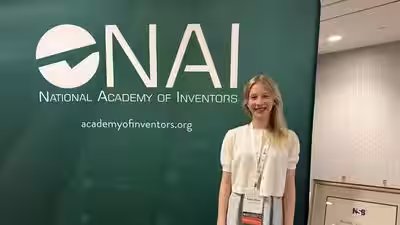
Meet Kaia Minn, the 13-year-old Massachusetts inventor who turned discarded orange peels into biodegradable seed pods for reforestation |

Kaia Minn at the National Academy of Inventors conference. Image Credit: kaiaminn.com A discarded citrus peel is not the sort of thing most people would associate with restoring forests. But for 13-year-old Massachusetts inventor ‘Kaia Minn,’ it became the starting point for a simple idea with potentially far-reaching environmental uses. Minn has developed a ‘biodegradable…

Read More

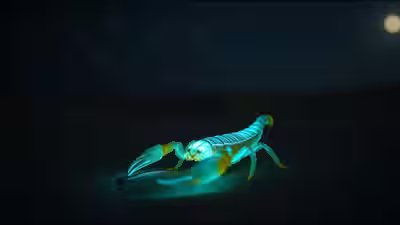
In 1945, an Arizona professor started hunting glowing scorpions at night; decades later his laboratory had become a major centre for venom research |

​Representative Image of fluorescent scorpions glowing across a desert landscape after dark (AI-generated image) In 1945, an Arizona State University professor began wandering the desert at night, hunting scorpions that glowed under his black light, and few people around him understood why. That professor, Herbert L Stahnke, was already the nation’s leading authority on scorpions…

Read More

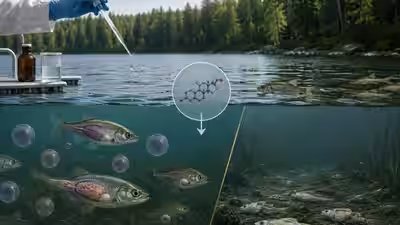
In 2001, scientists began adding 5 to 6 nanograms per litre of synthetic estrogen to an Ontario lake; after 2 seasons its minnow population collapsed

Representative Image (AI-generated) A tiny concentration of a synthetic hormone was enough to trigger a dramatic ecological change in a remote Ontario lake. In 2001, scientists began adding the synthetic estrogen 17α-ethynylestradiol (EE2) to Lake 260 in northwestern Ontario, maintaining concentrations of about 5 to 6 nanograms per litre. The experiment continued for seven years,…

Read More

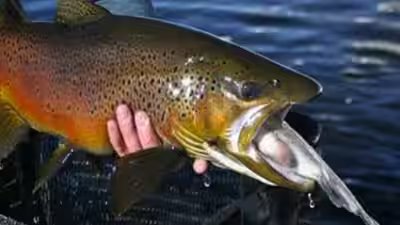
In 2003, crews began removing non-native fish from the Grand Canyon; by 2006 rainbow trout’s share of the catch had fallen from about 90% to under 10%

In the depths of the Grand Canyon, scientists were trying to give native fish a better chance of survival, by taking other fish out of the Colorado River. A four-year fish-removal experiment conducted between 2003 and 2006 dramatically changed the composition of fish being caught in one section of the river. According to a 2011…

Read More

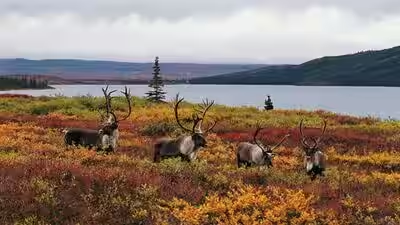
2,800+ wolves killed, nearly $10 million spent and 15 caribou herds still at risk: Why scientists say British Columbia is targeting the wrong problem

Since 2015, British Columbia has killed 200-300 wolves annually to help endangered caribou populations recover. Recently, the provincial government has proposed extending its decade-long wolf cull program by five more years in areas that are home to 15 declining woodland caribou herds. But according to scientists, the deforestation, not the wolves, is the main driver…

Read More

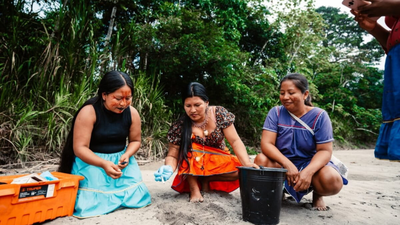
Meet the ‘Turtle Women’ of Amazon: 7 Indigenous women are bringing vulnerable river turtles back from the brink after releasing 208 baby turtles into the wild |

Seven Indigenous Siekopai women in Ecuador’s Amazon are using ancestral knowledge, modern technology and community-led conservation to give vulnerable river turtles a better chance of survival. Known as the Tari Nomiowa’i, or “Turtle Women”, the group patrols the banks of the Aguarico River in search of charapa turtle nests, carefully collects eggs threatened by flooding,…

Read More

Your AI may soon be able to pay for things through UPI without asking every single time: Here is how India plans to control it

India’s digital payment journey has evolved from passwords, PINs and OTPs to fingerprints and facial authentication, making transactions faster and more seamless. Now, with AI, the next step could be completely hands-free payments, where systems recognise users, assess transactions and authenticate payments almost invisibly.The country may allow AI agents to make small UPI payments without…

Read More

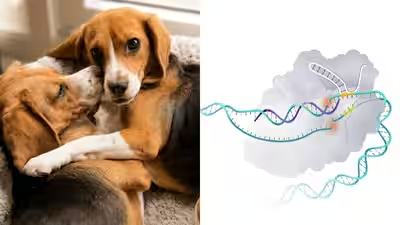
Researchers edited 25 beagle embryos to remove a major dog allergen; two pups born in 2024 produced no detectable Can f 1 and did not trigger one allergic founder’s skin-prick test

Researchers tested saliva and dander from the gene-edited dogs and found no detectable Can f 1 protein. The resulting 25 reconstructed embryos were implanted into a surrogate beagle, which eventually gave birth to Alfie and Bailey. Dogs are often called humans’ best friend, but for people with dog allergies, living with a canine companion can…

Read More

Quote of the day by Richard Feynman: “To every man is given the key to the gates of heaven. The same key opens the gates of…” – a powerful reflection on choice and consequences |

Quote of the day by Richard Feynman (Image: Wikipedia) Some of the most memorable lines are powerful precisely because they manage to say something genuinely complicated in just a few words. This one, often credited directly to the physicist Richard Feynman, is a genuine example. “To every man is given the key to the gates…

Read More