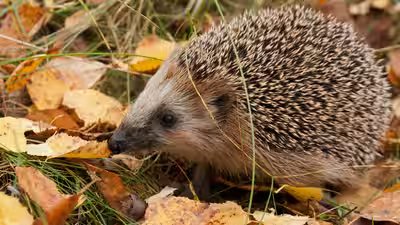
In 1885, New Zealand released European hedgehogs as garden pest killers; 140 years later, DOC calls them a major threat to native wildlife and one can empty an endangered tern colony of nesting birds

European hedgehog (Image Credit: Canva) What was once seen as a useful garden helper in New Zealand has become an unexpected threat to some of the country’s most vulnerable wildlife. European hedgehogs were deliberately introduced to New Zealand in the 19th century, with acclimatisation societies releasing them in the hope that they would help control…
Read More

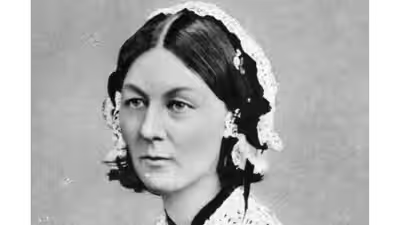
Quote of the day by Florence Nightingale: “So never lose an opportunity of urging a practical beginning, however small” |

Florence Nightingale, widely remembered as the “Lady with the Lamp”, became one of the most influential figures in the history of nursing and healthcare. Born in 1820, she challenged the expectations placed on women of her time and devoted her life to improving the treatment of sick and injured people. Her work during the Crimean…

Read More

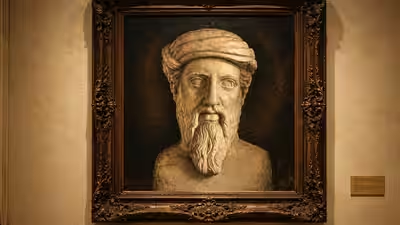
Quote of the day by Pythagoras: “Of all the rest of mankind, make him your friend who distinguishes himself by his virtue” |

Pythagoras is best known today for the mathematical theorem that bears his name, but the ancient Greek thinker was also associated with a broader philosophical tradition that explored morality, discipline, friendship and the pursuit of a virtuous life. One saying attributed to him offers a timeless reflection on the people we choose to keep close:…

Read More

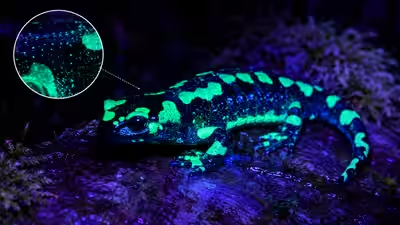
Scientists found fire salamanders glow blue-green under ultraviolet light, with their skin glands producing fluorescent secretions |

At first glance, the fire salamander appears much as it always has: black skin broken by irregular yellow markings, a pattern long associated with the species’ chemical defences. But under ultraviolet light, that familiar appearance changes. According to the 2026 study published in the Royal Society, titled ‘Glandular biofluorescence in fire salamanders (Salamandra salamandra): first…

Read More

Henrietta Lacks died at 31 in 1951, but her cells kept multiplying; the discovery that transformed medicine and helped save millions of lives

Henrietta Lacks (Image Credit: Wikipedia) In 1951, Henrietta Lacks, a 31-year-old African-American woman, was diagnosed with cervical cancer at Johns Hopkins Hospital in Baltimore. During her treatment, doctors removed tissue from her tumour for research without telling her or obtaining her permission. The cells behaved unlike any human cells scientists had successfully maintained before: they…

Read More

Solar Storm Forecasts: New model may improve solar storm forecasts

Representative image of CME (Image credit: Nasa) BENGALURU: Scientists have developed a computer model that could help predict how quickly powerful eruptions from the Sun will travel towards Earth, potentially improving warnings for disruptions to satellites, power grids and communication systems.The three-dimensional model was developed by researchers at the Indian Institute of Astrophysics (IIA), an…

Read More

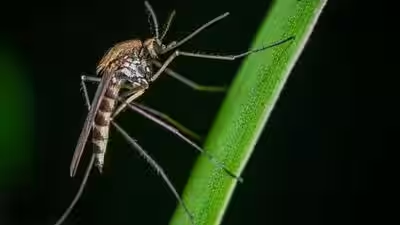
A dose of insecticide killed 97.91% of mosquitoes that spread dengue; a tiny fraction that survived has researchers in Delhi worried

While India is a country filled with annual cultural traditions, a natural one that returns every year without fail is the buzzing around the bed as soon as the monsoon rains begin pelting the ground. Most of the mosquitoes that entered homes and offices were removed with the help of α-cypermethrin, a widely used pyrethroid…

Read More

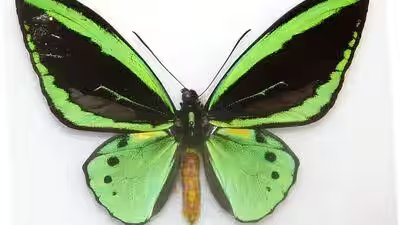
Butterfly wings inspire a breakthrough solar panel design that could boost electricity production by 66% |

Ornithoptera priamus. Image Credit: Robert Nash/Curator of Entomology Ulster Museum/Wikipedia Butterfly wings could offer a unique solution to one of the biggest problems faced by solar panels, which is ‘sunlight that bounces away before it can be used.’ A study published in ‘Solar Energy’ explored how the tiny structures found on the black scales of…

Read More

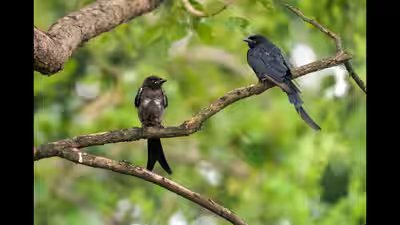
In 1935, black drongos were introduced on Rota to control crop pests; decades later the aggressive birds spread to Guam and became a threat to native birds

A juvenile and an adult Black Drongo perch on a tree branch (ANI Photo) In 1935, the Japanese South Seas Development Company made a decision that would have repercussions for Mariana Islands’ ecosystems for nearly 100 years. In search of a natural method for controlling agricultural pests, they imported black drongos (Dicrurus macrocercus) from Taiwan…

Read More