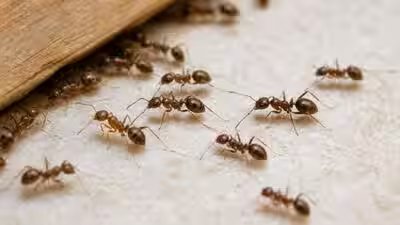
California scientists poisoned invasive Argentine ant colonies with two common baits; one sent workers roaming before death, the other made them stop searching for food and cluster near water

Argentine ants are invasive ants commonly found in homes and gardens in Southern California Seeing more Argentine ants after putting out pesticide bait may not mean the treatment has failed. A new University of California, Riverside, study found that the chemicals can change the ants’ behaviour, with the response varying depending on the type of…
Read More

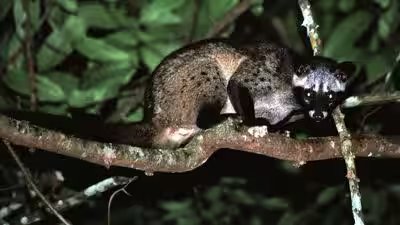
Coffee beans found in Civet poop used to make one of the world’s most expensive Kopi Luwak coffee which costs thousands of dollars per kilogram |

Asian palm civet. Image Credit: Bernard DUPONT/Wikipedia Kopi luwak is one of the world’s most unusual coffees because its production begins inside the digestive system of an animal. The coffee is made from beans eaten and later excreted by the ‘Asian palm civet,’ a small mammal found across parts of South and Southeast Asia. The…

Read More

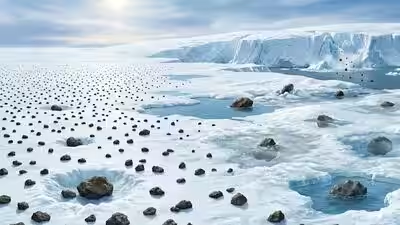
Antarctica holds more than 60% of the world’s meteorites, but warming could make thousands disappear into the ice |

Antarctica holds more than 60% of the world’s meteorites, but warming could make thousands disappear into the ice (PC: AI Generated) More than 60% of all meteorites ever found on Earth have been recovered from Antarctica, where dark rocks can remain exposed on bright blue-ice fields for thousands of years. Now, climate warming is putting…

Read More

Dutch plant turns 420,000 tonnes of poultry manure into renewable electricity for 45,000 households while recycling the leftover ash into fertiliser |

A Dutch plant is turning a huge agricultural waste stream into renewable electricity and fertiliser. BMC Moerdijk in the Netherlands processes around 420,000 tonnes of poultry manure each year, using thermal conversion to generate electricity for the farms supplying the manure and enough additional power for around 45,000 households. The process does not end after…

Read More

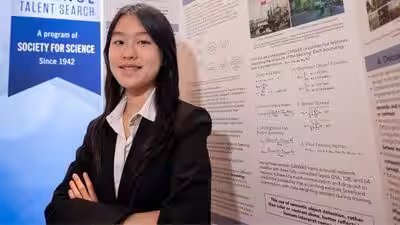
Meet Ella Lu, the 17-year-old North Carolina student who taught AI to recognise how Impressionist painters arranged objects in their paintings |

Ella Lu. Image Credit: Chris Ayers/Society for Science Ella Lu, a 17-year-old student from Chapel Hill, North Carolina, has found a way to bring two different interests of ‘art’ and ‘computer science’ together. As a senior at the North Carolina School of Science and Mathematics(NCSSM), Lu developed a system that can study how objects are…

Read More

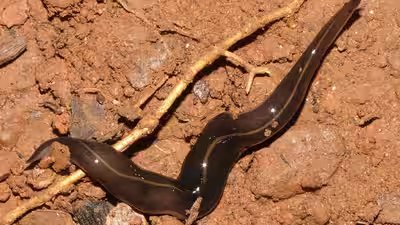
In the 1990s, a predatory flatworm was released in Samoa to control giant African snails; it later became linked to the decline and extinction of native island snails

In the 1990s, a predatory flatworm was released in Samoa to control giant African snails An aggressive predatory flatworm introduced to Pacific islands during the 1990s to control agricultural pests has pushed native land snail species toward extinction, turning a planned biological control program into an ecological disaster. The New Guinea flatworm (Platydemus manokwari) was…

Read More

In 1937, Australian scientists released infected rabbits on an island to test a virus that would later transform rabbit control across the continent |

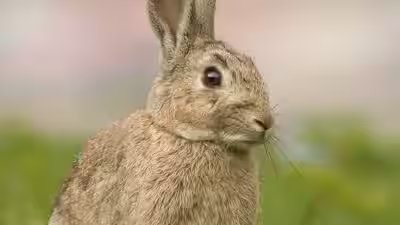
A European rabbit in Tasmania. Image Credit: JJ Harrison/Wikipedia In 1937, Australian scientists took an unusual step in the fight against one of the country’s most destructive pests known as ‘rabbits.’ They released rabbits carrying ‘myxoma virus’ on Wardang Island, off South Australia, to see whether the disease could spread naturally. The experiment was part…

Read More