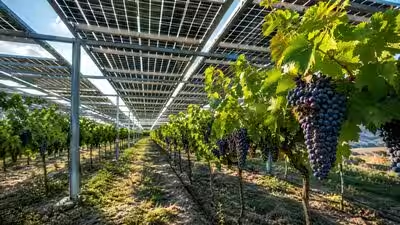
Solar panels were installed above grapevines in Italy’s Puglia, and the harvest revealed a surprising 277% jump in grape production |

In a vineyard in Italy’s Puglia region, rows of grapevines grew beneath something more usually associated with power stations than agriculture: photovoltaic panels. The arrangement changed the amount of sunlight reaching the vines, but it also altered what was happening much closer to the ground. Soil stayed wetter, temperatures were less extreme and the air…


Read More

American scientists are building a $12 million ‘digital brain’ for drones based on how insects make decisions with limited information |

A $12 million research project at Penn State is trying to give drones a new way of making decisions, drawing inspiration from the small brains of insects and other animals. Funded by the US Army’s Army Research Laboratory, the project aims to develop an onboard sensing system that can pick out useful information without sending…

Read More

Meet Aniket Sarkar: The 13-year-old 3M Young Scientist who built a low-cost system to capture water from dry air for farmers |

PC: 3M Young Scientist Lab Dry air is not completely without water. There is moisture suspended in the atmosphere even when rainfall is scarce, and 13-year-old Aniket Sarkar wanted to find out whether some of it could be recovered for agriculture. His idea led to a low-cost atmospheric water capture system built with ordinary materials,…

Read More

Florida Atlantic University received $600,379 grant to develop 3D-printed adsorbents that remove phosphorus and combat harmful algal blooms |

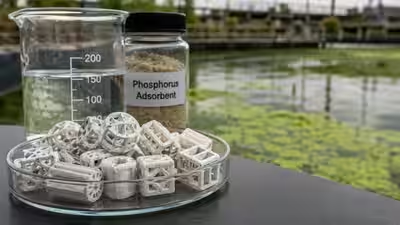
Harmful algal blooms can turn freshwater ecosystems into dangerous environments, but researchers at Florida Atlantic University are developing a novel way to tackle one of the nutrients that helps drive them, excess phosphorus. Rather than removing algae after a bloom has already formed, the team is developing 3D-printed adsorbent structures designed to capture phosphate directly…

Read More

Scientists discovered four snakes curled together in a burrow for 38 million years as the volcanic ash preserved their remarkable fossils |

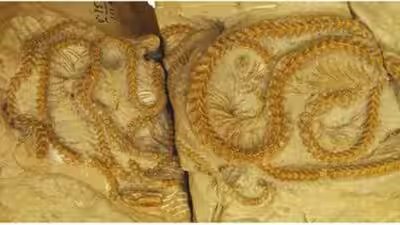
Overview of Hibernophis breithaupti (UW11120 on two blocks), showing holotype (UW-11120-A) and paratype (UW-11120-B) specimens as exposed on the surface. Image Credit: Zoological Journal of the Linnean Society A snake fossil discovery in Wyoming has given palaeontologists an unusually close look at the lives of these ancient reptiles. Four complete skeletons belonging to a newly…

Read More

For the first time in history, astronauts use portable X-ray technology in space that could pave the way for future Moon and Mars missions |

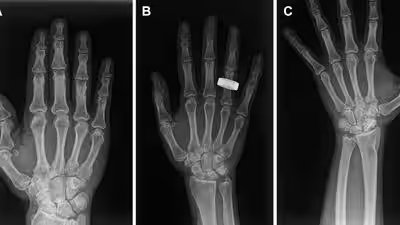
Representative preflight, in-flight, and post-flight hand radiographs. Radiographs of the hand were acquired (A) preflight by a crew member, (B) in-flight on day 1 after launch (L+1) by a crew member, and (C) post-flight by a non-crew operator using the same imaging protocol. Image Credit: Radiological Society of North America(RSNA)​ The first X-rays taken in…

Read More

Tasmania spent 28 years removing invasive carp from two lakes; after 49,301 fish were taken out, the state declared carp functionally eradicated and trout began bouncing back

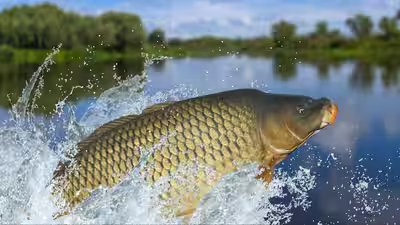
Invasive Species: Why Are Asian Carp a Problem? An intensive 28-year eradication campaign has eliminated common carp from two major Tasmanian lakes, achieving what fisheries experts around the world once considered almost impossible in a large, open freshwater system. The Tasmanian Inland Fisheries Service (IFS) has officially declared European carp (Cyprinus carpio) functionally eradicated from…

Read More

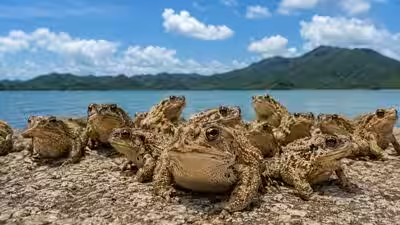
In 1978, just 10 to 15 cane toads were moved to Ishigaki Island. Decades later, their population increased to 20,000 with surprising evolutionary change |

On Ishigaki Island, cane toads have been living in conditions quite different from those faced by the populations from which they came. The island is warm, wet and separated from mainland habitats, and the animals introduced there in the late 1970s have now had several decades to establish themselves. When scientists compared these Japanese toads…

Read More

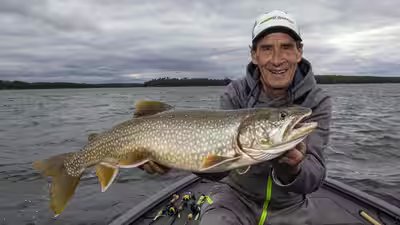
In 2006, Idaho launched a bounty-and-netting war on invasive lake trout; a decade later adult numbers were down 64% and Lake Pend Oreille’s kokanee had rebounded

An aggressive campaign using commercial nets and angler bounties helped turn around a decade-long fight against non-native predators in northern Idaho’s largest lake. By 2016, ten years after the Idaho Department of Fish and Game (IDFG) began its suppression programme on Lake Pend Oreille, the number of adult lake trout had fallen by 64 per…

Read More