In 1978, just 10 to 15 cane toads were moved to Ishigaki Island. Decades later, their population increased to 20,000 with surprising evolutionary change |
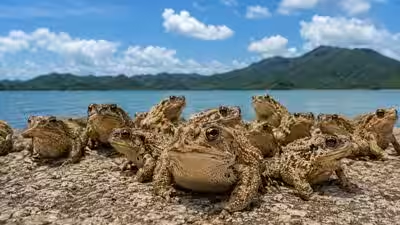
On Ishigaki Island, cane toads have been living in conditions quite different from those faced by the populations from which they came. The island is warm, wet and separated from mainland habitats, and the animals introduced there in the late 1970s have now had several decades to establish themselves. When scientists compared these Japanese toads with populations elsewhere, the difference was visible before any measurements were taken. The Ishigaki animals were generally larger, but their bodies were not simply scaled-up versions of their relatives. Their heads, limbs and other features had shifted in proportion too. For evolutionary biologists, the small island population offers a useful glimpse of how quickly an introduced species can change after entering an unfamiliar environment.
Japan’s cane toads began with just a handful of animals
The cane toad, Rhinella marina, has travelled widely with human help. Its original range lies in parts of northeastern South America, but attempts to use it against agricultural pests carried the species to new parts of the world. Some introductions failed. Others produced populations that proved remarkably persistent.According to the research published in PLOS One, titled ‘Methods for invasive species control are transferable across invaded areas’ revealed Japan received cane toads in 1978, roughly 10 to 15 individuals from the Daito Islands were brought to Ishigaki Island. It was a small founding group, but the population took hold and likely grew to 20,000 individuals. Ishigaki, part of Japan’s southern Ryukyu island chain, offered a climate in which the amphibians could breed and feed throughout much of the year.The descendants of those first animals now occupy a much larger area of the island. Their history is unusually well defined, too. Because the population was founded relatively recently and came from a known source, it gives scientists a chance to look for changes that appeared over a comparatively short evolutionary period. That is where the body measurements become interesting.
The Japanese toads were heavier than their Australian counterparts
As reported, the difference was clearest in body mass. Adult cane toads from Ishigaki weighed about 6.7 ounces on average, compared with around 4.8 ounces among the Australian animals used for comparison.Length showed a smaller but still measurable difference. Ishigaki adults averaged roughly 4.8 inches from snout to the rear of the body, while Australian toads averaged about 4.4 inches.Weight by itself can be a slippery measurement. An animal’s recent meals, access to water and general condition can all affect it. Length is less easily changed from one day to the next, so the fact that the Japanese animals were longer as well made the contrast more difficult to explain simply as a matter of temporary body condition.The study involved 80 adult cane toads collected on Ishigaki. Their measurements were compared with animals from Australia, Hawai’i and French Guiana, allowing the researchers to look beyond a single population.
The Ishigaki toads developed a evolutionary changes
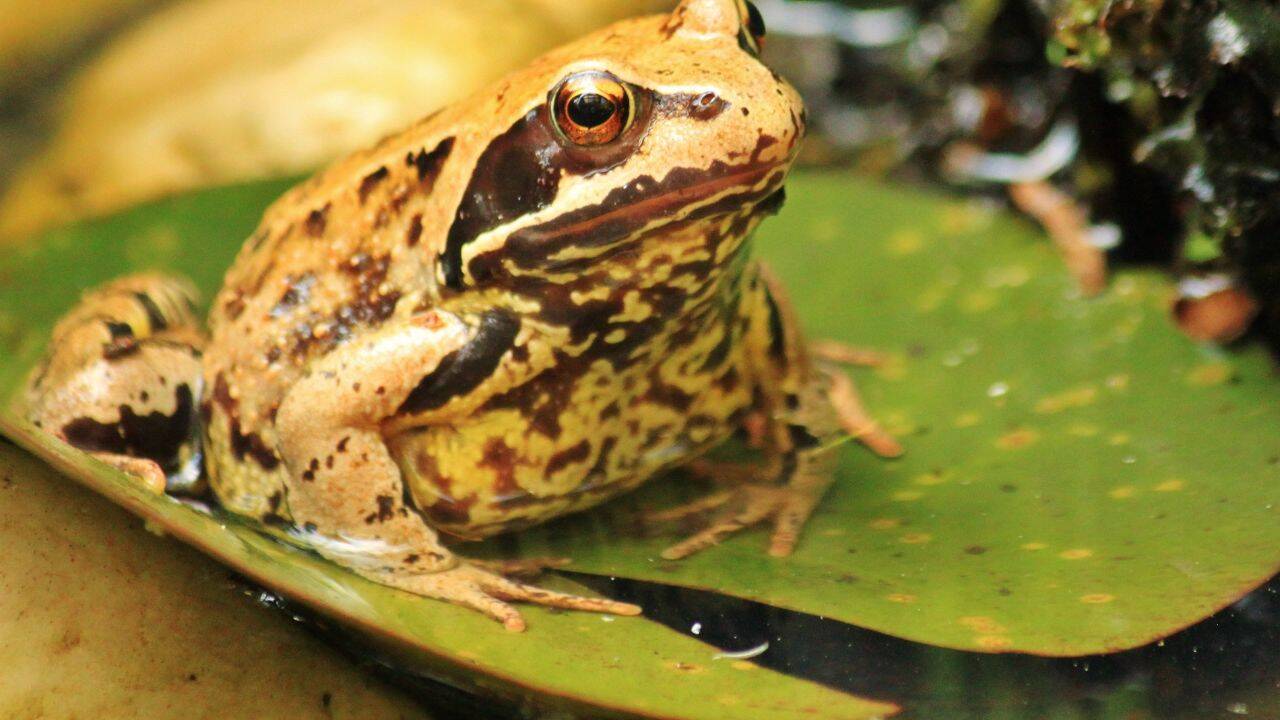
A larger animal would normally be expected to have larger body parts. That makes it difficult to tell whether a population has genuinely evolved a different body shape or whether everything has simply become bigger together. The researchers therefore adjusted their comparisons for overall body length. This revealed several differences that remained after size had been taken into account.Ishigaki toads had broader heads and longer leg bones, while their forearms were relatively shorter. Their parotoid glands, the raised structures behind the eyes and head that contain toxic secretions, were also narrower.Those details matter because they point towards a shift in proportions rather than straightforward growth. The Japanese population had not simply produced unusually large individuals. Some parts of the body appeared to have changed relative to others.Female cane toads on Ishigaki were substantially heavier than males, with females averaging about 44% more body mass. The difference was not confined to weight. Females recorded larger measurements across the traits examined, although the dimensions of the parotoid glands showed particularly clear differences between the sexes.Male and female animals often respond differently to the pressures around them. Reproduction, feeding, competition and survival can all affect the way the two sexes grow and use energy.
The island provides a different set of conditions
Ishigaki is very different from the environments in which many of the comparison populations developed. The island has a warm, humid climate and receives substantial rainfall. For an amphibian, that can make a difference.Cane toads depend on moisture for reproduction, and a reliable supply of water can also support the insects and other food on which they feed. The ability to remain active for much of the year may give individuals more opportunities to grow.There is another possibility. Cane toads are toxic to many predators, and the chemicals released by their parotoid glands can make attacking them dangerous. If adult toads face relatively little predation on Ishigaki, more individuals might survive to older ages.
Rapid evolution is not unusual in invasive species
Cane toads have already provided several examples of fast change elsewhere. In Australia, populations at the advancing edge of the invasion have developed differences in their legs and behaviour. Animals at the front of the spread can travel considerable distances, and traits that help movement may become more common there over generations.The Ishigaki case is different. There is no need to explain the body differences through a long-running invasion front. The population developed on an island after a relatively small introduction, making it a useful example of change within a confined setting.Evolutionary change does not always require thousands or millions of years. When a population enters a new environment, the conditions affecting survival and reproduction can shift immediately. Several decades may provide enough generations for measurable differences to emerge, provided the relevant traits are heritable and selection is strong enough.