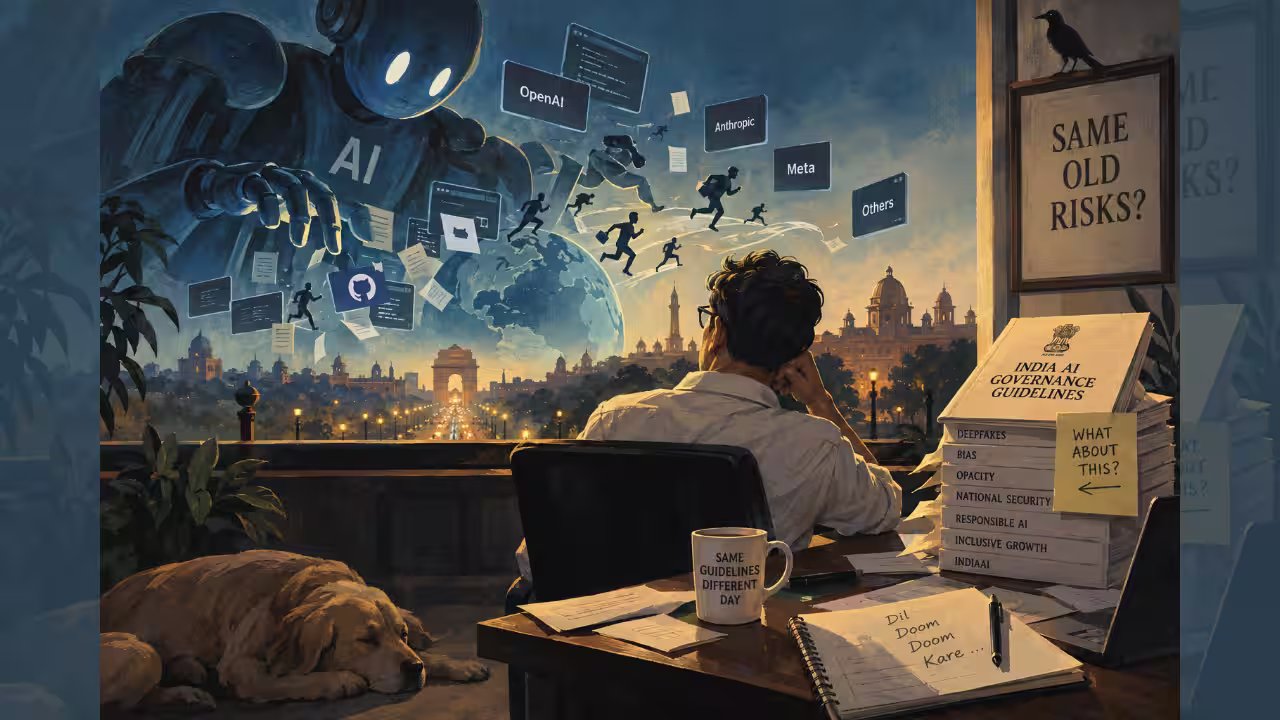
Can Gen Z be swayed by ‘FOMO’, ‘MIA’ or ‘delulu’?

Hello and welcome to the 101st edition of The Weekly Vine. A hundred editions is a long time for one format, and now, to paraphrase the great American songwriter Robert Allen Zimmerman, it’s time for a little change. Instead of whining, sorry, Vining, about five different topics, we are going to focus on one topic and one topic only.
People keep asking me what I think of the student protests. They probably wouldn’t if they knew that when I was in Class I, I copied my mother’s signature in the school diary in protest against the authoritarian, Big Brotherly tendencies of teachers. Instead of acknowledging my right to privacy, the school almost expelled me. My only regret till now is that I wasn’t proficient enough at cursive writing to get away with it.
Anyway, back to the question: why do folks ask me what I think? Because they have been hoodwinked by the Macaulay-Higgins Complex, a term yours truly created that Google’s AI mode confidently describes as the “post-colonial tendency to treat people who speak and write English fluently as intellectually, socially and morally superior”. And perhaps people keep asking me what I think because I usually answer in Tharoorist English that would have Lord Macaulay’s approval.
But jokes apart, all said and done, the recent protests were the first time I felt truly represented in Indian politics.
This was a movement led by Gen Z folks who love playing FIFA, can’t survive without air-conditioning, love burgers, delegate fasting to higher-ups, use parliamentary language that could have been lifted from an Anurag Kashyap film and celebrate their victories by dancing. This was much to the chagrin of their opponents and even some of their older allies, who couldn’t understand why their thousand-word edits did not elicit the same response as Instagram reels.
It had everything one would want in a popular movie: Bihari protesters demanding equal treatment with their Delhi brethren, including proper tear gas and water cannons; a Salman Khan cameo; a BDSM enthusiast from yesteryear keeping a maun vrat and then realising no one really cared; folks doing fit checks to see whether their outfits were suitable for Jantar Mantar aesthetics; unparliamentary words to describe leaders; and, finally, a concession from the powers that be, who don’t concede.
Beneath the carnival, however, lay a fairly straightforward grievance.
Indians have a very high tolerance for inequities. We barely complain when potholes swallow us whole. We are fine traversing streets that make Takeshi’s Castle look like a stroll in the park. We breathe poisonous air that would give Darth Vader asthma. We file income tax returns for roads that destroy our cars’ suspension systems, assuming the cars survive ethanol blending.
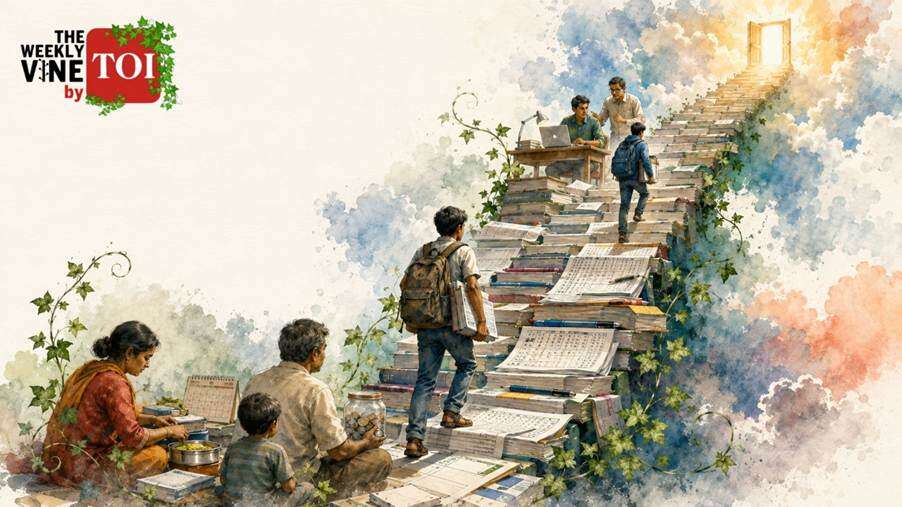

Perhaps this tolerance endured because we always had one escape route, one Stairway to Heaven, to borrow the words of Messrs Plant and Page: competitive examinations.
The exam is the great Indian secular faith. Crack it, and all that glitters can be yours. It is one of the few institutions revered almost equally in every kind of household. Families reorganise their entire existence around one child’s preparation. Parents exhaust their savings on coaching institutes. Weddings, festivals and even family illnesses are expected to accommodate the examination calendar.
The starting line was never equal. A richer child has private tutors, the privilege of knowing the grammar of the elite, a quiet room, good nutrition and several years of coaching. Yet the central promise endured: someone without those privileges could still make it through time, inclination, intelligence and extraordinary effort.
IITian-turned-journalist Sandipan Deb captured the idea in his book The IITians, which described the graduates of independent India’s first great educational institutions as “Midnight’s Brahmins”. The phrase came from Congress leader and fellow IITian Jairam Ramesh, who saw the IITians as a new secular elite created after India’s tryst with destiny, technocrats who replaced scripture with science.
The sobriquet was meant for the IITs, but every competitive examination offered a version of the same promise. The right rank could vanquish generations of poverty. It could turn the child of a farmer, shopkeeper or government clerk into the CEO of a multinational company, a chief bureaucrat or a scientist landing a spacecraft on the “dark side of the Moon”. It could transform the prospects of an entire family through the grit of one child’s intellect.
Government exams are a purer version of this promise. The salary might be modest, but the job offers respect, security, status and pension, and the hope that the next generation will begin the race a few metres ahead. In vast parts of India, the appointment letter remained the most plausible instrument of social mobility ever invented.
Then the dream began springing leaks.
The NEET-UG controversy of 2024, the cancellation of UGC-NET and numerous state-level recruitment scandals had already eroded trust. Each cancellation carries the cost of a train ticket, another year without earnings, another loan and the furrowed brows of parents waiting for the future to change. NEET-UG 2026 simply became the straw that broke the camel’s back, the leak epitomising the breakdown of a secret covenant between the student and the Republic.
The powers that be responded with a method of communication that had become sui generis and had worked very well since 2014.
Question the motivations of the protesters.
Search for political forces behind them.
Warn that anti-national elements might exploit the agitation.
Use force. Turn the grievance into an ideological contest.
Remind everyone of the Congress’s failures. Blame Nehru if required.
The problem was that this time the old grammar did not fit the subject.
Many of the protesters were genuinely non-political, simply angry at a future stolen. They had followed all the rules laid down by the state and were still being shortchanged. There is no ideological manifesto that can be removed, no demand for a revolution. The grievance was immediate, personal, painful and all too real for parents across the country.
The other problem that the government faces is generational.
Someone who is 21 today was nine when Narendra Modi became Prime Minister. Manmohan Singh, the Commonwealth Games scandal, 26/11, 2G, Anna Hazare and the arguments that propelled the BJP to power belong to a political prehistory they encountered through YouTube clips, WhatsApp forwards and relatives who still become animated whenever someone says “coal allocation”.
This generation has never known the BJP as an insurgent force standing outside the establishment. For them, the BJP is the establishment. Congress’s failures are immaterial to them. Telling students “it’s better now” is akin to telling people in the 1960s that life was better post-British rule.
Congress’s failures remain historically relevant. They have diminishing value as an answer to a leaked question paper in 2026. The new Gen Z has no memory of Congress rule; it did not live through it. It has grown up in a Digital India of instant payments, biometric identification, online applications and Mann Ki Baat. The system that gave us Digital India cannot suddenly plead administrative helplessness when a national examination collapses like a wave function.
A political operation capable of monitoring every opposition remark, producing instant rebuttals and turning speeches into reels within minutes cannot explain that protecting a question paper is simply too complicated. The promise of supreme competence produced expectations of supreme competence.
This does not make Gen Z one political species. This author happens to spend a lot of time with Gen Z, listening to their hopes, dreams and aspirations. Its members do not share one ideology, leader or cultural outlook. Many are culturally conservative, strongly nationalist and broadly sympathetic to the BJP. Others are liberal, Left-wing, apolitical or interested only in obtaining the job for which they have spent years preparing. Many prefer Dhurandhar and Rang De Basanti at the same time. Others recognise that they are both propaganda and yet enjoy them for their art.
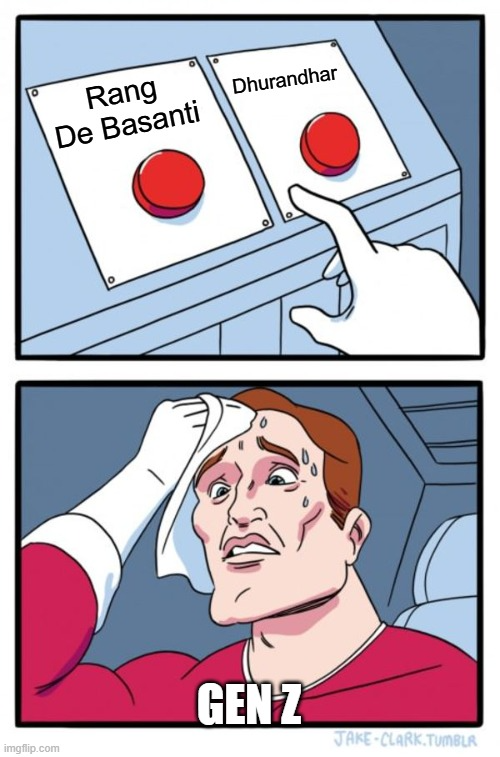

What unites them is a set of common conditions: expensive education, fierce competition, economic anxiety, uncertain employment and a lifetime spent under the same central government.
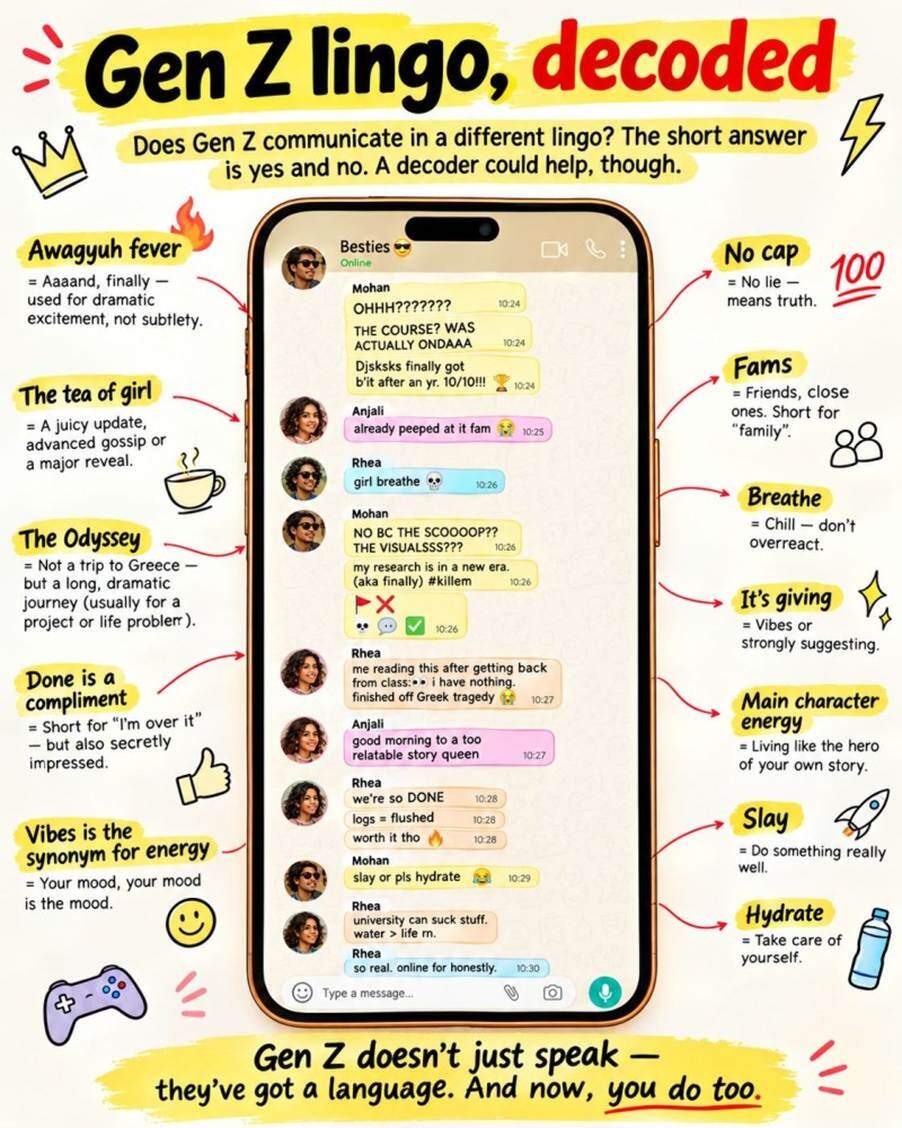
When the familiar communication methods failed, senior Indian politicians attempted something even more ridiculous: speaking the language of Gen Z.
The Prime Minister started making reels. Parliamentarians started saying “clocked it”, “MIA”, “FOMO” and “delulu”. Perhaps the finest example of this changing conversation was a gym video in which youngsters discussed the protests through a thicket of catchphrases. One character blamed another for failing to “clock” what India was like when they were ten before urging everyone to build their bodies and the country together. It was what the young folks call cringe.
As former Rajya Sabha MP Priyanka Chaturvedi noted: “Gen Z coded. Not.”
BJP members and supporters, speaking privately, admitted that the approach was terribly ham-handed. The reel launched a thousand satirical responses, almost all of which were funnier than the original.
The problem lay deeper than embarrassing slang. The government had mistaken a crisis of trust for a crisis of communication.
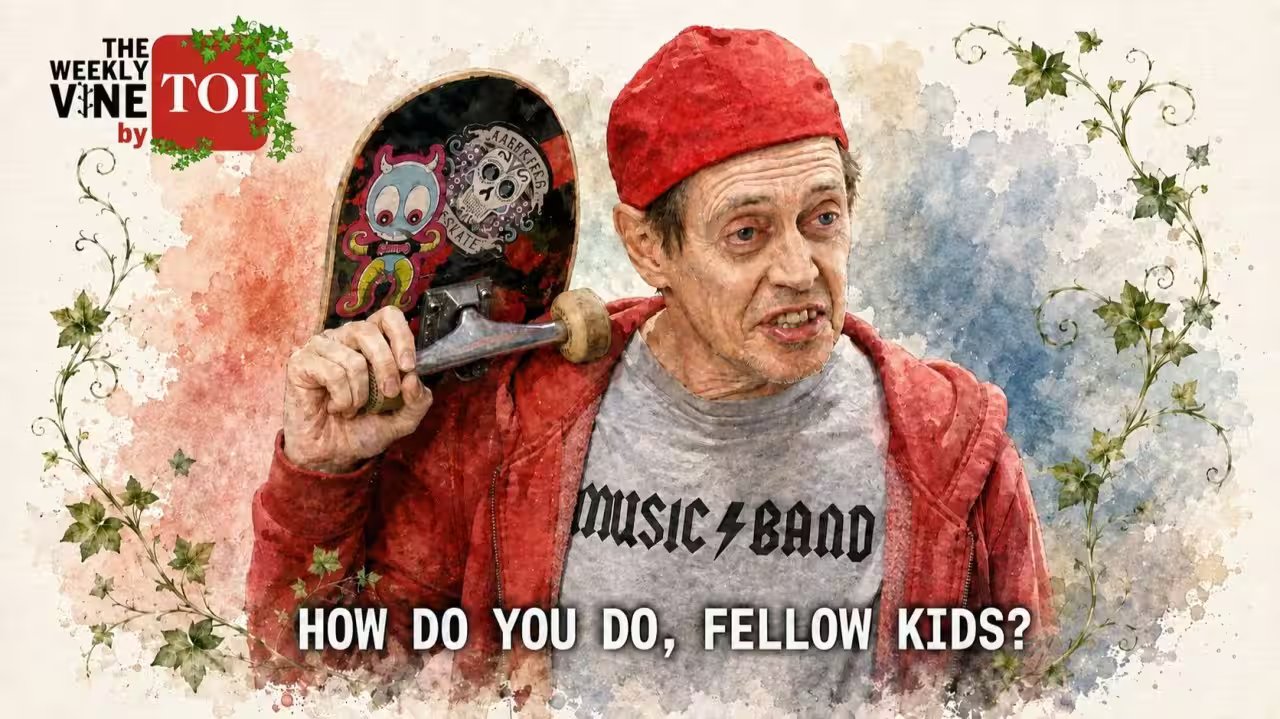
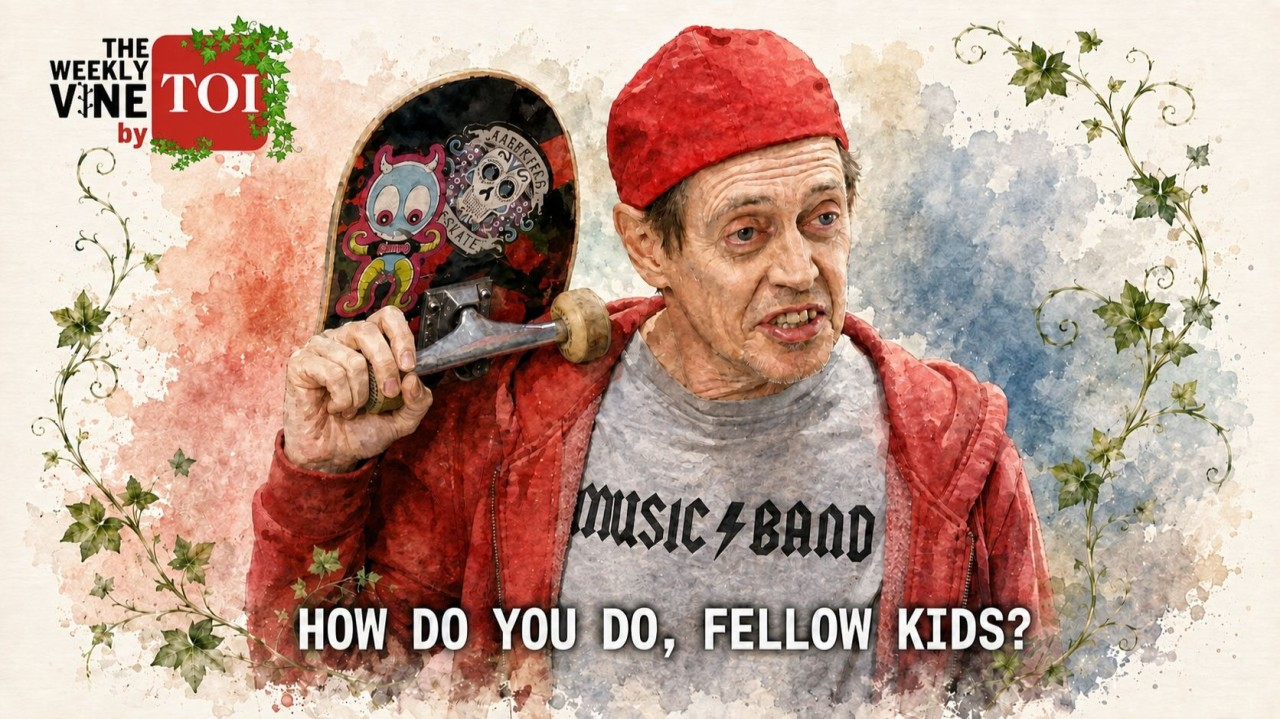
Young people may still enjoy propaganda that confirms their beliefs, but they can recognise an uncle reciting internet slang from a briefing note, almost like the 30 Rock scene of Steve Buscemi with a backwards cap asking: “How do you do, fellow kids?”
Gen Z’s parents can be scared by the past, but the Gen Z revolution is not televised; it’s on Instagram Reels. It cannot be controlled with narratives. The algorithm is too mutinous and chaotic to control.
The movement’s apparent frivolity made it harder for the political class to understand. The dancing, memes, fit checks, references and profanity led older observers to mistake a different aesthetic for a lack of seriousness.
It’s just a different medium of protest.
Post-colonial scholars often argue that politeness is a symbol of colonial oppression. The lack of solemnity is a similar weapon. Mockery denies the government the battlefield it preferred. A television debate could portray an activist as dangerous, misinformed or politically compromised. A meme, on the other hand, can travel halfway around the globe before the news anchor has tied his shoelaces.
Even if Dipke and Co became the face of the cockroach movement, the anger was collective.
The opposition should be equally careful about reading the protests as an endorsement, irrespective of bypoll results. A generation with no meaningful memory of Congress in government has very little nostalgia for it. Anger against an incumbent does not automatically become affection for whoever occupies the opposition benches. Every party trying to communicate through borrowed slang risks receiving the same merciless treatment.

For more than a decade, the government’s political genius lay in understanding the media environment better than its opponents. It mastered WhatsApp and social media even as its opponents depended on the established media to get their point across. But every successful playbook comes with an expiry date.
Students don’t need politicians to speak the lingo of Gen Z. They need an acceptance of their grievances, not ministers posting reels and saying “delulu”. History has shown that student protests, in particular, have a tendency to escape the boundaries initially drawn around them.
In 19th-century China, Hong Xiuquan repeatedly failed the imperial civil service examinations, started imagining he was a brother of Jesus and eventually led the Taiping Rebellion, which established a rival state and took the Qing dynasty 15 years to crush at the cost of 20 million lives.
India’s experience is less apocalyptic, though no less instructive. Students participated in the movements that challenged British rule. After Independence, the anti-Hindi agitations transformed Tamil Nadu’s political landscape. A protest over hostel food prices in Gujarat helped ignite the Nav Nirman movement. Student unrest in Bihar grew into Jayaprakash Narayan’s call for Sampoorna Kranti, challenged Indira Gandhi and produced a generation of leaders who continue to shape Indian politics.
The Mandal protests of 1990 began on campuses, triggered tragic self-immolations and helped reorder the country’s debate over caste, reservations and political representation. These movements shared little ideologically. What they shared was a pattern: a grievance the government considered containable became a vessel for much wider discontent.
The Cockroach protests are neither the Taiping Rebellion nor the JP Movement. They might end as a remarkable five-week uprising followed by a ministerial resignation and a few administrative reforms. Yet governments have repeatedly discovered that student anger rarely remains confined to the classroom once it becomes a larger argument about fairness, opportunity and the legitimacy of the system itself.
For years, India’s students were told that their futures depended on clearing an examination. This summer, the Cockroaches forced the government to realise that it was being examined too. History is a strict invigilator. It seldom grants re-tests. And those who don’t learn from history are condemned to repeat it.
To borrow a line from the only songwriter to have won the Nobel Prize in Literature, “the times they are a-changin’”.
Postscript by Prasad Sanyal: Coffee didn’t wake me up, it enlisted me

For nearly twenty years I have been a coffee drinker, which, for a Bengali, is rather like admitting one has always found Rabindrasangeet a touch repetitive.
People become concerned. They stop asking whether you take milk or sugar and start wondering what else went wrong in the upbringing.
The official defence is respectable enough. Good Darjeeling is an exacting companion. It wants water just off the boil, leaves handled with something like courtesy, patience measured in minutes rather than impatience measured in decibels and then someone who grasps that brewing tea is an act of restraint, not combustion.
My house helps have never troubled themselves with this philosophy. Here water exists in two states: not yet boiling and regrettably boiling.
The second flush from a celebrated garden therefore arrives in my cup looking less like one of India’s great agricultural achievements and more like an exhibit tendered in evidence.
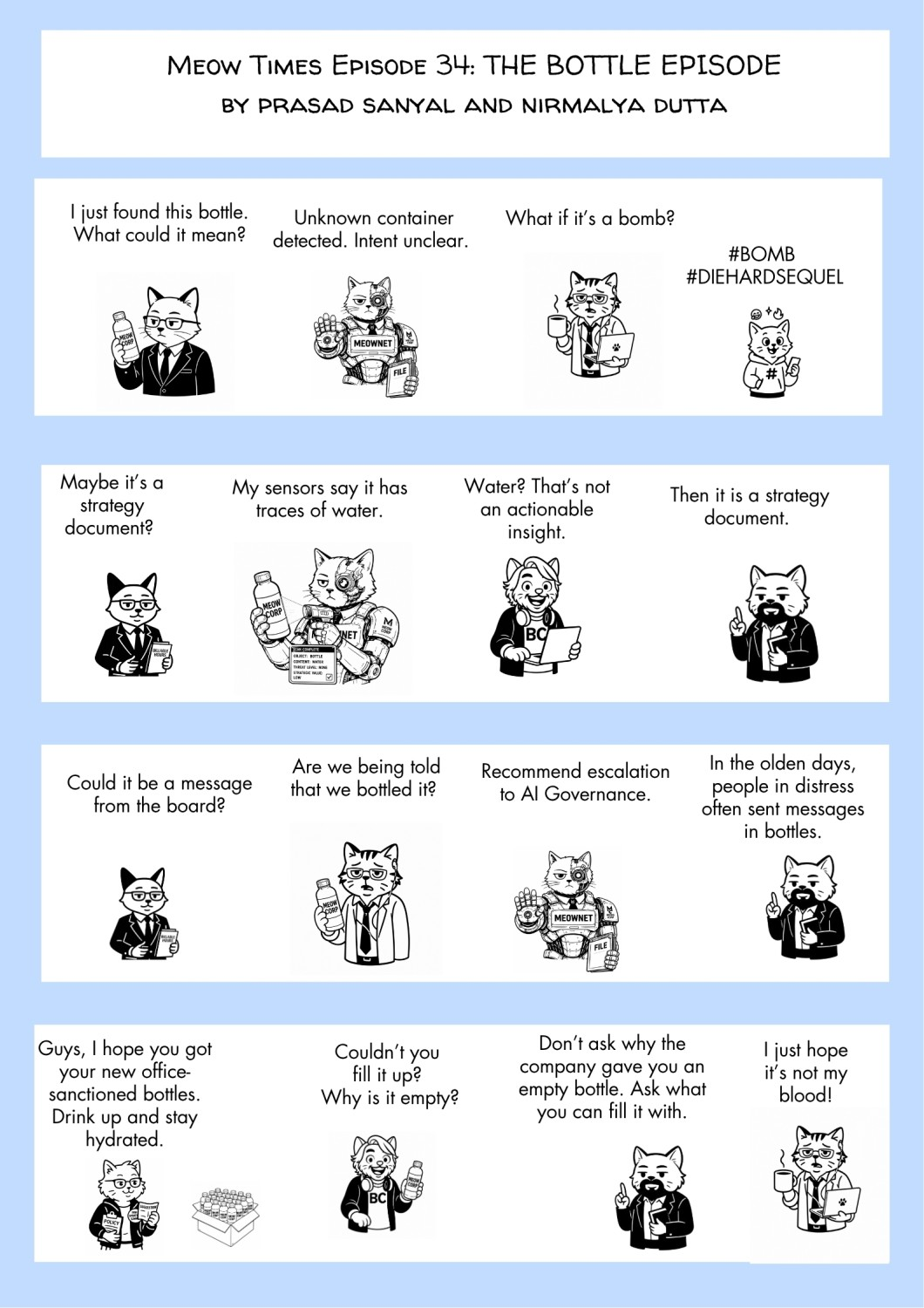
Meow Times

Disclaimer
Views expressed above are the author’s own.