Brats, batons and Insta-Bapu

On an early morning school run, as my car skidded over potholes and puddles, I asked my daughter about a term I had seen online during the recent student protests. ‘What does ‘clock it’ mean?’
‘Mom,’ she said, ‘It means noticing something.’ It was in the weary tone of someone explaining electricity to a Neanderthal. Then she added, ‘And please don’t use it, you will look foolish.’
I decided to take my remaining questions to Google Bhai Saab. I wanted to know which finger you tap against the thumb while ‘clocking it’ so that I didn’t look like I was performing one of those viral Instagram neurological tests for dementia. The answer came swiftly. Middle finger and thumb. Then index finger and thumb. After confusing me further, I was also informed that Gen Z had not invented the term. It had been around for decades. When I shared this information with my teenager, she got so annoyed that she put on her AirPods for the rest of the drive.
After depositing her at the school gate, I called my sister to complain. ‘Once these kids looked up to us. Now, they only roll their eyes.’ I told her about my flight to Ahmedabad. A mother and daughter hurrying to the bathroom just as we were landing. The mother was obviously ill and had thrown up on her daughter’s head. A dripping, smelly crown. ‘I should have felt sorry for the girl, but my first thought was revenge. This mother had done what most of us have fantasised about doing to our children at some point. And exactly what I really wanted to do fifteen minutes ago.’
My sister laughed, ‘When they want something it’s all, ‘Mummy, Mummy’. Otherwise, they think we are dummies.’ Then she said, ‘What do you expect? Their icons are MrBeast and Sabrina Carpenter. We had Michael Jackson and Mahabharat every Sunday on Doordarshan.’
I complained that our children had it too easy. Everything was instantly available. ‘You remember how there used to be that one black phone in the house? On the living room table and everyone used to wait for their turn to use it. What do these kids know about waiting for anything?’
She snorted, ‘You sound like Nani, with those stories of her walking miles to go to school. They walked; we waited around a landline. It’s just what we had to do, not a character certificate.’
She could be right. Every generation has a strange habit of making inconveniences sound like virtues. It reminded me of something Javed Akhtar once said: Each generation believes that the one before them is obsolete and the one after, foolish. And yet somehow, our own is the only sensible one.
For our parents, their greatest asset was summed up by Salim-Javed’s ‘Mere paas ma hai’. For us, it became, ‘Mere paas computer hai’. And Gen Z has upgraded that to ‘Mere paas ChatGPT hai.’
The Angry Young Man of Indian cinema had a less visible counterpart, the Angry Young Woman. When I was growing up, female rage was expected to be contained. We were given a set of instructions. Take things in your stride. Work hard. Keep your head down. Become someone. Because being yourself was never good enough.
We fought to raise children, especially daughters, who would not be as afraid as we were. We told them to set boundaries, have opinions, and speak out. We expected them to be fearless. But also, to obey us. Then when that contradiction showed up, we thought we had raised brats. In our lexicon, ‘brat’ is an entitled person, or a diet prescribed for when you have loose motions. In Gen Z’s lingo, it can often be a compliment.
Like our parents before us, we spent years complaining about our kids. They were lazy and addicted to their phones. Then came the student protests at Jantar Mantar and now Jharkhand, and they reminded us of something we had forgotten. Change belongs to the people who believe they can make a difference. Every parent has the same wish that their child will be braver and better than they were. Now, there was an entire generation showing their strength.
Protests have always been a form of political theatre. A hunger strike. Tying yourself to a tree. A padayatra. A human chain. You can’t make a nation sit up if you don’t grab its attention.
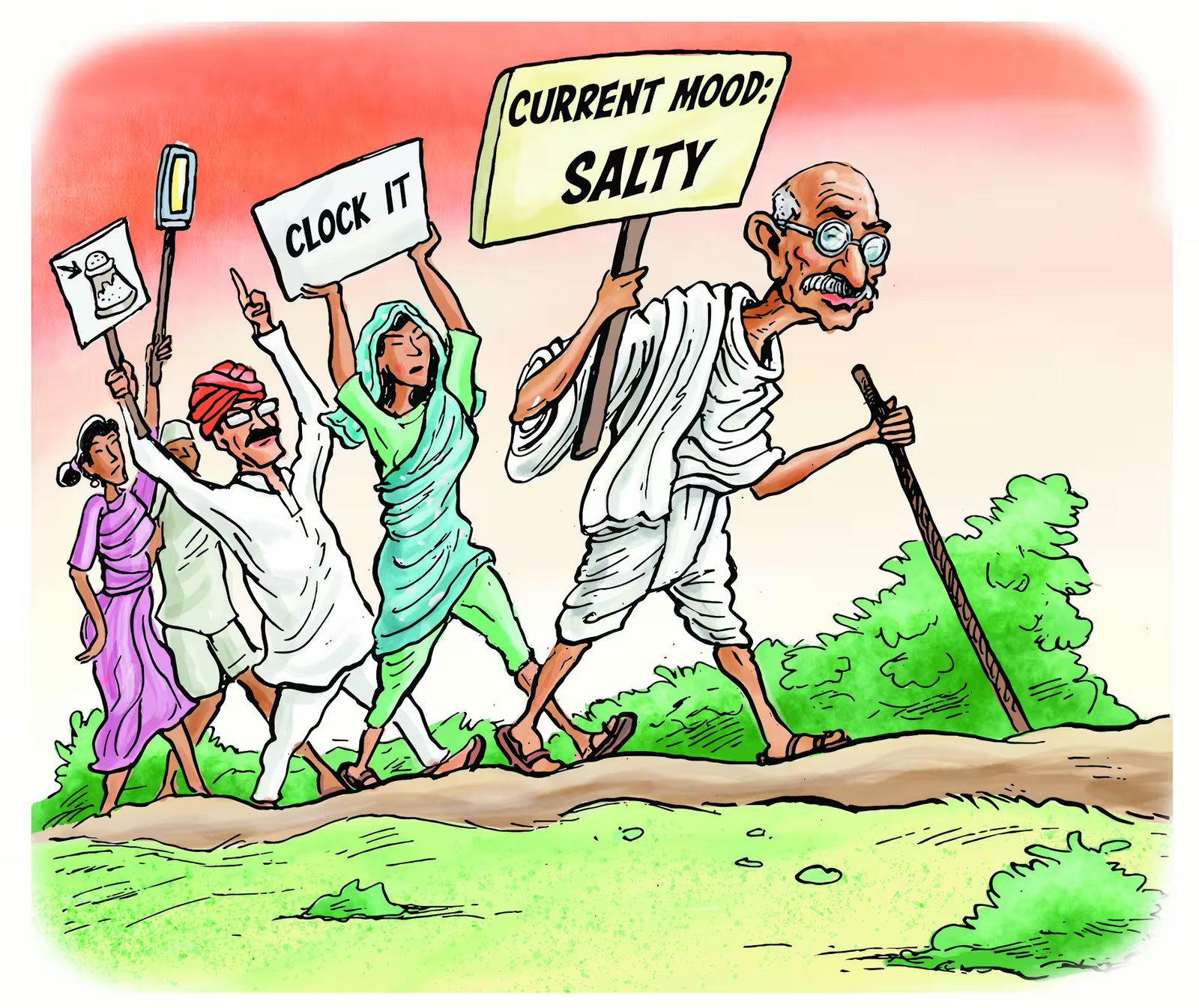
Unlike earlier times, the student protesters didn’t have to rely solely on newspapers and television channels to amplify their words. Everyone could become a mini media outlet with a phone in their hand. Satire pleases algorithms. So, they waved placards with ‘IKEA has better cabinets’ and ‘Even my ex hadn’t ignored me this much.’ They cosplayed Spiderman and Batman. They made comic reels even while facing batons and tear gas. Irreverence, like dhania, was sprinkled over their grievances.
Mahatma Gandhi too understood the power of imagery when he turned salt into a political symbol. He just wasn’t from the Instagram era. Otherwise, he would have perhaps arrived at Dandi holding a placard that said, ‘Current Mood: Salty’.
Our children have ‘clocked’ something we have not. You can demand change, shake the system and be serious without taking yourself too seriously.
I would tell my daughter this, but she would probably roll her eyes and say I am using ‘clocked’ wrong.
Disclaimer
Views expressed above are the author’s own.