Assam can’t be a charity case every monsoon
A few days ago, I travelled to flood-affected villages in Sivasagar, Betbari, Ligiripukhuri, and Nepalikhuti. Coming from Chhaygaon in Kamrup district, floods have been part of my life since childhood. Floods do not end when the water goes away. They remain in damaged homes, fields buried under silt, lost livestock, and memories that refuse to fade. They remain in people who wake at night hearing the sound of water entering their homes. When it rains again, fear returns.

One mother broke down because her young daughter just got her first period. They escaped with almost nothing and did not have a spare pair of underwear. There was no shop nearby, and she was embarrassed to ask. We managed to arrange one. She tried to touch my feet and said she would never forget the help. The moment was deeply unsettling. Something so basic had become a matter of dignity and survival.
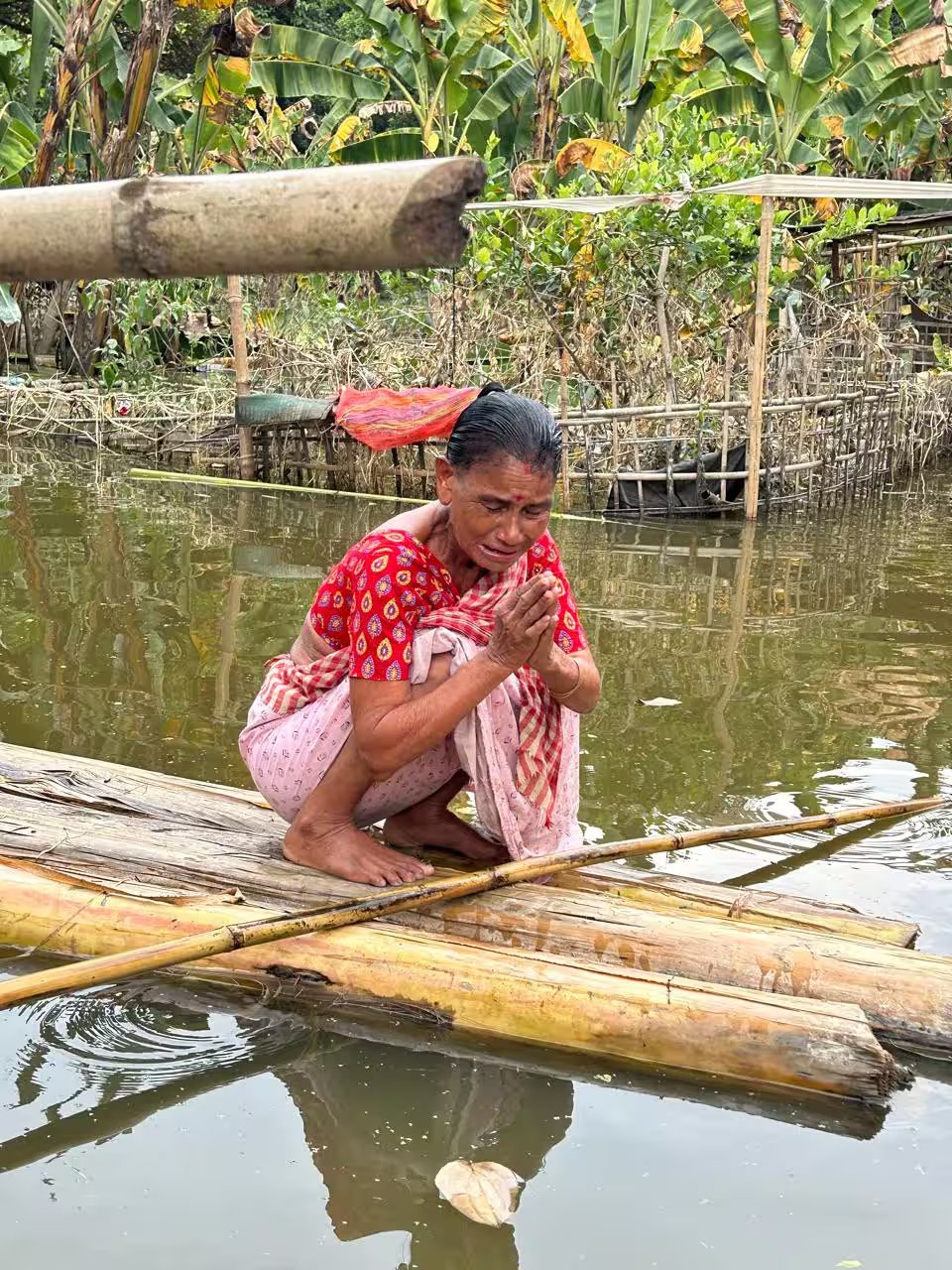
Another elderly woman refused to leave her home, guarding her goats and chickens from a banana raft. When our boat approached, she cried about the farm she had built over many years. People searched through mud for photographs and belongings. Children looked for their books. Eleven days after the flood, there was still water everywhere. In one video, a small child receiving relief quietly said, “Just give for me. I can’t find my mother.”
Sometimes, it feels as if time moves in circles in Assam. Every year, the floods return in new forms, while stories of loss and survival pass from one generation to another. What happened to our parents and grandparents does not remain entirely in the past; it shapes how we live and fear the next monsoon.
Growing up in rural Assam meant accepting that floods are a part of life. We learned to swim because one day it might save us. My mother, Jaya Das, came to my father’s family home by boat after her marriage. She had grown up in the hills of Nilachal and did not know how to swim. She told me how traumatic those early days were. There was not even a toilet, and my aunt had to row the boat to a distant place to use one.
There have been many discussions, promises, and efforts to address the problem, yet the challenge remains. This year, something felt different. Water entered places where people had never imagined it would, while some areas that traditionally faced flooding remained dry. Such shifts raise questions about whether we are witnessing a deeper ecological imbalance, with the relationship between rivers, rainfall, land, and human habitation shifting.
Assam’s floods are complex. The Brahmaputra is one of the world’s great rivers, and heavy monsoon rainfall has always shaped life here. But deforestation, unplanned development, changes in land use, and ecological degradation can make disasters more destructive. These realities demand serious scientific study and long-term planning.
What is most worrying is what repeated floods do to people’s willingness to build a life. Why invest in a garden if it may disappear next year? Why raise animals if they may be swept away? Why cultivate a field if you do not know whether you will harvest it?
The effects are already visible in villages like mine. Some people have sold their land for very little. Some traditional occupations have disappeared as people migrate or find new livelihoods. Assam has extraordinary knowledge of bamboo, carpentry, and agriculture. Repeated disasters can accelerate the loss of stability that allows communities to preserve their livelihoods and cultural practices.
If flooding continues to reach places that were once considered safe, it could change where people live, what they grow, how they work, and how they imagine their future.
Volunteers are working tirelessly, and people across Assam and outside the state are responding with extraordinary generosity. The govt is helping. But Assam cannot become a charity case every monsoon.
Relief can provide food, clothing, and a roof. It cannot return a lifetime of work, restore a lost farm, or bring back a loved one. Families need resilient homes, functioning schools, healthcare, restored livelihoods, better flood forecasting, and serious ecological planning.
The people of Assam have lived and worked on this land for generations. No one should have to stretch out a hand year after year simply to recover from the same disaster. What people deserve is the chance to live with dignity, work without constant fear of losing everything, and rebuild with confidence.
We must not allow repeated disasters to become normal. Assam deserves security, dignity, and long-term commitment. That is not an unreasonable hope. It is a national responsibility.
Children in Assam should learn to swim because they love rivers, not because survival depends on it.
This piece appeared as an editorial opinion in the print edition of The Times of India.