
AI could make blue-collar jobs great again

17. That is the net number of employees added by India’s five largest IT services companies, TCS, Infosys, Wipro, HCLTech and Tech Mahindra, during the first nine months of FY 2025-26. In the same period last year, these companies had added 17,764 employees. For decades, they were among India’s most dependable employment machines, absorbing thousands of young engineers from colleges. That machine is now sputtering.
This number may explain the Cockroach Janta Party protests better than much of the commentary around them. Young Indians are beginning to ask whether the bargain offered to them by the education system still holds: study hard, clear increasingly competitive exams, get a degree and a respectable job will follow. But what happens when the exam is compromised, the degree devalued, and that kind of job no longer exists?
India’s youth are already in a difficult place. Four out of every five unemployed Indians is below 30, while unemployment among graduates is much higher than among people who cannot read or write. Real wages have remained largely stagnant, and many govt skilling programmes produce certificates without producing employment.
Graduates have to work in jobs for which they are grossly overqualified. Engineers become construction supervisors, postgraduates take up data-entry assignments, and graduates enter poorly paid gig work without security or a clear career ladder. The anger over exams is therefore also anger over what lies at their end.
AI is intensifying this apprehension. The first tasks being automated are often those traditionally given to young entrants: preparing presentations, summarising documents, writing basic code, conducting basic research, checking contracts, and creating routine reports. These were not merely low-value tasks. These were how young people learnt to work. The bottom rung of the white-collar ladder is not simply becoming harder to reach. In some professions, it is being removed.
Young people will certainly need AI literacy. They must learn to work with these systems, question their output, understand their limitations and use them to become more capable in their chosen fields. Humanities, judgment, context and domain knowledge will also become more valuable as routine answers become easier to produce. Entrepreneurship will become more practical because one or two people equipped with AI can now build, market and operate businesses that once required much larger teams. But the most important response may be the simplest: do what you were trained for.
For decades, India turned mechanical, civil and electrical engineers into software engineers. A mechanical engineer maintaining machines was considered less successful than one writing code for an IT services company. An electrical engineer working on power systems received less prestige than someone preparing PowerPoints in a consulting firm.
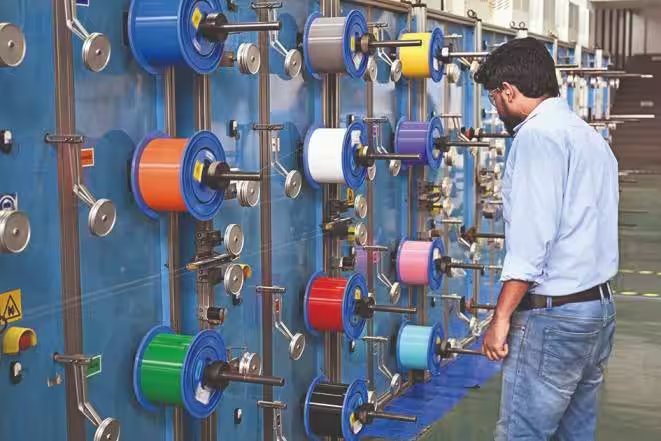
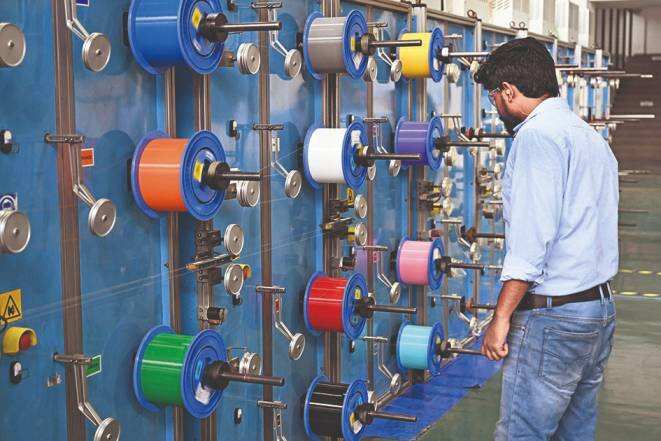
AI may reverse that hierarchy. The AI economy is not made only of models and software. It needs electricians, HVAC technicians, welders, construction workers, maintenance engineers, solar technicians, equipment operators and people who can build and repair things in the physical world.
This may be AI’s most unexpected employment effect. A technology associated with replacing labour could help produce a renaissance of skilled blue-collar and grey-collar work.
India should seize that opportunity. Instead of opening more engineering colleges whose graduates chase a shrinking number of generic office jobs, we need IIT/IIM like institutes for data centre electricians, robotic machinists, healthcare technicians, solar installers, and drone operators. Importantly, these should not be treated as remedial institutions for those who supposedly failed academically but as aspirational institutions with credible employment pathways.
India has long treated white-collar work as intellectually and socially superior to work performed with tools, machines, bodies or hands. A young person earning Rs 5 lakh in an IT company is frequently regarded as more successful than a shopkeeper, physiotherapist, or pet-care professional earning twice as much. Some of this prejudice comes from caste and feudal attitudes towards manual labour. Some comes from the post-liberalisation worship of engineering degrees, MBAs and ‘techie’ office jobs.
The CJP protests contained the possibility of a different social imagination. The protesters were not separated by corporate designation, college pedigree, caste hierarchy or the colour of their collars. They appeared simply as young Indians confronting a system that they believed had failed them. There was something almost classless about the movement, a rough equality born from a shared fear about the future.
That equality must now extend to work. The technician, nurse, farmer, physiotherapist and welder are no less essential than the consultant, coder or manager.
The new UK PM Andy Burnham put it well this week: “I want an education system based on parity between academic and technical which gives all young people a clear path in life. From today, Britain will value the hard hat every bit as much as the graduation cap.” Our employment future too may depend on recognising that blue-collar and white-collar work are different, but neither is inferior to the other.
Bindra is the founder of AI&Beyond and author of ‘Winning With AI: Your Guide to AI Literacy’
Disclaimer
Views expressed above are the author’s own.