
A double tragedy for students and a warning for the system

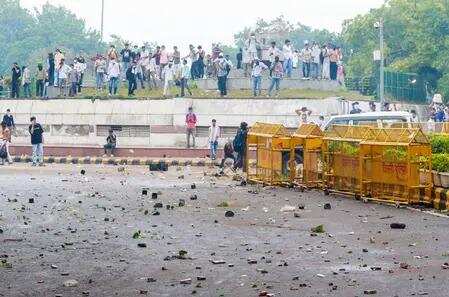

The visuals emerging from what began as the NEET protest are deeply disturbing. What appears to be planned violence, attacks on police and security personnel, damage to public property, arson, and anarchy cannot be described as peaceful protest.
That makes this a double tragedy for students.
The first tragedy was the inexplicable paper leaks that made a mockery of the aspirations of lakhs of honest students. Those leaks demanded answers, accountability, and punishment for everyone responsible, regardless of how influential they may be.
The second tragedy is that a legitimate cause now risks being hijacked by those whose agenda appears to be violence rather than justice. That serves no student. It only weakens the very cause they set out to fight for.

There is also a larger issue that deserves attention. If large numbers of young people can so easily be drawn into such situations, it raises uncomfortable questions that the government cannot afford to ignore. India has one of the youngest populations in the world, with over 65% of its citizens below the age of 35. Yet, youth unemployment remains a persistent concern. Various estimates suggest that unemployment among graduates and young people is significantly higher than the national average, with some surveys placing youth unemployment rates in double digits. When millions of educated young people struggle to find stable opportunities, frustration inevitably builds.
NEET is a double tragedy for students.
First, paper leaks that mocked the effort of lakhs of honest aspirants.
Now, a just cause hijacked by arson and attacks on police.
Jail the leakers, however powerful. Jail the rioters, equally.
Neither group serves a single student. pic.twitter.com/M15ZyEtSNX— Rajesh Kalra (@rajeshkalra) July 22, 2026
It is important to recognise that the overwhelming majority of these young people do not wish harm upon the nation. On the contrary, they take pride in India’s progress and want to see it counted among the best in the world. They invest years of effort preparing for competitive exams, believing that merit will be rewarded. But when systems fail them—through paper leaks, lack of transparency, or limited opportunities—the resulting sense of injustice and stagnation can turn into deep frustration. In such an environment, it becomes easier for disruptive elements to exploit that anger and channel it in destructive directions.
This is precisely why the government must be concerned. The issue is not just about law and order in a single protest, but about the broader ecosystem in which young citizens feel heard, valued, and fairly treated. If that trust erodes, it creates fertile ground for unrest. Addressing unemployment, ensuring credible examination systems, and creating visible pathways for growth are not just economic priorities—they are essential for social stability.
At the same time, students too must reflect. If they allow their genuine grievances to be overtaken by lumpen elements, it will not help anyone—least of all themselves.
Those who leaked the papers must be brought to book, irrespective of how powerful they are. Equally, those who indulge in violence in the name of protest must also face the consequences.
India’s young population is one of its greatest strengths. They deserve an examination system they can trust, one that rewards merit and integrity. A growing nation cannot afford to let administrative failures and violent opportunism erode that trust or turn its greatest asset into a force of instability.
Disclaimer
Views expressed above are the author’s own.


