In 2022, engineers mixed discarded lipstick into asphalt binder; the cosmetic waste restored the aged binder’s cohesion and could make warmer, longer-lasting road mixes |
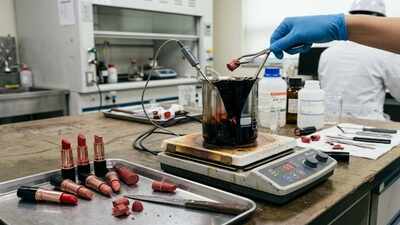
Every asphalt road ages over time. The bitumen that binds asphalt gradually stiffens under exposure to sunlight, heat and oxygen. As flexibility declines, cracks can develop. This creates a challenge for road builders who want to reuse old pavement because aged binder can make recycled asphalt mixes more brittle and increase the risk of cracking, particularly in winter. Researchers in South Korea examined an unusual potential additive: discarded lipstick from a cosmetics store. Their 2022 laboratory study explored whether the oils, waxes and other ingredients in expired lipstick could change asphalt binder’s behaviour and reduce some of the effects associated with ageing.How the researchers did itThe findings were published in Molecules on March 4, 2022, in a study by Nader Nciri, Namho Kim and Arnaud Caron, who were affiliated with Korea University of Technology and Education. The paper, Unlocking the Hidden Potential of Cosmetics Waste for Building Sustainable Green Pavements in the Future: A Case Study of Discarded Lipsticks, examined waste lipstick as an additive for asphalt binder.The expired lipsticks came from a popular cosmetics store in South Korea. The base binder was a conventional paving-grade AP-5 asphalt supplied by a Korean asphalt industry cooperative. The researchers mixed lipstick into the asphalt at 5%, 10% and 15% by weight, stirring the samples for two hours at 180 degrees Celsius, a temperature associated with hot-mix asphalt production.They then used two accelerated ageing procedures to examine how the blends performed. A rolling thin-film oven operated at approximately 163 degrees Celsius for 85 minutes to simulate short-term ageing during asphalt production, transportation and laying. For long-term ageing, a pressure ageing vessel held the samples at 100 degrees Celsius and 2.1 megapascals for 20 hours. The paper describes this procedure as an approximation of five to ten years of service.The researchers also analysed the chemical composition of the lipstick. The analysis classified 85.48% as resins, a fraction the authors associated with ingredients such as oils, fats and plasticisers. The remaining fractions included 9.67% saturates, 1.20% aromatics and 3.67% asphaltene-like components. These figures are the study’s measured weight fractions, rounded here to two decimal places. The lipstick also contained mineral fillers, including titanium dioxide, iron oxide, mica and silica.Infrared analysis indicated that the interaction between the lipstick and asphalt was physical rather than chemical. That distinction matters: the results show that adding lipstick changed the binder’s measured properties, but they do not demonstrate that the additive chemically reversed the oxidation caused by ageing.What the tests showedThe lipstick softened the binder and made it flow more readily. As the additive content increased, penetration generally rose and viscosity fell. These changes led the researchers to suggest that lipstick might reduce the temperatures needed to mix and compact asphalt. That is the principle behind warm-mix asphalt technology. As the Federal Highway Administration explains, warm-mix asphalt allows mixtures to be produced and placed at lower temperatures than conventional hot-mix asphalt. Lower production temperatures can reduce fuel use and emissions while limiting additional ageing during manufacturing. The lipstick study also reported that the blends remained below a viscosity limit of 3,000 centipoise at 135 degrees Celsius, which the paper cites as a benchmark for workable asphalt binder.The researchers also measured ductility, which indicates how far a binder can stretch before breaking and helps to assess its elastic and adhesive behaviour. Tests showed that a 5% lipstick blend recovered some of the ductility lost by the base asphalt during short-term ageing. After long-term artificial ageing, blends containing higher lipstick doses showed increased ductility, suggesting improved elastic-adhesive behaviour under those laboratory conditions.Dynamic shear rheometer tests also indicated changes in properties associated with ageing and fatigue cracking. The researchers reported an improvement in the binder’s temperature-sensitivity index as well. These are promising laboratory findings, but they describe the behaviour of the tested binder samples rather than the performance or lifespan of a finished road. Because the interaction appeared to be physical rather than chemical, the results should not be interpreted as proof that lipstick reverses the underlying chemical oxidation of aged bitumen.
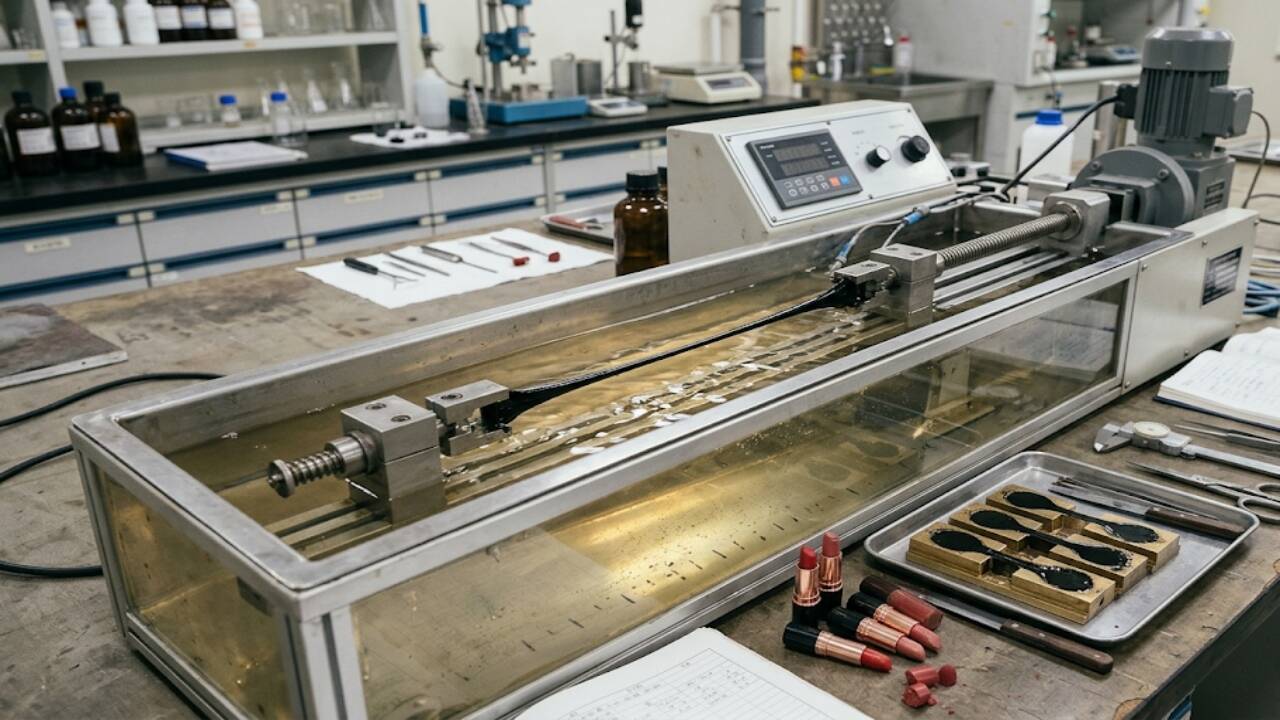
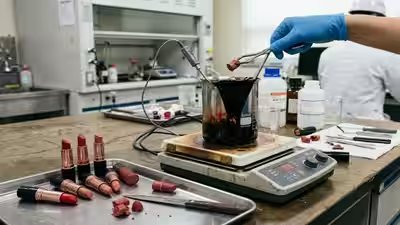
AI-generated representative image showing a ductility test measuring how far asphalt binder can stretch before breaking. Credits – Gemini
The catchThe main limitation is that a softer binder can become more vulnerable to rutting, or permanent deformation, at high temperatures. The study found that the original asphalt modified with 15% lipstick was more susceptible to permanent shear deformation. This suggests that the amount of additive would need careful control, particularly in places where road surfaces become very hot.The experiments also covered just one base asphalt and three lipstick concentrations: 5%, 10% and 15%. They were conducted in laboratory samples, not on a road carrying trucks and exposed to changing weather. Further tests on complete asphalt mixtures would be needed to determine how the additive affects aggregate bonding, moisture resistance, rutting and cracking under realistic conditions. Field trials would then be needed before road agencies could consider specifying the construction material. The study suggests that discarded lipstick can change asphalt binder’s flow and stretching properties and may help lower processing temperatures. Whether those changes translate into more durable roads remains to be established through further testing.