VB-GRAM-GA: A premature evaluation?
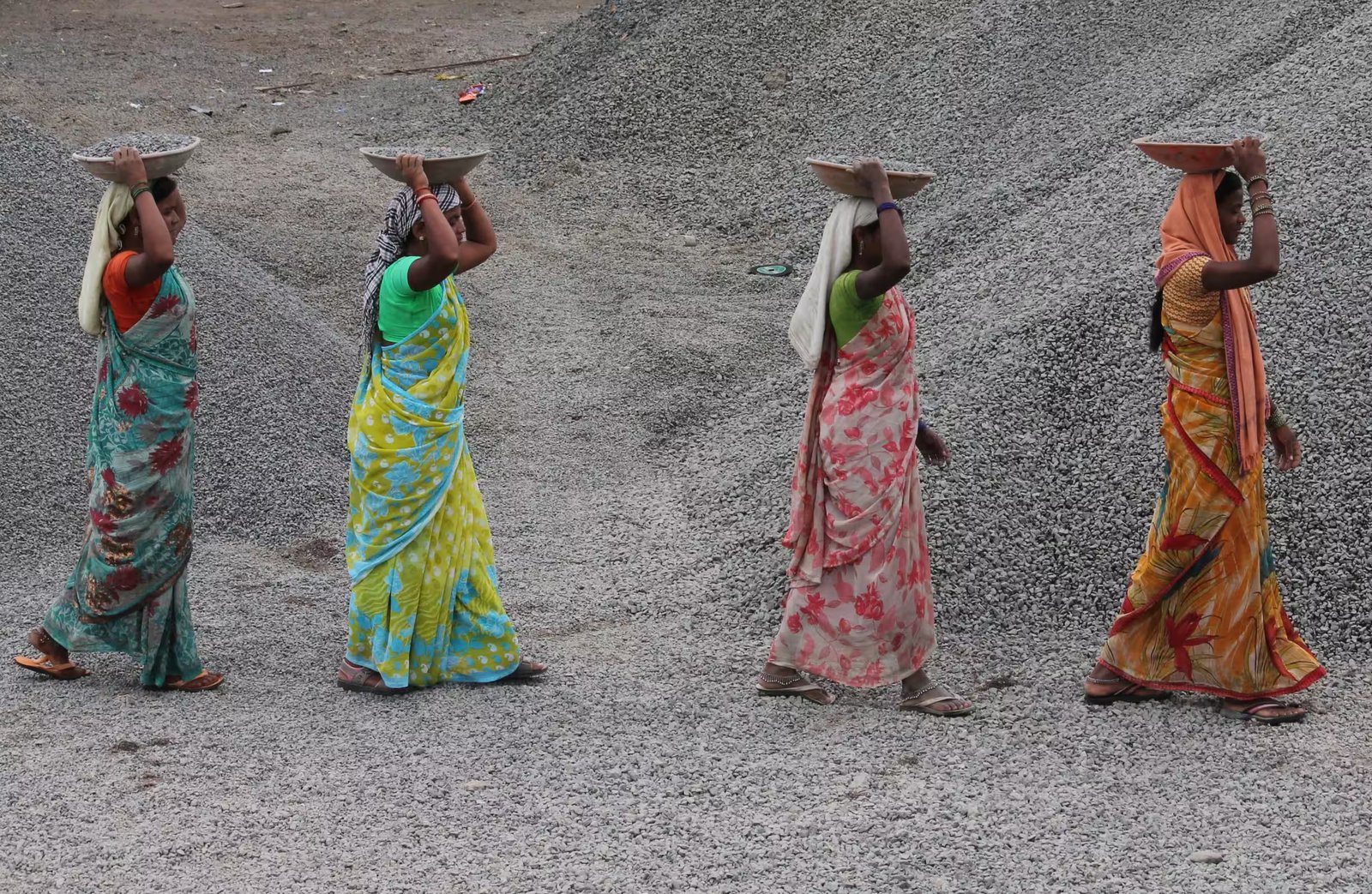
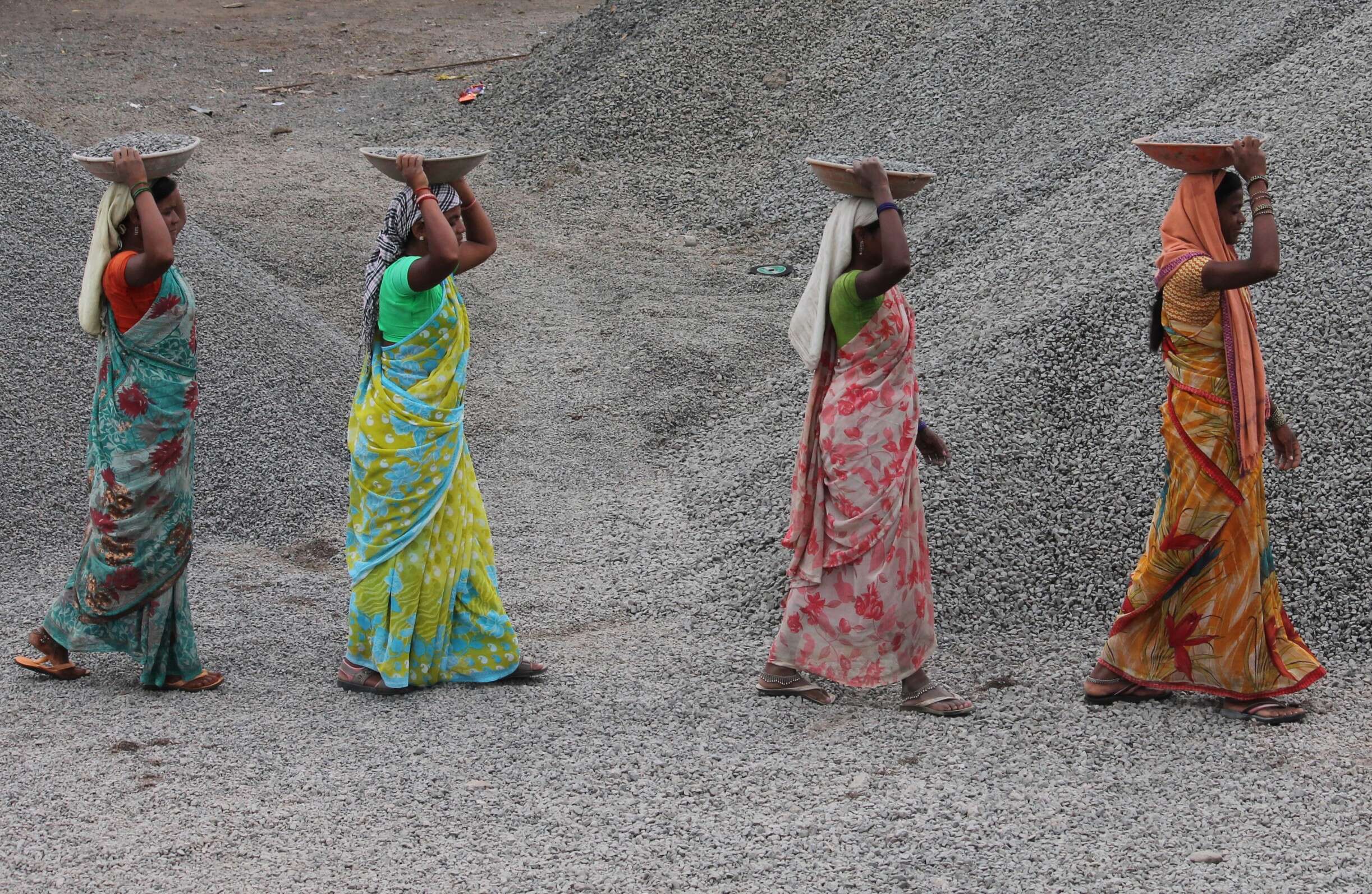

GRAMGA was meant to be bigger and better than MGNREGA, the rural employment law that it replaced. Bigger, for it promised 125 days of work to adults in rural households compared with 100 days promised by MGNREGA. Better, because it is meant to solve all the problems that afflicted the implementation of MGNREGA. The poor performance in July is seen as a betrayal of these promises. Judging GRAMGA in the very first month of its existence may seem premature. The question is—is the July crash merely a teething issue, or is this what ‘guaranteed’ employment under GRAMGA is going to look like from now on?
One could argue that it is early days, and the system is transitioning. Various levels of govt, from the ministry in Delhi down to gram panchayats, need to adapt to the rules of GRAMGA. Also, July tends to be a slow month for public works, when agricultural activity picks up. In fact, GRAMGA explicitly allows states to halt its implementation (for up to 60 days in a year) when agricultural activities are at a peak.
Still, well begun could have been half done. Instead, the first month has damaged GRAMGA’s reputation before it has begun. Experts had warned about the dangers of the govt’s move. Since GRAMGA was passed—speedily and perhaps without enough debate—in Dec 2025, things have been in limbo. The budget did not provide much clarity on where things were headed (apart from announcing the budgets for the old and the new laws). There was suspense around the date of notifying GRAMGA, with the state-wise budget only announced on June 9, 2026, a few weeks before GRAMGA was eventually notified on July 1.
GRAMGA requires states to cough up 40% of total expenditure, much higher than their obligations under NREGA (roughly 10%). Given this, consultation with state govts is important. Contrary to the minister’s claim on Dec 24, 2025, that there was “extensive consultation with the state governments”, there is no publicly available record of such consultations before the introduction of GRAMGA or after its passage. Several state govts passed resolutions against GRAMGA after its passage. Using this year’s state-wise allocation under GRAMGA, we can work out the state’s projected contribution. The implications are serious: for instance, last year NREGA expenditure in Chhattisgarh was Rs 3,553 crore, of which the state contribution would be roughly Rs 280 crore. For 2026-27, it has been allocated Rs 3,354 crore for GRAMGA. This implies it will have to budget for Rs 2,237 crore in its state budget. This is nearly nine times Chhattisgarh’s contribution to NREGA in the previous three years. A state budget handout claims to have budgeted Rs 4,000 crores for GRAMGA, but it has been reported under ‘agriculture/allied sectors/tourism/handicrafts’ rather than rural development, the department that implemented NREGA. [The accompanying chart shows the projected financial obligations of the 12 states with the largest contributions under GRAMGA.] How are states supposed to budget for this major increase two months after the annual budgets have been presented?
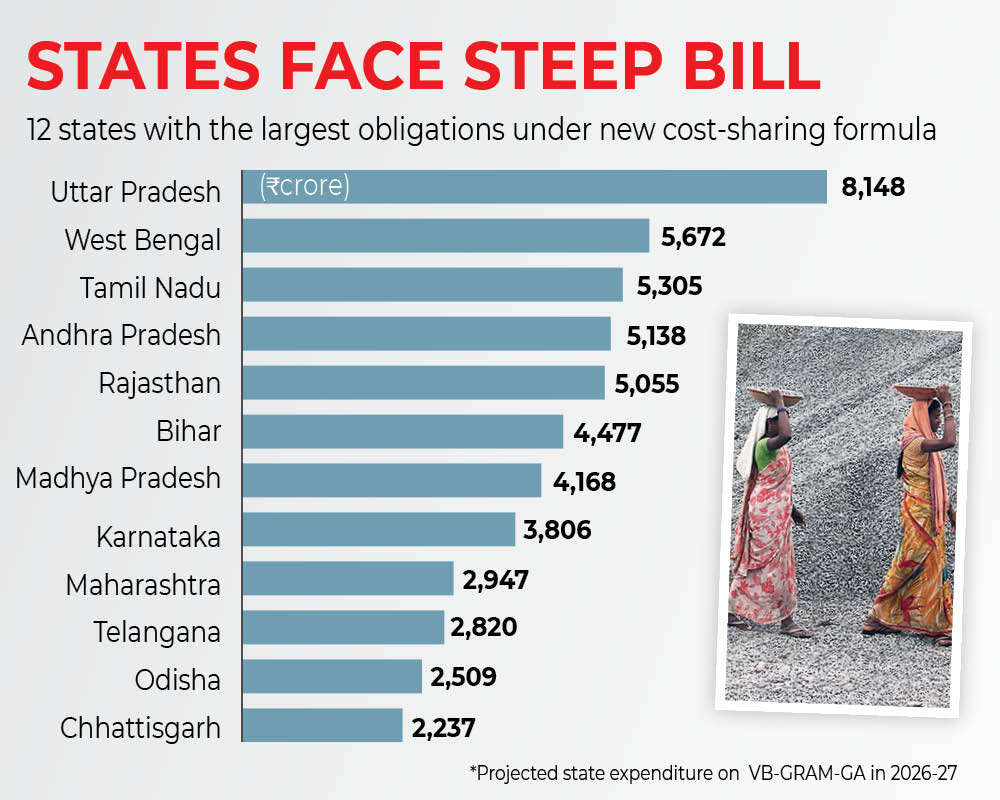

Whether states can rise to the challenge, given their current levels of debt, is anybody’s guess. If the Centre was genuinely committed to “no worker” being “without employment for even a single day”, the very least it could have done was to give states a transition window. To demonstrate its firm commitment to the right to work, the Centre must immediately provide states some leeway (e.g., by giving time to transition to the new funding pattern). Since Dec 2025, millions of rural workers have been plunged into even greater uncertainty than usual. This uncertainty is precisely what a law like MGNREGA was supposed to reduce. Its modest promise of 100 days for adults of rural households that demand it, never really materialised —not in most parts of the country at any rate. Rural workers did, however, come to rely on MGNREGA even in its far-from-ideal implementation. One clear indication was NREGA person-days jumping to 349 crores during Covid-19, from an average of 234 crore person-days over 2014-20.
The tragedy is that the most disadvantaged —landless, women, Dalits and Adivasis, who participate in public works in large numbers —get this shoddy treatment. Were such a massive overhaul to affect, say, Pay Commission beneficiaries, there is no way it would have been acceptable to anyone.
Disclaimer
Views expressed above are the author’s own.