How to treat the illness of paper leaks through the right policy architecture
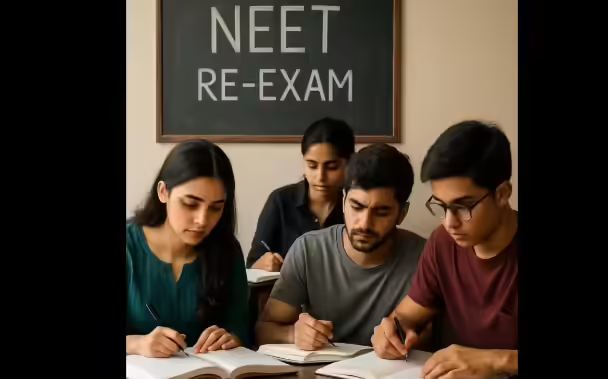
India performs a peculiar ritual every few years. A high-stakes public examination is compromised. The leak is discovered. Arrests follow. A committee is constituted. A re-examination is announced. Within a season, the nation moves on until the cycle repeats. The cancellation of NEET-UG 2026, taken by more than 22.7 lakh aspirants on May 3 and cancelled on May 12 after investigators found that a pre-circulated “guess paper” of 410 questions contained about 120 that appeared in the actual examination, is only the latest episode.
Coming just two years after the 2024 NEET crisis involving the same examination, the same conducting agency and the same ecosystem of coaching centres and insiders, it points to a more uncomfortable reality. Paper leaks in India are not isolated accidents. They are symptoms of a chronic institutional illness, yet public policy continues to treat only the immediate crisis rather than the underlying disease.

The anatomy of a leak
A pen-and-paper examination administered simultaneously to millions of candidates is, in engineering terms, a system with an extraordinarily long chain of custody. The question paper passes through subject experts, translators, printing presses, transport contractors, bank strongrooms, and thousands of centers where papers routinely arrive days before the test. Every link involves human hands, and every hand is a potential point of failure.
The 2026 investigation has laid this anatomy bare. Those arrested by the Central Bureau of Investigation are not shadowy outsiders but insiders: they include subject experts empaneled by the National Testing Agency itself, and the headmistress of a Pune school who, by her own confession, memorized physics questions she accessed in her official capacity as an NTA-appointed expert and passed them on.
The leaked content travelled through coaching networks stretching from Sikar in Rajasthan to Latur and Pune in Maharashtra, circulating on messaging apps for nearly a fortnight before the examination, and changing hands for sums that investigators say ranged from Rs. 30,000 to Rs. 28 Lakh. The CBI has since found evidence that the same racket compromised the NEET-UG 2025 paper as well – undetected at the time. Union Education Minister Dharmendra Pradhan’s candid admission of a “breach in the command chain” is welcome, but a command chain that breaches repeatedly is not suffering from indiscipline. It is suffering from bad design.
Nor should the cost be discussed in the bloodless vocabulary of “examination integrity” alone. The cancellation triggered street protests, litigation in the Supreme Court, and, most devastatingly, the reported suicides of at least three young aspirants who had staked years of their lives and their families’ savings on a single afternoon. When the state compels lakhs of young people into a winner-takes-all contest for roughly 1.2 lakh medical seats, it assumes a fiduciary duty of the highest order. A leak is not a procedural lapse. It is a breach of trust between the republic and its youth.
Why severity has not worked?
India is not without law here. The Public Examinations (Prevention of Unfair Means) Act was passed in February 2024 and hurriedly brought into force that June as the NEET scandal raged, prescribing imprisonment of five to ten years and fines of not less than Rs. 1 Crore for organised leak syndicates. Yet the 2026 leak occurred squarely under this statute’s shadow. The lesson is an old one in criminology: certainty of detection deters far more effectively than severity of punishment. A racketeer who stands to earn crores from a single leak, and who observes that insiders are caught only after the damage is done, will price even a draconian statute in as a business risk.
Nor can the failure be attributed to an absence of expert advice. The Radhakrishnan Committee constituted after the 2024 crisis, recommended precisely the reforms now being rediscovered: computer-based testing, biometric authentication, encrypted question delivery, multi-session examinations, and a restructured NTA with dedicated security and technology divisions. The government says those recommendations were implemented and the Minister has conceded that the breach occurred regardless. A parliamentary standing committee had warned as recently as December 2025 that the NTA’s performance “inspired little confidence”, noting that five of its fourteen examinations in 2024 had faced major disruptions. The problem, then, is not that India does not know what to do. It is that reform has been adopted on paper while the underlying architecture remains intact. Accountability diffuses across this ecosystem until it belongs to no one.
The elements of a genuine cure
Four elements suggest themselves.
First, shrink the attack surface. The announced transition of NEET to secure computer-based testing from 2027, with question banks assembled algorithmically and delivered only at the moment of examination, is the correct instinct. Multi-session testing with statistically equated papers, the model used by JEE Main, eliminates the very possibility of a single paper whose theft compromises the entire examination. But candour is owed about the trade-offs. Sceptics rightly note that digital systems create new vulnerabilities like server breaches, remote-access malpractice at poorly supervised centres and the NTA’s own estimate that some twenty shifts would be needed for 22 lakh candidates imports the contested science of score normalisation, a perennial grievance in JEE. CBT reduces the attack surface; it does not abolish it. Its success will depend on rigorous centre audits and a massive expansion of secure testing infrastructure in district towns, so that digitisation does not become a new axis of exclusion for rural aspirants.
Second, rebuild the NTA as an institution rather than a procurement office: a permanent professional cadre, an independent board with security expertise, end-to-end ownership of the pipeline, and mandatory external audits. Item writers and translators must work in monitored, air-gapped environments, and the practice of empanelled experts retaining recallable access to live questions must end. One strand of the 2026 leak, after all, began not with a stolen document but with a memory.
Third, invert the incentive structure. Alongside punishment for perpetrators, the law should institute statutory compensation for candidates when an examination is cancelled due to systemic failure, payable by the conducting agency. Nothing concentrates institutional minds like financial liability. Whistle-blowers deserve formal protection and reward; they are the immune system of this ecosystem.
Fourth, and most fundamentally, reduce the stakes. Leaked papers command lakhs because a single examination is the sole gateway to a scarce, lucrative career. So long as demand outstrips supply by a factor of nearly twenty, the black market will find a way. Expanding quality medical education, permitting multiple attempts a year, and weighing supplementary evaluation criteria are not merely education reforms; they are anti-corruption measures.
Treating the disease, not the episode
The temptation after every scandal is the theatre of severity mistaken for reform. A system that has now compromised two consecutive NEET papers requires the state to treat examination security as critical public infrastructure, deserving the seriousness accorded to elections or currency printing. The Election Commission conducts polls for nearly a billion voters with formidable credibility; there is no reason a well-designed testing authority cannot do the same for twenty-three lakh aspirants.
The young people who died this May did not fail the system. The system failed them; first by leaking their paper, then by having no better remedy than making them sit through it again. The right policy architecture will be built the day we stop asking merely who leaked the paper, and start asking what kind of system makes leaking this easy, this profitable, and this survivable.
Disclaimer
Views expressed above are the author’s own.