How secretarial jobs helped develop India’s hybrid food traditions

As thousands of English-educated South Indian men moved across India for secretarial jobs in the mid-20th century, they brought their families and food traditions with them. In unfamiliar cities, their wives adapted regional recipes using local ingredients, creating new culinary blends. As Telugu and Tamil families settled in cities like Calcutta and Mumbai, women improvised with local ingredients, shared recipes, and introduced South Indian foods to new communities.
Most people assume secretaries only do typing and filing work. But Hari Pulugurtha had to transport his boss’s skeleton. Pulugurtha, secretary to J.B.S.Haldane, the British scientist who took Indian citizenship and left his body to science upon his death in 1964, organised the delivery, to the Rangaraya Medical College in Kakinada.
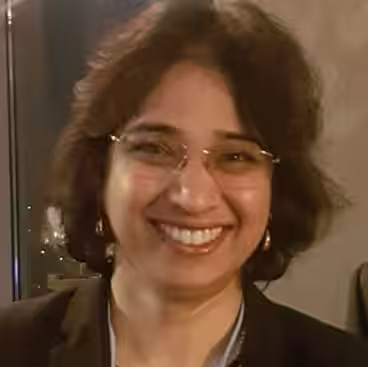
Nishi Pulugurtha tells this story about her father in The Inheritance of Taste, her memoir-cum-cookbook of growing up in a Telugu family in Calcutta. It is part of another, wider, story of young men from South India going north to find secretarial work, and changing awareness of South Indian food. This would happen through their wives who, suddenly placed in a new environment, had to learn to make their home food.
This process started in the 1930s when south India had a surplus of young men educated in English. Secretarial positions in other parts of India were an attractive option, and it led to the opening of training schools, like the Stenographer’s Guild which was opened in Madras in 1937, under the auspices of political leader C.Rajagopalachari. Once they had steady jobs, the next step was to get a wife from home.
In the 1940s, S.Meenakshi Ammal was a young widow in Madras, taking care of her son and her late husband’s younger brother. She was known for her cooking skills, and was often asked to help the young women who were being married and sent to join their husbands. She started by sending them cooking instructions on postcards, then realised it would be more efficient, and lucrative, to collect these in a book. The result was Samaithu Paar (Cook & See), the great Tamil Brahmin cookbook, whose first edition came out in 1951.
A more recent example is Gomathy Moorthy, who came to Mumbai in the 1970s, where her husband worked in a mill’s office. She brought a mechanised wet grinder, a machine that had revolutionised the making of idli batter. The idlis that Moorthy supplied her husband for lunch were very popular with his Gujarati colleagues. So, around 1988, when he lost his job, a Gujarati friend suggested he start selling his wife’s idlis. This later turned into selling idli batter; the foundation of a whole new business model.
Pulugurtha’s story echoes many of these details. Her father was born in 1933 in Coastal Andhra. His history is a reminder that the state-wise focus we have today is a recent concept. Instead of gravitating towards Hyderabad, he studied and worked his way up the east coast to Bhubaneshwar, where he met Haldane, and then Calcutta, where he was employed by the Indian Statistical Institute, which was Haldane’s first base in India. But when it came to marriage, he went back to Kakinada in Coastal Andhra and met Tayaru.
There were few other Telugu families in Calcutta. The Pulugurthas discovered shops in Lake Market and Dacres Lane that sold some South Indian staples, but the rest had to be improvised or got from Andhra. Her brother brought, with great difficulty, a grinding stone. Pulugurtha would later get a wet grinder herself. The sour gongura leaves beloved of Andhra food weren’t found in Calcutta, though could be found in Titagarh, north of the city, which had a larger Telugu community.
One bonus was potatoes, in plenty. They were still an uncommon in Andhra then, called bangaladumpa, Bengali roots. The Pulugurthas would take potatoes home as a present. Potatoes, along with Bengal’s beloved potol, pointed gourd, received the Telugu treatment. Pulugurtha’s parents didn’t eat fish, but their daughters experimented with it.
Tayaru dried mangoes for Andhra pickles, but Calcutta’s summer Kalbaisakhi storms were a constant danger – to the extent that, when it was really hot, her family would joke that she should start making pickles. In this way a hybrid tradition emerged, with secretarial jobs scripting yet another strand in India’s culinary history.
Disclaimer
Views expressed above are the author’s own.
END OF ARTICLE