Zero FIR against Noida woman over PM Modi remarks: Is abusive language punishable under Indian law?
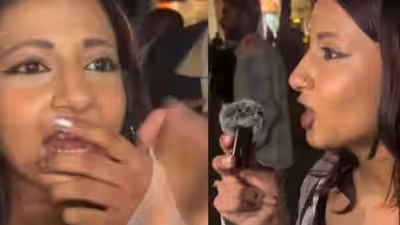
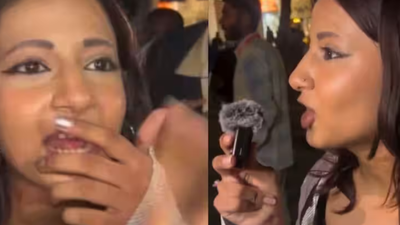
On July 29, the Noida Police registered a zero First Information Report (FIR) against 25-year-old Ruchika Singh, a resident of Lotus Zing Society in Sector 168, over remarks she allegedly made against Prime Minister Narendra Modi during a protest at Delhi’s Jantar Mantar on July 23. The case was filed at the Expressway police station on a complaint by Smriti Singh, a Supreme Court advocate and resident of Vasundhara in Ghaziabad, who said she came across a video of the incident and found the language used objectionable. The FIR invokes Sections 352, 353(1) and 356(1) of the Bharatiya Nyaya Sanhita (BNS), covering intentional insult, public mischief and defamation. Since the alleged incident occurred in Delhi, the case has been transferred to Delhi Police for further investigation.The FIR has revived a familiar argument online, about whether crude language directed at a public figure amounts to a crime in India. Going by more than a decade of Supreme Court and High Court (HC) rulings, the answer is narrower than the public mood around such cases suggests.
The default charge, and why it doesn’t apply here
Most disputes over crude public speech reach for Section 296 of the BNS (Section 294 of the Indian Penal Code, or IPC). It punishes obscene acts or obscene words uttered in a public place to the annoyance of others, with up to three months in jail. Courts, however, have read “obscene” narrowly, and this is not even the section invoked in the Noida case.
How the legal test for obscenity changed
The doctrine was first tested over the ban on D.H. Lawrence’s novel Lady Chatterley’s Lover. In Ranjit D. Udeshi v State of Maharashtra (1965), the Supreme Court upheld the ban and adopted the Hicklin test, an 1868 English rule that asked whether isolated passages could corrupt the most vulnerable reader. Indian courts applied it for decades, even after England had moved on.The shift began in 2006, when the Supreme Court cleared the broadcast of Anand Patwardhan’s documentary Father, Son and Holy War, holding that obscenity must be judged by viewing a work as a whole, through the eyes of an average viewer, not through isolated scenes. The test changed further in 2014, in Aveek Sarkar v State of West Bengal, where the Court held that a nude photograph of tennis player Boris Becker and his fiancée was not obscene. The Hicklin test was formally discarded for what the Court called a “community standards” test, drawn in part from the American case Roth v United States (1957), under which material is obscene only if it tends to arouse lustful thoughts by the standards of an average person.
Profanity is not obscenity, the Supreme Court has ruled three times
In 2024, the Supreme Court quashed criminal cases against the makers of the web series College Romance, filed under the Information Technology Act (IT Act) over an expletive-heavy episode. The Court held that vulgarity and profanity are not the same as obscenity. Common swear words, it said, are “reflective of emotions of anger, rage, frustration, grief, or perhaps excitement” rather than anything sexual.Two more rulings this year applied the same logic to ordinary disputes. In Sivakumar v State (April 2026), the Court set aside a conviction over the word “bastard” used during a violent family altercation, holding that “mere use of the word ‘bastard’, by itself, is not sufficient to arouse prurient interest of a person”. In Mani v State (July 2026), hearing an appeal over vulgar language used during a land dispute, the Court went further: “Let’s be clear, legally, obscenity is not synonymous with ‘vulgarity’, ‘abuse’ or ‘profanity’.Across these rulings, the standard has stayed consistent. For speech to count as obscene under criminal law, it must be shown to be lascivious, or likely to arouse sexual interest. Anger, insult or abuse, however uncivil, falls short of that bar on its own.
What the Noida FIR actually alleges
The sections cited against Ruchika Singh do not concern obscenity at all. They sit in a different part of the BNS, each carrying its own, narrower test. Section 352 requires proof that the accused intended, or knew it was likely, that the insult would provoke an actual breach of public peace, not merely that someone felt insulted. Section 353(1), on public mischief, is aimed at incitement, such as pushing people toward offences against the state or stoking enmity between communities, a considerably higher bar than criticism of a leader. Defamation under Section 356(1) carries long-standing exceptions for good-faith comment on a public figure’s conduct in their public role.A comparable case reached the Telangana HC in September 2025. The court quashed FIRs filed over social media posts that called a political party a “scourge” and compared it to a “pest,” along with a post accusing the state’s chief minister of taking a “20% commission.” The bench held that the first post was “harsh and metaphorical but constitutes political criticism”, and did not meet the threshold for intentional insult or public mischief in the absence of an imminent threat to public order. The Supreme Court later upheld that reasoning when the Telangana government challenged it.Whether the remarks attributed to Ruchika Singh clear the higher bar set by Sections 352, 353(1) and 356(1), rather than the lower one popularly associated with “obscenity,” is what any investigation, and eventually a court, will have to determine.