‘Why put up this show of independence?’ Supreme Court flags CEC appointment mechanism
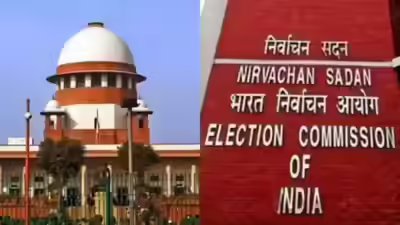
NEW DELHI: The Supreme Court on Thursday questioned the inclusion of a cabinet minister in the selection panel for the appointment of election commissioners, observing that a minister would not be able to go against the Prime Minister in the decision-making process.Hearing the matter related to the appointment process of the Chief Election Commissioner and Election Commissioners, the top court raised concerns over the composition of the panel, which currently includes the Prime Minister, the leader of opposition and a Union cabinet minister.The bench observed that decisions in such appointments would effectively be passed by a 2:1 majority, with the cabinet minister unlikely to differ from the Prime Minister’s stand.“Why this show off of independence in appointment of election commissioner,” the court remarked while questioning the present structure of the selection committee.The court further said that if the Chief Justice of India could be part of the appointment process for the director of the Central Bureau of Investigation, then there was no reason why an independent process could not be followed for the appointment of the Chief Election Commissioner and Election Commissioners.The bench observed that the appointment process for the Election Commission was even more important as it directly concerned “upholding democracy and free and fair elections”.The court also underlined the importance of public confidence in the poll body’s impartiality, stating that the Election Commission of India “should not only be neutral but it should look neutral in its functioning”.According to Bar and Bench, the bench further observed: “But why should it be a minister from the cabinet? Let us assume the ruling party has 300 MPs. The PM picks 25 of his best. Now you again micromanage it and bring one from the 25. Why? Why do you then include the leader of the opposition? He’s ornamental. It will always be 2:1. Why do you put up this show of independence in the body? Will a member of cabinet go against the prime minister?”The court further said that if the Chief Justice of India could be part of the appointment process for the director of the Central Bureau of Investigation, then there was no reason why an independent process could not be followed for the appointment of the Chief Election Commissioner and Election Commissioners.The bench observed that the appointment process for the Election Commission was even more important as it directly concerned “upholding democracy and free and fair elections”.The court also underlined the importance of public confidence in the poll body’s impartiality, stating that the Election Commission of India “should not only be neutral but it should look neutral in its functioning”.According to Bar and Bench, Justice Datta also remarked: “I was wondering. For a CBI director, CJI is there. for a CBI director. We can say for maintenance of law and order. Or you can stretch it to rule of law also. But Not for maintaining democracy? Not for ensuring pure elections? We don’t say CJI should be there. But why shouldn’t there be an independent member? Why should it be from the ministry? Let us be very clear. Today prime minister picks one. And LOP picks another one. There is disagreement. The third member will go towards the LOP?”According to Live Law, retired IAS officer SN Shukla, appearing for petitioner Lok Prahari, challenged not only the law governing the selection process but also the appointments of the current Chief Election Commissioner and Election Commissioners under the Act.“We are challenging no only the law but also the appointments of CEC and both ECs under the Act. We are not challenging only on the ground of Anoop Baranwal judgment, but due to proven legal infirmity obtained via RTI,” Shukla submitted.Citing Dr B R Ambedkar during arguments, Shukla said, “Dr Ambedkar accepted that there is no point in making EC’s tenure fixed and secure if there is nothing in the constitution to prevent a person likely to be under the thumb of the executive. The new Act fails to take care of this. It is violative of Articles 14 and 324.”He further argued that the law compromised political neutrality. “The selection committee is also a one man show. Merely including the LoP is meaningless as his opinion can be ignored. It’s a committee in name only. Purpose of committee is to appoint someone acceptable to all or most political parties, not only the ruling party,” he said, according to Live Law.Shukla also questioned the qualifications and selection process of the current appointees, alleging they were selected due to “political considerations not knowledge”.During the hearing, Justice Sharma observed that the officers appointed had experience in election management due to their IAS backgrounds and service as returning officers. “This man has worked as a Collector. He must have worked as a returning officer in many elections,” the judge remarked, according to Live Law.Attorney General R Venkataramani defended the law and argued that the petitioners were effectively seeking judicial intervention in the legislative domain.“It’s a wrong assumption that by this law the only outcome is that ECs are not independent,” the Attorney General submitted, according to Live Law.He also argued that the judgment in the Anoop Baranwal judgment case could not be treated as binding legislative direction on Parliament.“Which model is best suited for our country’s needs the Parliament can have a choice,” he submitted.Justice Datta, however, remarked that the issue before the court was whether the law violated constitutional guarantees under Article 14 and whether the structure ensured public confidence in the independence of the poll body.“It is not sufficient to be independent but it has to appear to be independent,” Justice Datta observed during the hearing, according to Live Law.The bench also questioned whether the matter required consideration by a Constitution Bench under Article 145(3) of the Constitution, given the substantial constitutional questions involved.