Why India is playing the long game with US despite tensions
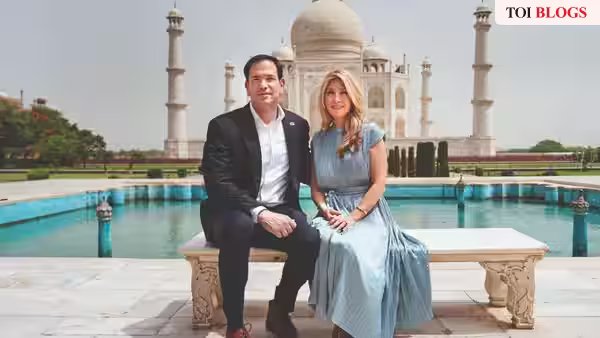

There is little doubt that India’s ties with the US have experienced significant headwinds over the last 18 months. As US Secretary of State Marco Rubio heads to India, there has been much discussion about these setbacks. Less asked is why, despite the friction, Indian policymakers — and other stakeholders — continue to invest in ties with the US. The answer lies neither in some conspiracy nor in a desire to curry favour with the US. It is about a calculation that it is in Indian self-interest to continue cooperation.Pragmatism Over OutrageDisquiet over Sino-American ties, actual and threatened US tariffs, President Trump’s approach to the Pakistani leadership, and anti-Indian incidents in the US, among other friction points, have led to demands for condemnation. There have also been calls for India to reduce engagement with or even disengage from the US. But cooperation has persisted and, in some areas, even deepened.Some have asserted that Delhi has held its fire due to fear or favouritism. But the explanation is simpler: pragmatism. There’s a reason why both Prime Ministers Manmohan Singh and Narendra Modi labelled the US an “indispensable partner”. When in opposition, parties might criticise cooperation with the US, but when in govt, they have recognised that it is crucial for India’s diplomatic, security, economic and technology objectives. Officials don’t have the luxury of outraging; they have had to focus on outcomes.Just consider some facts even in the context of the storms that have beset ties. In 2025-26, the US remained India’s largest goods trade partner, and by far its largest single export market. Then there are the significant services exports. These numbers don’t just represent revenue, but all-important jobs. The US is also India’s largest source of foreign portfolio investment and one of its top FDI sources.Those global capability centres going up? A significant chunk of them — some estimate even a majority — are American. The defence exports India is increasing? The US is the single largest destination, boosted by American companies incorporating India into their supply chains and participating in Indian efforts to enhance its defence industrial base. In terms of technology — both civilian and military — cooperation with the US has been seen as critical, for instance in the semiconductor, artificial intelligence, space and undersea domains. In addition, the US has been a top destination for Indian students going abroad, the largest single source of remittances and tourists for India, and a growing source of oil, natural gas and coal.Strategically, New Delhi needs partners to help it tackle its China problem. And despite the recent bout of Sino-US engagement, India clearly still sees the US as a useful like-minded partner in this regard in the defence, economic (including supply chain) security and technology spaces. A partnership with the US also strengthens India’s negotiating hand with Beijing. And then there’s the less visible bilateral counterterrorism, law enforcement and intelligence cooperation.So, it’s not surprising that India is playing the long game with the US, even as it adapts to changes in America and uncertainty about it.The US OptionIndian policymakers have also recognised that the US, ironically, can be an enabler even in their efforts to reduce dependence on the US. One way is, as mentioned above, by helping enhance India’s own capabilities. The second is by facilitating Indian diversification. Having the US in its portfolio of partners increases India’s leverage with other countries (many of whom might be diversifying from the US but are not disengaging from it either). Moreover, the US can have an influencer effect: for instance, others — particularly American allies — notice where American officials, capital and companies go.There might be another reason for India’s pragmatism when it comes to the US: a recognition that none of its partnerships is perfect or problem-free. Britain and Europe, for instance, have also backed sanctions on India for Russian oil imports; they, too, are engaging with Pakistan. Immigration headwinds and the backlash against Indians are increasing in Australia and Canada. When it comes to Russia, there is a close partnership with China, a large trade deficit for India, the recruitment of Indians into the military, and strikes killing Indian citizens in Ukraine and seafarers.The partnership with the US has also perhaps shown resilience because it is broader and more mature today. This is not just a Delhi-Washington relationship; there are several stakeholders involved and invested. It’s why you see chief ministers of different stripes also seeking to partner more with the US. This is true of several businesses as well — even if they don’t want the competition, they have wanted American capital, markets or technology.But this resilience isn’t immune to headwinds. And Washington will need to be aware that with every storm, it will erode. So will Indian interest in aligning with the US in ways that have benefited American interests if Delhi’s cost-benefit analysis of the relationship changes.Madan is senior fellow at Brookings Institution and author of ‘Fateful Triangle: How China shaped US-India relations during the Cold War’
Disclaimer: Views expressed above are the author’s own.