Tibetan Plateau Ice Increase: Between 1979 and 2018, ice inside the Tibetan Plateau has increased despite rising global warming, which should melt it: What is the surprising reason behind the unusual pattern?
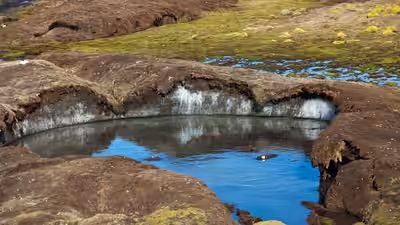
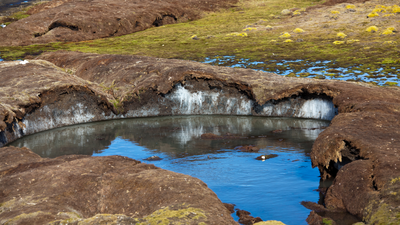
Global warming is supposed to have one obvious effect on frozen ground: it melts.And this is what is happening across most of the world’s cold regions, from the Arctic to the Alps. But high up on the Tibetan Plateau, something strange is going on. Scientists have found that across roughly a third of the region’s permafrost, the ground isn’t losing ice, it’s gaining it, even as temperatures around it are rising.But how is this reverse process happening?Let’s dig in to find out.The team behind this discovery, led by Yi Zhao and Dongfeng Li at Peking University along with Jan Nitzbon from Germany’s Alfred Wegener Institute, built a computer model covering the whole plateau and then checked it against real ice samples brought out from the ground.What they found doesn’t fit the usual warming story, and it is important to know because roads, buildings, and rivers all depend on this ground staying intact.Tibetan plateau permafrost is not melting amid global warming; it’s freezing more under the groundSince the plateau is high, remote, and hard to reach, ice data has always been scarce, so the team gathered records from 369 boreholes, 194 drilled before 2000 and 175 after. Soil samples were oven-dried and weighed to calculate ice content. Older holes averaged 16% ice by volume; newer ones averaged 25%. To confirm this wasn’t just site variation, they compared four pairs of boreholes drilled years apart in nearly the same spots, and every pair showed more ice in the newer hole.
But how is this phenomenon happening despite rising temperatures?
Permafrost isn’t frozen solid to the surface; the top few feet, called the active layer, get melted each summer and refreeze each winter. Stronger westerly winds have been carrying extra moisture across Eurasia from as far as the Mediterranean and Iran, and annual rainfall in the ice-gaining regions has increased about 60%, from nearly 9 inches before 2000 to about 14 inches now. Water reaching the base of the active layer stays cold enough, year-round, to freeze there permanently.
Testing rain against rising heat
To figure out what the reason was behind this, the researchers ran their model two more times. First, they kept rainfall at old, pre-2000 levels and let temperature rise like it actually did. They found that the ground lost ice, just like you’d expect in a warming world.Then they changed it, keeping temperature steady and letting rainfall rise instead. This time, ice built up even faster than in real life, about one and a half times as fast. They also checked ten other independent climate models, and seven of them showed the same thing, with frozen soil water increasing even as the air above it warms.
A three-mile block of extra ice
Between 1979 and 2018, the model estimates the westerly-fed parts of the plateau gained about 35 cubic miles of ice in the top 10 feet of ground, while the monsoon-fed southeast lost roughly a third of that. The plateau ended the four decades with a surplus of about 24 cubic miles of ice, roughly the size of a block nearly 5 kms on each side. A similar pattern has already been seen above ground, where Karakoram glaciers held steady while glaciers elsewhere shrank.