
Three Harvard students built a low-cost infrared headset designed to screen athletes for possible concussions in about 60 seconds; it won the $6,500 US James Dyson Award but still needs validation
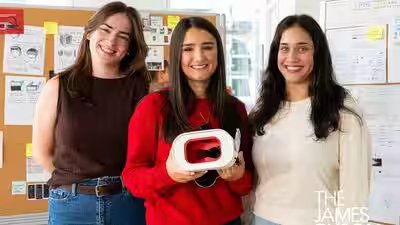
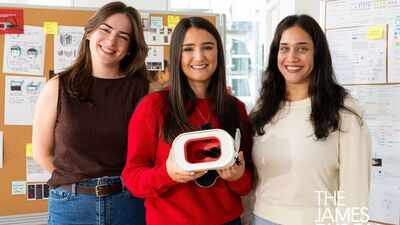
Three Harvard students have built a low-cost infrared headset that can screen athletes for possible concussions in about 60 seconds, bringing objective eye-tracking data from the clinic to the sideline. Their invention, called Rumble Rims, was named the 2026 US winner of the James Dyson Award and comes with a $6,500 prize to support further development. While the team emphasises that the device is a screening tool and not a diagnostic system, they say it could help coaches and families make clearer, faster decisions about whether an athlete should be removed from play and referred for medical evaluation, according to a PR Newswire release about the award.The gap the students wanted to closeConcussions are a persistent concern in youth and amateur sport. The US Centers for Disease Control and Prevention (CDC) reports that about seven in ten emergency department visits for sports and recreation related traumatic brain injuries involve children aged 17 and under, with contact sports accounting for roughly 45 percent of these cases. Separate CDC analysis of high school students found that around 15 percent reported at least one concussion linked to sports or physical activity in the previous year. Current guidance says athletes with a suspected concussion should be removed from play immediately and kept out until cleared by a healthcare provider.In practice, sideline assessments often rely on symptom checklists, balance tests and subjective judgement. Athletes may underreport symptoms because they want to stay in the game, and some neurological changes only become apparent when heart rate, movement and eye tracking are challenged. Expensive clinical eye-tracking systems exist, but they are not designed for quick use on a busy field or in a school gym. Radhika Saran, Cleo Pontone and Sophia DeVito set out to build something that could fit into this gap.How Rumble Rims worksRumble Rims combines a portable infrared headset, a coach-facing mobile display and a recovery dashboard. The headset uses infrared cameras and hot mirrors that reflect infrared light to the cameras while allowing visible light to pass through, so the athlete can still see clearly, as per the report. During screening, the athlete completes a short oculomotor task that captures how the eyes follow, fixate and move.The coach-facing display translates complex eye-tracking measurements into simple, real-time guidance. This does not tell the coach whether the athlete definitely has a concussion, but it can highlight whether the eye-movement patterns suggest neurological disruption that warrants removal from play and referral for professional evaluation. After the game, the recovery dashboard allows repeat testing over time, creating an objective record that athletes, families and clinicians can use to monitor progress before return to play. The team stresses that final return-to-play decisions should remain under the direction of a qualified healthcare provider.Designed with the sideline in mindThe students spoke with coaches, athletes and medical professionals while shaping the invention. Matthew McTague, a certified physical therapist and former collegiate athlete, told them that concussion symptoms may not always appear when an athlete is tested at rest. He recommended using tools like smooth pursuit eye tracking and real-world testing to improve evaluations, especially in high-pressure situations where athletes might downplay how they feel.Early concepts explored helmets, mouthguards, a black-curtain room and expandable structures that enclosed the screen, camera and athlete’s face. Through testing, the team realised accuracy depended less on building a controlled room and more on controlling the relationship between the eyes and cameras. That insight led to a headset design that moves with the athlete’s head while keeping the screen separate and the setup simple enough for coaches to use under sideline pressure.Recognition and next stepsRumble Rims was named the US national winner of the 2026 James Dyson Award, an international design competition that celebrates problem-solving inventions from the next generation of design engineers. The $6,500 prize will help the team build and test a higher-fidelity headset prototype, refine the oculomotor test and validate the system with athletes, coaches, trainers and medical advisors. Long term, they hope to pilot Rumble Rims with schools and youth sports programs, pursue medical-device validation pathways and make objective concussion screening accessible to every sideline.The invention will advance to the next stage of the award, with an international Top 20 shortlist to be announced in October and global winners chosen in November. Alongside Rumble Rims, two other US entries were named national runners-up. BiliRoo is a wearable phototherapy device designed to treat infant jaundice while allowing parents to hold their babies during care. Preta is a design material platform that transforms carbon-rich agricultural waste into high-performance materials for everyday products.Why validation still mattersWhile the concept is promising, the team is clear that Rumble Rims is still in development and needs further validation before it can be widely adopted. Objective eye-movement data responds to a real clinical need, because concussion assessment today still often depends on symptoms, history and clinical evaluation, while structural imaging is frequently normal and self-reporting can be incomplete. The next phase of work will focus on proving that the headset can reliably detect meaningful changes in eye tracking after head impacts, and that those signals align with clinical assessments and outcomes.If validation is successful, the technology could become a practical tool for schools and community leagues that cannot afford expensive clinical systems. For now, Rumble Rims represents a student-led attempt to move part of the concussion screening process out of the clinic and onto the field, where many of the hardest decisions are made in real time.