The US-Iran accord and shifting equations
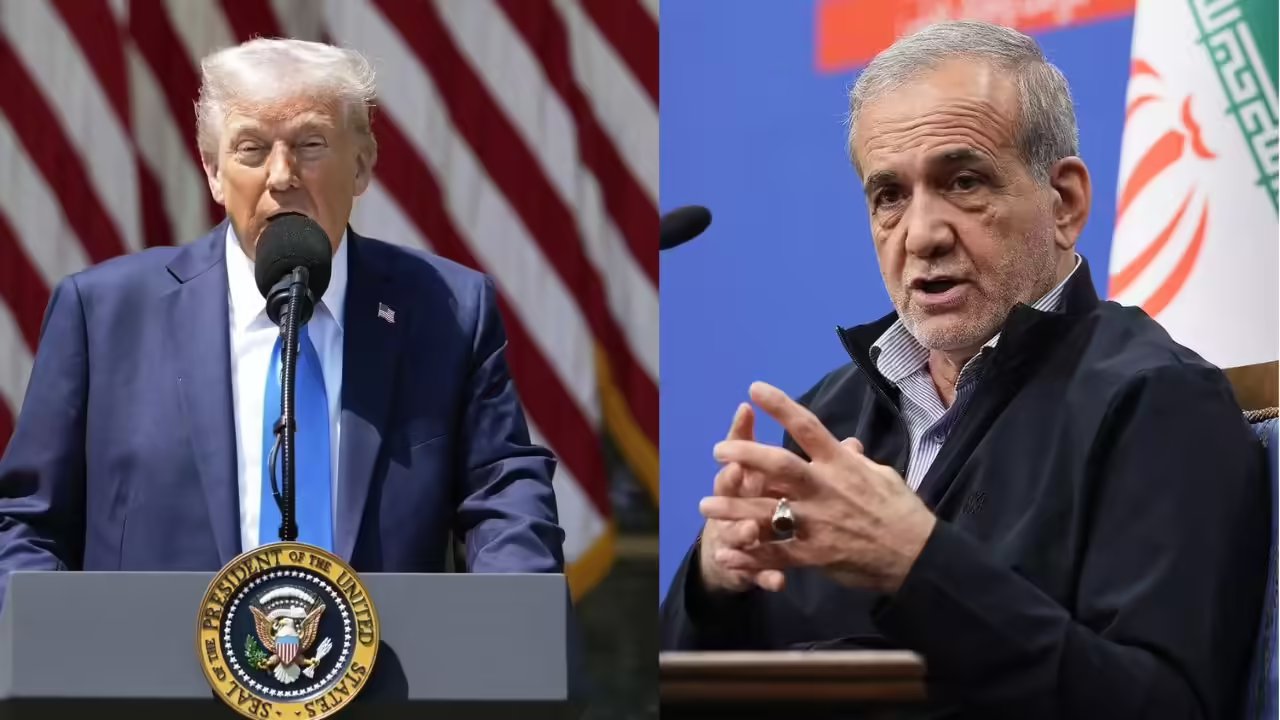
President Donald Trump’s remark that “without America there is no Israel, and without him there is no Israel” was unusually blunt. Yet it highlighted a strategic reality so far, and that may be shifting, with far-reaching consequences for West Asia’s geopolitical order. Israel’s military, diplomatic and financial strength has long rested on unwavering American support. Until around 2012, US and Israeli interests in West Asia largely converged, though their priorities differed. For Washington, energy security was paramount. Israel’s focus, by contrast, was national security, military superiority over its adversaries, and strategic depth through control of territories such as the West Bank of Palestine, the Golan Heights in Syria, and Shebaa Farms, Kfar Shouba Hills, and parts of Ghaja in Lebanon.
The American shale revolution transformed the United States from a major energy importer into a net exporter, reducing its dependence on Gulf oil. While the partnership remained robust, Israel’s security priorities acquired greater influence over US regional policy. This trend reached its peak during the recent conflict with Iran and amid President Trump’s personal support.
Israel’s long-standing objective has been to isolate the Iranian challenge from the Palestinian issue and from Tehran’s support for Hezbollah. While both Iran and Hezbollah reject Israel’s legitimacy, their motivations differ. Hezbollah frames resistance as a moral and religious duty to defend the oppressed, particularly the Palestinians. Iran, by contrast, embeds anti-Israel ideology within a broader strategy of regional influence, deterrence, sovereignty over its energy resources, regime security and great-power competition.

The recent war exposed the limits of efforts to contain or coerce Iran through military means alone despite facing sanctions and economic isolation for over four decades. Expectations that targeted strikes or the elimination of senior leaders would trigger rapid political collapse proved misplaced. Iran’s hardened underground facilities, missile and drone capabilities, and regional network enabled it to absorb substantial military pressure while retaining the ability to threaten critical maritime routes, including the Strait of Hormuz. The conflict imposed high costs on global energy markets and Gulf economies alike.
Domestic American politics also favoured restraint. Within the Republican Party, Trump-aligned conservatives supported an agreement that avoided deeper military entanglement, while hawkish factions warned against weakening Israel’s position. Democrats remain divided between traditional pro-Israel moderates and a progressive wing increasingly critical of Israeli actions in Gaza and open-ended US involvement in regional conflicts. Similar divisions are evident within the American Jewish community. Together with the economic and strategic costs of confrontation, these domestic pressures strengthened arguments for limiting unconditional American support to Israel.
These realities appear to have shaped the emerging US-Iran accord, which provides for a cessation of hostilities, the reopening of the Strait of Hormuz, and a 60-day framework for negotiations on sanctions relief and Iran’s nuclear programme. Besides the expulsion of the United States and Israel, the 1979 Iranian Revolution sought to export its revolutionary ideology across the Muslim world. These threats drove Gulf monarchies firmly into the American security architecture, leading to the establishment of extensive US military bases across the region. The recent war, however, laid bare the limits of Gulf dependence on the United States, as Washington was perceived to place greater weight on Israel’s security.
The Gulf states’ vulnerability to disruption in the Strait of Hormuz—through which most of their oil and LNG exports pass—combined with fears of prolonged instability, reportedly led them to exert sustained pressure on both Washington and Tehran for de-escalation. This was particularly evident in Qatar’s diplomatic role as a key mediator in the final stages of negotiations. Oman, long a trusted backchannel between Washington and Tehran, also facilitated contacts and hosted earlier rounds of talks. The shift is further reflected in indications that several Gulf states are prepared to support Iran’s post-conflict economic recovery, provided Tehran adheres to the agreement.
For Iran, survival under sustained US and Israeli military pressure constitutes a strategic achievement. Moreover, Tehran was able to place the American-Israeli partnership under strain while demonstrating its capacity to intervene in Lebanon should Israel escalate further. Crucially, it has reopened a vital global energy artery without relinquishing its long-standing strategic leverage over the Strait of Hormuz, which has emerged as a greater strategic instrument than a nuclear weapon.
Israel, by contrast, faces uncomfortable questions. Elements within the current government have pursued a vision of maximal territorial and security control, often associated with the idea of a “Greater Israel”. The agreement limits the scope for further escalation and signals that American support, while substantial, is not unlimited. Prime Minister Netanyahu’s inability to secure decisive outcomes against either Iran or Hezbollah, coupled with growing divisions within the American Jewish community, may weaken the political appeal of such maximalist visions and create space for a more pragmatic engagement with the Palestinian question.
The accord does not resolve the underlying conflicts. Tensions between Iran and Israel, between Israel and Hezbollah, and between Israel and Palestinian actors will persist. However, a significant outcome is the end of active hostilities between Iran and the United States, as well as between Iran and the GCC states. By reducing the likelihood of wider regional escalation, the agreement lowers the risk of further economic disruption and broader geopolitical instability in West Asia.
For Washington, the accord reflects a paradox: overwhelming military superiority failed to yield a decisive political outcome. The resulting accommodation with Iran sits uneasily with America’s traditional preference for imposing rather than negotiating terms. President Trump has managed this contradiction through calculated ambiguity, projecting success while obscuring the compromises that made the agreement possible.
More broadly, the conflict underscores the ongoing transition from a US-led order to a more diffuse, multipolar geopolitical landscape. What began with expectations of decisive military success ended in a costly stalemate that forced a pragmatic reset. Trump’s public acknowledgement of Chinese and Russian neutrality during the crisis underscored this reality. Beijing and Moscow enhanced their diplomatic standing by avoiding direct involvement while positioning themselves as potential interlocutors.
For India, the lesson is clear. The imperatives of Energy security, diaspora protection, supply-chain resilience, and strategic autonomy reinforce the traditional policy of engaging all sides equally rather than tilting excessively toward any one side. At the same time, the expanding strategic space occupied by China and Pakistan in West Asia could carry important implications for India’s interests, including on Kashmir and its broader border disputes, which we need to gear up for.
Disclaimer
Views expressed above are the author’s own.