The story of the first human tool that might not be a weapon, scientists say it was far more important |


When people imagine the earliest human tools, they usually picture weapons. Stone handaxes, sharpened spears and heavy clubs have long dominated both archaeology textbooks and popular culture, reinforcing the idea that survival in prehistoric life depended mainly on hunting and violence. But some researchers now believe one of humanity’s most transformative early inventions may have been something far less dramatic: the container. Long before cities, farming or metal tools existed, the simple ability to carry water, transport food and store resources may have quietly reshaped human survival, cooperation and migration in ways that helped lay the foundations of civilisation itself.In recent years, archaeologists and cognitive scientists have begun paying closer attention to what they call “mobile containers” like bags, baskets, slings, nets and other carrying devices that may have been central to prehistoric life. A 2020 paper by cognitive scientist Thomas Suddendorf and colleagues described mobile containers as a possible “keystone human innovation”, arguing that carrying technologies may have played a much larger role in human evolution than previously recognised. More recently, a 2026 study by researcher J. C. French examining the origins and development of mobile containers explored how transport and storage technologies may have shaped hunter-gatherer societies over thousands of years.
Why researchers are rethinking the first human tool
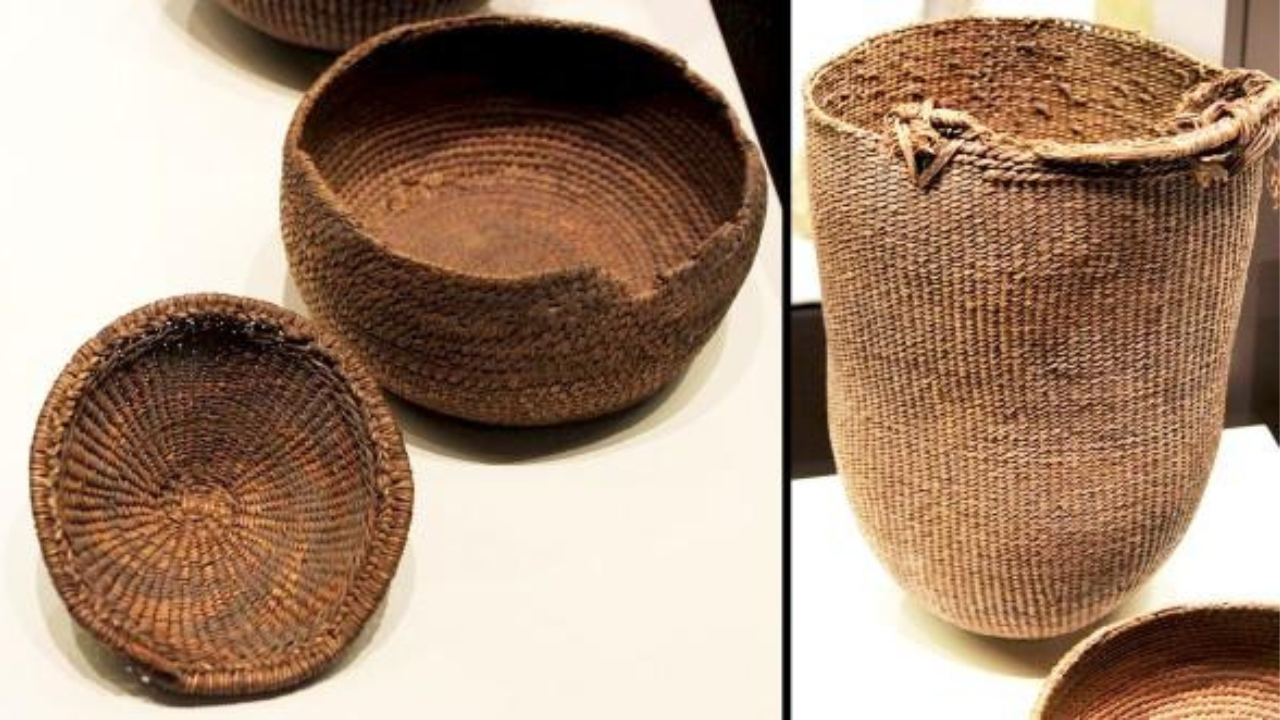
For decades, archaeology focused heavily on stone tools because they preserve exceptionally well in the archaeological record. The National Research Council notes that Oldowan stone tools date back at least 2.6 million years, while discoveries from Gona in Ethiopia remain among the earliest widely accepted examples of stone-tool use.But that creates an important bias. Stone survives for millions of years, while organic materials such as wood, bark, leaves, woven fibres and animal skin usually decay. As a result, archaeologists may be seeing only a fraction of prehistoric technology.Researchers studying mobile containers argue that some of the most important tools in early human life may have been made from fragile materials that disappeared long ago. The archaeological record, in other words, may naturally favour weapons and cutting tools simply because stone lasts longer than fibre or leather.
The simple invention that may have changed survival
The argument for containers is surprisingly straightforward. Once early humans could carry water, transport gathered food and store resources for later use, their ability to survive difficult environments would have improved dramatically.Researchers believe containers may have allowed prehistoric groups to travel longer distances, move resources between campsites and survive in landscapes where food and water were scattered across wide areas. Carrying technologies may also have helped parents transport infants, move firewood and share food within social groups.Some anthropologists argue that gathering plant foods was likely just as important to human survival as hunting animals. If that is true, then the ability to transport gathered resources may have become one of the defining survival technologies of early human societies.Researchers stress that this does not prove the container was literally the first human tool ever invented. Instead, the argument is more cautious: portable containers may have been among the earliest truly transformative technologies in human evolution.
The strongest archaeological clue comes from ostrich eggshells
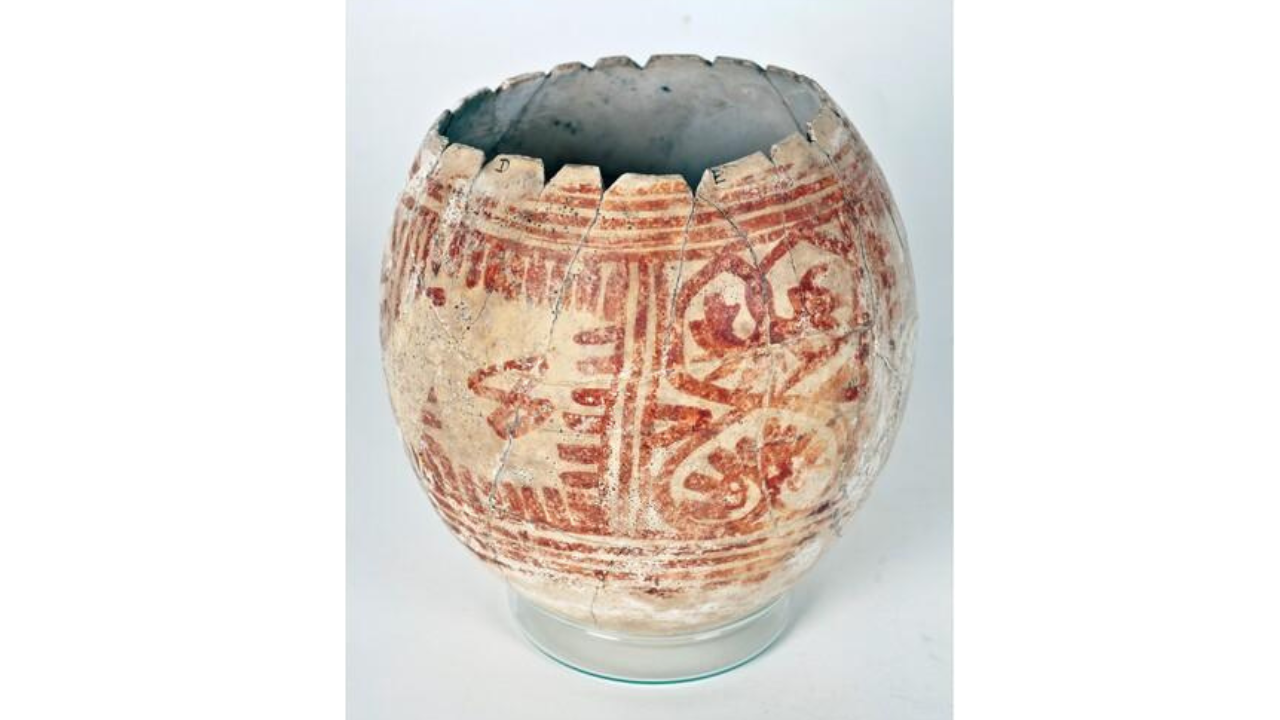
One of the clearest pieces of evidence for ancient containers comes from southern Africa. In 2010, researchers led by archaeologist Pierre-Jean Texier published a major study in the journal PNAS examining engraved ostrich eggshell containers from Diepkloof Rock Shelter in South Africa.The research team included scientists from institutions such as the University of Bordeaux, University of Tübingen, University of Cape Town, Stanford University, the British Museum and the Max Planck Institute for Evolutionary Anthropology.The study showed that humans were using modified ostrich eggshells as portable water containers around 60,000 years ago. That does not prove containers existed hundreds of thousands of years earlier, but it does provide direct archaeological evidence that prehistoric humans relied on portable storage technologies long before civilisation emerged.
Why the earliest containers are so difficult to prove
Researchers remain cautious about pushing the origins of containers too far into the past because organic materials rarely survive prehistoric conditions. Wooden trays, woven baskets, animal-hide slings and fibre nets would almost certainly decompose unless preserved in extremely unusual environments.That means much earlier carrying technologies may never be directly discovered. Some anthropologists suggest simple containers could date back hundreds of thousands of years, but these ideas remain hypotheses rather than proven facts.J. C. French’s 2026 study approaches the question carefully, treating mobile containers as an inference built from scattered archaeological clues, ethnographic comparisons and the practical needs of hunter-gatherer life rather than direct evidence of the very first container.
Why the idea changes how scientists view prehistoric life
The container theory challenges the traditional image of prehistoric humans as societies focused mainly on hunting and violence. Increasingly, archaeologists emphasise gathering, transport, planning and food sharing as equally important parts of human survival.Thomas Suddendorf and his colleagues argued that carrying technologies may have influenced cooperation, delayed planning and resource sharing within groups. The ability to transport and store resources may also have helped humans expand into harsher environments where survival depended on moving supplies across long distances.That does not diminish the importance of weapons or stone tools. Hunting technologies remained essential throughout human evolution. But the growing research around containers suggests the ability to carry may have mattered just as much as the ability to cut or kill.
The overlooked invention that quietly shaped civilisation
Today, containers are so common they barely attract attention. Bottles, baskets, bowls, bags and boxes are woven into nearly every aspect of modern life. Yet researchers increasingly argue that this simple technology may have quietly shaped some of the most important developments in human history.Without containers, humans could not easily store surplus food, transport water across long distances or move valuable resources between groups. Those abilities later became central to migration, trade, planning and cooperation.So while archaeologists still cannot say with certainty what the very first human tool was, a growing number of researchers now believe one of humanity’s earliest and most transformative inventions may not have been something designed to kill, but something designed to carry.