
The space tragedy that shocked the world: Remembering the mission that landed with a dead crew as Soyuz MS-29 prepares to fly |
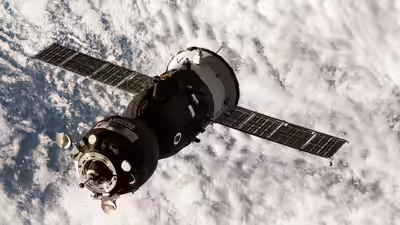
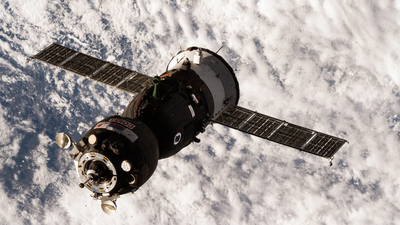
On 30 June 1971, recovery teams in Kazakhstan approached a Soyuz capsule that appeared to have completed a flawless return from space. The spacecraft had undocked from the world’s first space station, survived re-entry, deployed its parachutes, and landed exactly as planned. Yet when the hatch was opened, commanders found all three cosmonauts dead. The Soyuz 11 disaster remains the only incident in history in which humans have died in space beyond Earth’s atmosphere. Fifty-five years later, as the Soyuz MS-29 mission prepares for launch on 14 July 2026, carrying Russian cosmonauts Pyotr Dubrov and Anna Kikina alongside NASA astronaut Anil Menon, the shadow of Soyuz 11 still shapes every phase of crewed spaceflight. The Guinness Book of World Records marked it as the deadliest incident in the history of crewed spaceflight. The tragedy transformed spacecraft safety standards, altered Soyuz design permanently, and became an unlikely moment of respect between Cold War rivals.
Soyuz 11 became a historic success before turning into the deadliest tragedy in space
The Soyuz 11 crew: Georgi Dobrovolsky, Vladislav Volkov, and Viktor Patsayev, launched on 6 June 1971 and became the first humans to board the world’s first space station, Salyut 1. During their 23-day stay, they conducted scientific experiments, tested the realities of long-duration habitation in orbit, and set a new human endurance record in space. At the time, the mission was celebrated as one of the Soviet Union’s greatest achievements.NASA historian John Uri wrote:“The Soviet Union established the first experimental space station in Earth orbit in June 1971.” The mission proceeded largely as planned. After completing their work aboard Salyut 1, the crew undocked and began the journey home. Ground controllers received no indication that anything had gone wrong. The descent module re-entered Earth’s atmosphere normally and landed safely in the Kazakh steppe. Recovery personnel are expected to greet national heroes. Instead, they discovered three motionless crew members strapped into their seats.
Why the Soyuz 11 crew died after a successful landing
Subsequent investigations revealed that the accident occurred during module separation before atmospheric re-entry. A pressure equalisation valve opened unexpectedly at an altitude of approximately 168 kilometres, causing rapid cabin depressurisation. Because the crew were not wearing pressure suits, the atmosphere inside the capsule escaped into space within moments. According to NASA’s Safety and Mission Assurance records:“They rapidly lost consciousness as the pressure continued to drop and died within two minutes. Not wearing pressure suits, they had no hope of surviving.” Medical and flight data later showed that the cosmonauts lost consciousness within seconds. Despite attempts by Viktor Patsayev to reach the leaking valve, the crew had no realistic chance of survival. The spacecraft itself continued functioning perfectly, following its programmed return sequence all the way to landing. The Soyuz 11 crew remain the only human beings known to have died in space beyond the Earth’s atmosphere.
How Soyuz MS-29 reflects the lasting legacy of the 1971 disaster
The impact of Soyuz 11 was immediate and far-reaching. Soviet engineers halted crewed Soyuz flights while redesigning the spacecraft. One of the most important changes was the mandatory use of pressure suits during launch and landing phases. That rule remains in force today. NASA notes that “since then, all cosmonauts have worn spacesuits during Soyuz launches and landings”. The tragedy also produced an unexpected moment of international unity. During the height of the Cold War, the United States publicly mourned the fallen cosmonauts. NASA astronaut Thomas Stafford attended the state funeral on behalf of President Richard Nixon, signalling a rare display of respect between rival space powers. Historians regard the event as one of the factors that helped foster later cooperation, culminating in the Apollo-Soyuz Test Project in 1975.That legacy is visible again in Soyuz MS-29, scheduled to launch on 14 July 2026. The mission will carry Roscosmos cosmonauts Pyotr Dubrov and Anna Kikina, together with NASA astronaut Anil Menon, to the International Space Station for an approximately eight-month expedition. The multinational crew symbolises how far human spaceflight has evolved since 1971. Every Soyuz spacecraft launched today carries lessons written in the deaths of Dobrovolsky, Volkov, and Patsayev. While Soyuz MS-29 aims to continue routine operations aboard the International Space Station, it also serves as a reminder that modern safety procedures, pressure-suit requirements, and spacecraft redesigns were born from one of the most devastating moments in exploration history. More than five decades later, the story of Soyuz 11 remains both a warning and a foundation for every crew that follows.