
The SEO guy is still here, and so are we

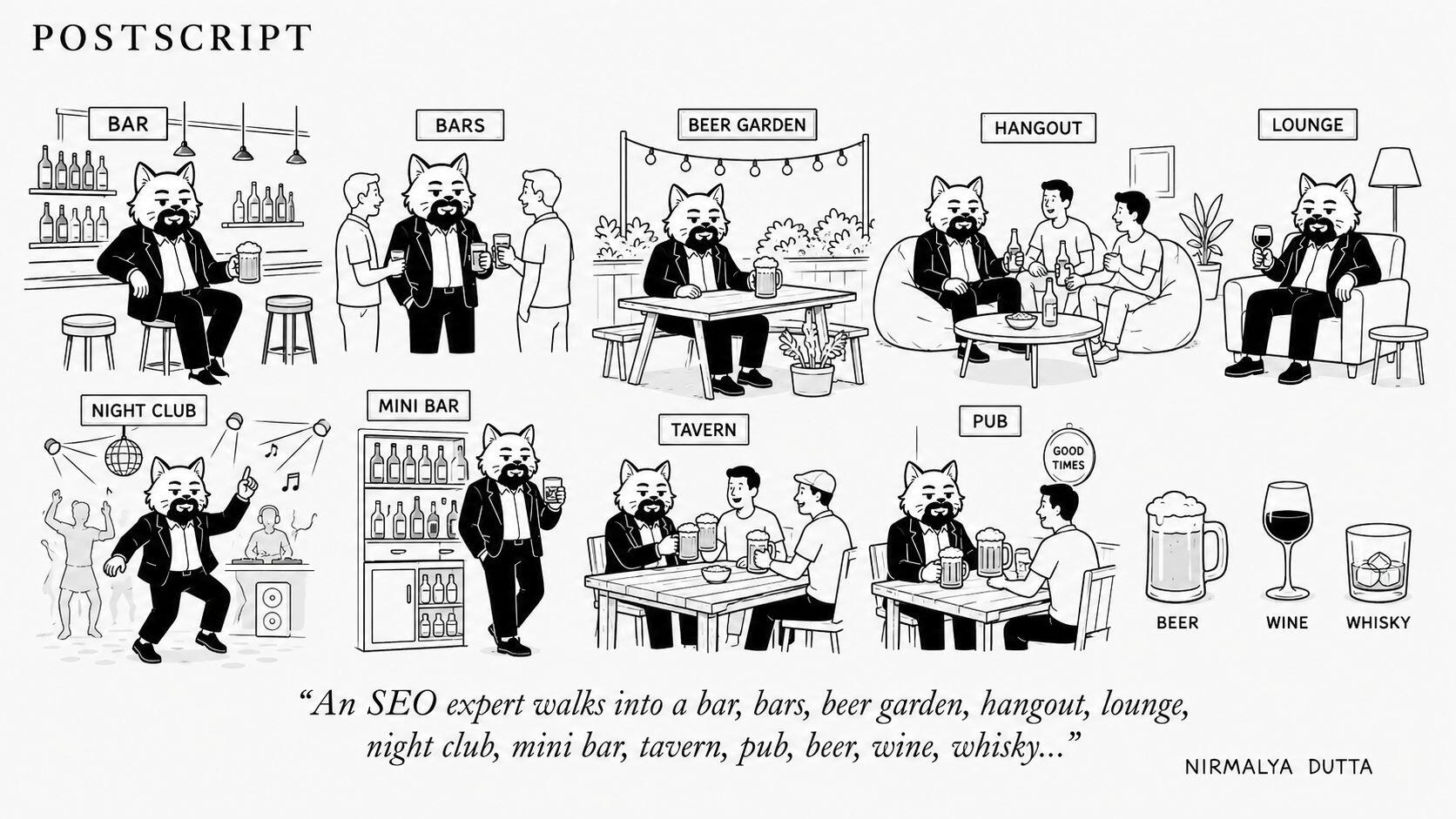
There is a guy in every Indian newsroom whose single job is to make sure the headline contains the words people are already typing into Google. He does not write the story. He reads it, winces, and appends a colon, after which comes the keyword: the actor’s name, the IPO, the phone that launched, the ailment currently trending on WhatsApp. He is paid to ensure that a piece of journalism arrives at the reader disguised as the answer to a question the reader was too bored to finish asking. We have all made our peace with him, which is precisely the problem.
Somewhere along the way, and I have been in these rooms long enough to have helped lay the track, we decided the metric was the point. Not the story that produced the number, not the reader the number stood in for, but the number itself, glowing on a dashboard that someone refreshes the way an anxious man refreshes his phone for a text that is not coming. We built desks around the dashboard. We hired for it. We promoted the people who understood it and quietly reassigned the ones who kept asking what it was for, which is a career-limiting question in any organisation that has stopped wanting to know the answer.


Consider the headline itself, that swollen, load-bearing sentence into which the guy has folded every term the algorithm was last seen sniffing at. I need not caricature it, because the specimens are lying in the open, bylined and datestamped.
Sample this: “Dharmendra’s success story in Bollywood, net worth, love life, first wife, everything you need to know about the ‘He-Man’,” a headline attached, as it happened, to a story about an eighty-nine-year-old man on a ventilator.
Or “Who is Sanjana Ganesan? Everything You Need to Know About Jasprit Bumrah’s Wife, Check Age, Family, Career, Net Worth and Their Love Story,” a woman who is herself a working broadcast journalist, introduced to the reader chiefly as an appendix to her husband.
Read either aloud. Notice that it is not, strictly, a sentence in English. It is a search query wearing a headline’s clothes, a queue of nouns holding hands and pretending to be a thought.
The tell is that these constructions cannot end. A real headline knows where it stops, because it is making a claim, and a claim has edges. The keyword headline stops only when it runs out of keywords, which is why it keeps accreting them: Age, Family, Career, Net Worth, like a man patting every pocket in turn because he has forgotten which one holds the point. There is no point. There was never meant to be one. There was a search volume and we serviced it.
The graphic doing the rounds, black background, yellow text, the confident hush of a thing built to be reshared rather than read, informs us that going viral is an event and not a strategy. True. It adds that the creators who lasted were the ones who converted attention into loyalty. Also true, and also useless, because it declines to say the difficult part aloud: loyalty is expensive and slow and boring to build, and it does not photograph well on a quarterly review. Attention is cheap and fast and arrives with a chart attached. So we chose attention, called it audience development, and gave the SEO guy a designation.

The trouble is that the ground beneath the dashboard has quietly given way. The Reuters Institute, surveying media leaders across fifty-odd countries, finds that publishers now expect search-engine traffic to nearly halve over the next three years, with Google’s organic traffic to more than two and a half thousand sites already down by a third worldwide in a single year. Even the God metric has found a god of its own, and He is an AI Overview that answers the reader’s question on the results page so the reader never has to arrive at ours. We spent fifteen years teaching an algorithm to bring us strangers. The algorithm has now learned to keep them.
Here is what nobody prints on the graphic. A newsroom optimised for traffic is not neutral about what it covers. It is quietly, structurally hostile to anything a search engine has not yet learned to want. The reported piece, the one that takes four sources and a fortnight and arrives without a keyword, loses the morning meeting. That’s not because anyone in the room is a villain, but because the dashboard has no column for it, and a thing that cannot be measured, inside an organisation that has agreed to be governed by measurement, is functionally a thing that does not exist. We did not kill the ambitious story; we simply stopped scheduling it.
And the loyal readers, the ones the yellow text is so touchingly certain we are cultivating, can tell. Not consciously, perhaps, but the way you can tell a friend is calling only because he wants something.
The Reuters Digital News Report for 2026 describes an India that now takes most of its news from YouTube and WhatsApp, a market not merely mobile but wholly platform-fed, which is the audience we earned, not the one that befell us. They come for the keyword, they get the keyword, and they leave, because we have trained them, expensively and with great success, to want nothing further from us than the keyword. We taught them the transaction. Then we convened offsites to wonder why they would not commit.
So what is the SEO guy still doing here? His job, which we assigned him. He is not the disease. He is the thermometer, and shooting the thermometer has never once brought down a fever. The uncomfortable thing the graphic will not say, because you cannot reshare an accusation that implicates the person resharing it, is that he stays because he works. The traffic was real. The revenue, such as it was, was real. He may in fact be the most honest man in the building, the only one who long ago stopped pretending we were in any business other than the one we were actually in.


The forecasts for the coming year now warn, in the tone of a man discovering fire, that AI will “brutally expose which organisations were adding insight and which were adding volume,” a sentence a consultant will charge you for and a subeditor could have supplied a decade ago for the price of a chai. The volume business is being repossessed by the very machines that taught us to love volume, and they do it more cheaply, in nine languages, without a Provident Fund. Loyalty, it turns out, was never a slide in the deck. It is the residue of a thousand small choices to run the better story over the bigger number, made in rooms where the bigger number is sitting right there, glowing, asking to be chosen.
There is a useful confusion buried in the phrase “the Midas touch.” We use it now as flattery, the mark of the man who turns everything he handles into money, and we have forgotten that in the myth it was a curse, the whole point of the story being that Midas turned his food, his wine, and his daughter to cold metal and sat down to starve at a groaning table. The compliment is a mistranslation of the warning.
We are Midas, and we made the identical error about our own gift. Everything we touched turned to traffic. We called it the golden age of digital, and it was gold, genuinely, measurably, gold on every dashboard. It is only now, seated at a table heaped with the stuff, that we notice we cannot eat it. The pageview will not convert into the one currency a newsroom actually lives on, which is the reader who returns on purpose, unbidden, out of something that is not a search query. What we took for the blessing was the curse all along. They were never two separate things, waiting to be told apart. They were the same touch, and we mistook the one for the other because the gold was real and arriving and easy to count, and the starving takes longer to show up on a chart.
The SEO guy, to his credit, never claimed to be Dionysus. He granted no wishes. He simply did the job we asked, which was to turn each thing we touched to gold, and he did it well, and he is still here, colon at the ready, waiting for the next thing you were already about to type.
Disclaimer
Views expressed above are the author’s own.