The new normal and what comes next
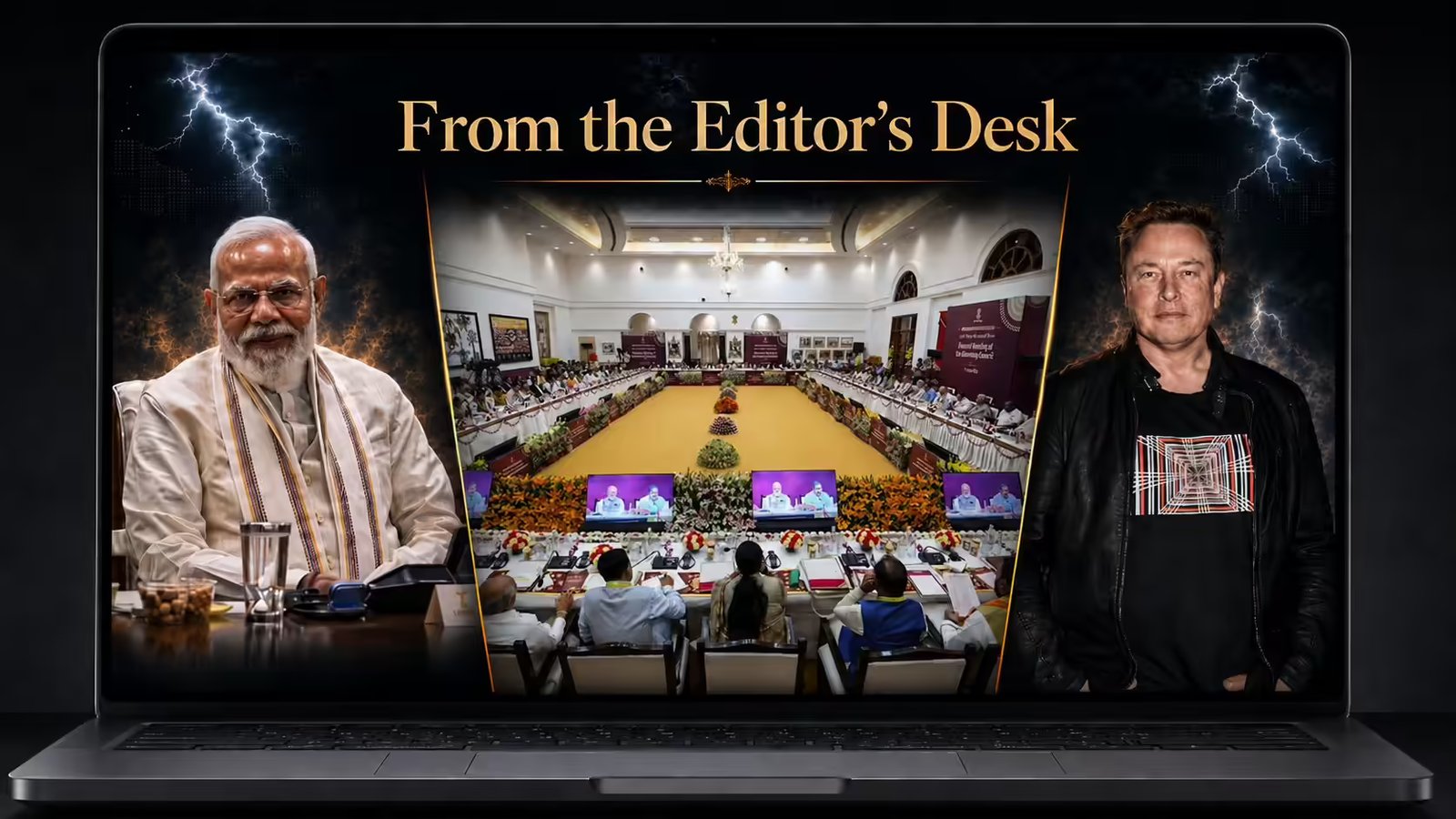
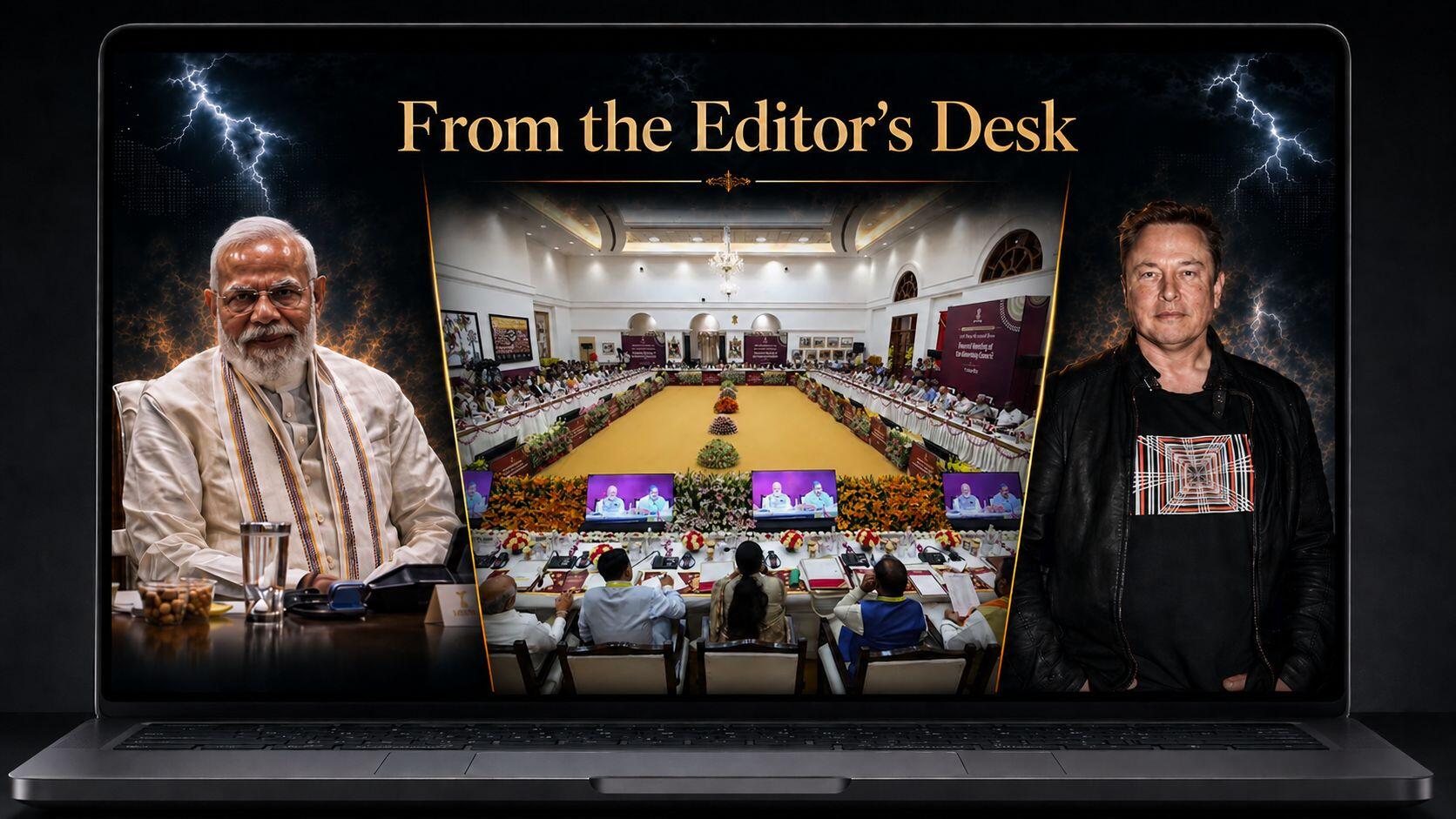

This week, we’re tracking:
- How 12 years of Modi have reshaped Indian politics and what the next phase could look like.
- Why the INDIA bloc still hasn’t found a clear way to take on Modi.
- How a weaker rupee quietly pushed India’s $5 trillion GDP milestone further away.
- Why SpaceX’s mega IPO could create thousands of millionaires, but also deepen the Musk bet.
- How Google’s mosquito plan could change the way we fight disease.
Twelve years of Modi govt: What changed, the new normal and what comes next
When Narendra Modi first came to power in 2014, India was tired of messy coalition politics. Twelve years later, one thing is clear: Indian politics now works very differently.
Modi, the BJP’s electoral insurance policy
- The most visible shift is politics moving from party to person. National elections were once contests between coalitions and manifestos; today they feel closer to referendums on one man. Even state campaigns lean heavily on a familiar face from Delhi. Chief ministers matter, caste alliances matter, local anger matters – but when things get tight, the BJP falls back on Modi, the guarantor: its electoral insurance policy. The promise is simple: you may not like your local MLA, but you can trust the person at the top.
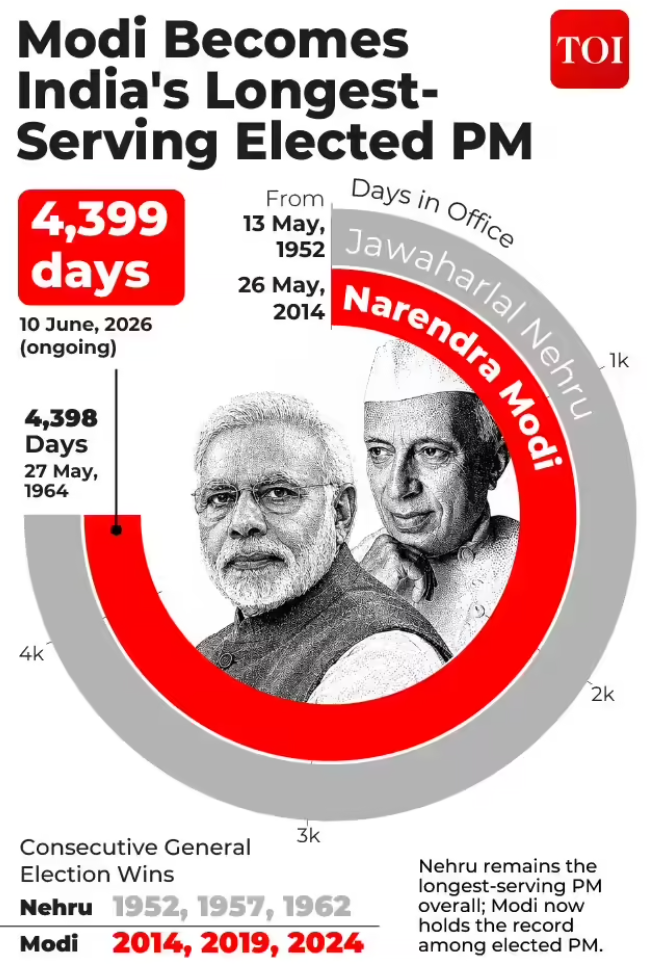

That shift has strengthened the BJP’s ability to nationalise every election. The old intermediaries have not disappeared, but they have become less central.
- The second big change is in how welfare works – and what it means politically. Jan Dhan accounts, Aadhaar-linked databases, mobile numbers and direct benefit transfers have turned welfare from a patchwork of schemes into a continuous machine. Gas connections, toilets, rural homes, tap water, health insurance, PM-Kisan transfers – each comes with a message that connects the last mile back to the top.
The genius of this model is attribution. When a cylinder arrives or a cash transfer pings, the state is not a faceless office; it’s a leader’s name and photo on a text, a certificate, a TV ad. That doesn’t mean every scheme works perfectly or that poverty has vanished. Many households still juggle insecure jobs, health shocks and inflation. But the grammar of legitimacy has shifted.
- All of this has happened alongside a third shift: Centralisation. The Prime Minister’s Office is now the undisputed command centre for policy priorities, messaging and monitoring. Supporters see this a necessity. Critics worry that Parliament, the Cabinet, regulators, and even the federal compact have all been bent around a single node of power. The irony is that both sides are right. Centralisation has delivered speed and coherence, but it has also raised the stakes of error by shrinking the number of truly independent veto points.
Nationalism: The new normal
Nationalism is the fourth piece of the new normal. India has always had nationalist politics; what has changed is that it is no longer an event, it’s an atmosphere. Border tensions, air strikes, counter-terror operations, diaspora rallies, summits, the Ram Mandir in Ayodhya, the abrogation of Article 370, civilisational rhetoric and the language of “Viksit Bharat” blur into one narrative: India is finally claiming its rightful place, and this leadership is the vehicle.
What comes next
By most conventional rules, a 12-year-old government should be sweating. There seems plenty of discontent to work with like jobs and exam leaks. But there is a structural problem with opposition in the Modi era. The Congress is large enough to matter but too weak to dominate. Regional parties are formidable at home but struggle to offer a common national story. The INDIA bloc has shown that seat-sharing arithmetic can hurt the BJP; what it has not yet produced is a simple, positive narrative of what comes after this model of power.
So what comes next? Twelve years in, the real test of PM Modi’s new normal is not whether it has changed India. It has. Now, PM Modi is competing not only against the opposition. He is competing against the expectations created by his own success. The Viksit Bharat frame is an attempt to shift discourse from not just “what we delivered,” but to “where we are going.”
12 years and counting: How to take on Modi? The opposition still isn’t sure
The latest INDIA bloc meeting had the usual mix: many leaders, polite smiles in public and plenty of unease behind the scenes. But it was surely lacking the energy and enthusiasm.
The 2024 Lok Sabha results gave the opposition a boost. The BJP lost its single-party majority, and Parliament suddenly felt more competitive. But since then, the supposed “anchor” states have wobbled. Uddhav Thackeray lost ground in Maharashtra. Mamata Banerjee is out in Bengal. M K Stalin has stumbled in Tamil Nadu. The “regional satraps” are busy defending themselves.
The opposition’s problem is easy to describe and hard to fix. The BJP has Modi, a strong organisation, a clear ideology, welfare reach, money power and an electoral machinery. The opposition has strong state leaders and a bigger presence in Parliament than before. What it still lacks is a clear answer to the voter’s question: what comes next?
Leadership is one issue. Modi is the BJP’s face for everything. The opposition has no equivalent. Rahul Gandhi is its most visible national campaigner, but regional parties do not want the Congress automatically taking charge.
Then there is the narrative problem. The opposition raises real issues: unemployment, inflation, institutions, crony capitalism, federalism and the Constitution. But these often sound like separate complaints, not one clear national story.
Organisation matters too. The BJP and RSS work between elections. The INDIA bloc will need more than meetings and photo-ops. It needs booth-level coordination, shared volunteers, legal teams, social media teams and fast responses to misinformation.
The BJP’s message, whether you like it or not, is easy to understand: strong leader, strong nation, welfare delivery, cultural pride and development by 2047. The opposition still needs a story that is just as simple.
Who ‘stole’ $1 trillion from India’s GDP?
India has quietly notched up a serious growth story. Between 2018-19 and 2025-26, nominal GDP has climbed from about Rs 189 lakh crore to roughly Rs 345-346 lakh crore. That’s almost a doubling in seven years, despite a once-in-a-century pandemic, global growth wobbling, war shocks, and choppy capital flows. Growth in current rupees has averaged close to 9% a year, with four of those seven years seeing double-digit nominal growth.
And yet, India has “missed” the much-hyped $5 trillion economy target.
So what went wrong? Did the factories not get built, the software not get exported, the roads not get laid? Not quite. The culprit is far less dramatic, which is precisely why it’s so powerful: the exchange rate.
The economy grew. The rupee shrank.
Here’s the uncomfortable arithmetic. India produces, spends, saves and pays in rupees. But the global scoreboard, from multilateral agencies to investment banks, converts everything into dollars.
Over 2018-19 to 2025-26, India’s nominal GDP in rupees grew around 9% a year. But in US dollar terms, the growth rate was closer to 3.5–5.5% annually, depending on how you slice the period. The reason: the rupee weakened from about Rs 69.9 to the dollar in 2018-19 to around Rs 88.3 by 2025-26.
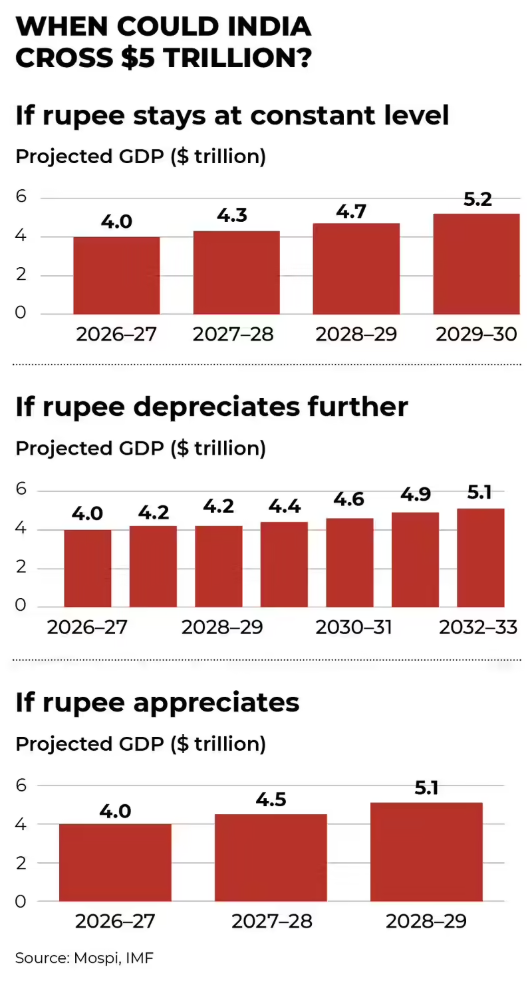

If the rupee had simply stayed where it was on average in 2018-19, and the real economy had grown exactly as it did, India’s 2025-26 GDP would have been in the ballpark of $4.95 trillion. In other words, we were basically at the finish line in economic effort, but the currency translation shaved off more than $1 trillion on the dollar scoreboard.
Why dollar GDP matters, even if you don’t earn in dollars
For a domestic voter, life is denominated in rupees: jobs, prices, EMIs, wages. Whether GDP is $3.9 trillion or $4.9 trillion may feel abstract.
But for the world, dollar GDP is a noisy but powerful signal. It shapes global rankings, investor perception, boardroom conversations, sovereign credit debates and the tone of multilateral negotiations. A country that has “crossed $5 trillion” sounds different from one that’s still below it, even if the underlying rupee economy is identical.
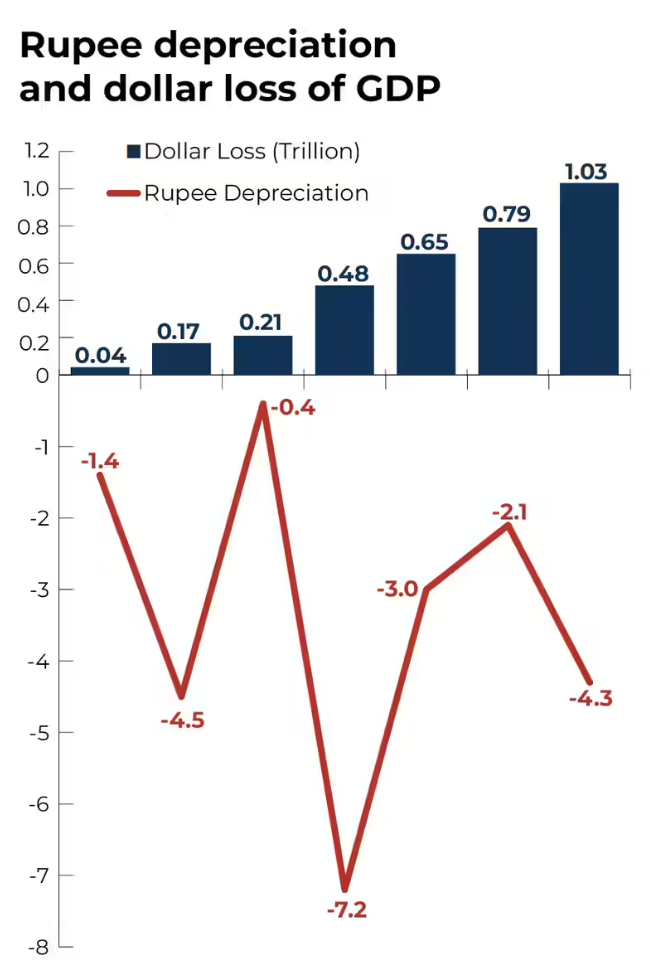

This is why the exchange rate feels like a “thief” in this story. It didn’t steal growth. It stole bragging rights.
With SpaceX, Elon Musk shows how to launch millionaires
It’s a once-in-a-generation wealth event that is set to mint thousands of new millionaires, turn Elon Musk into the world’s first trillionaire, and quietly drag millions of ordinary savers along for the ride-whether they like it or not.
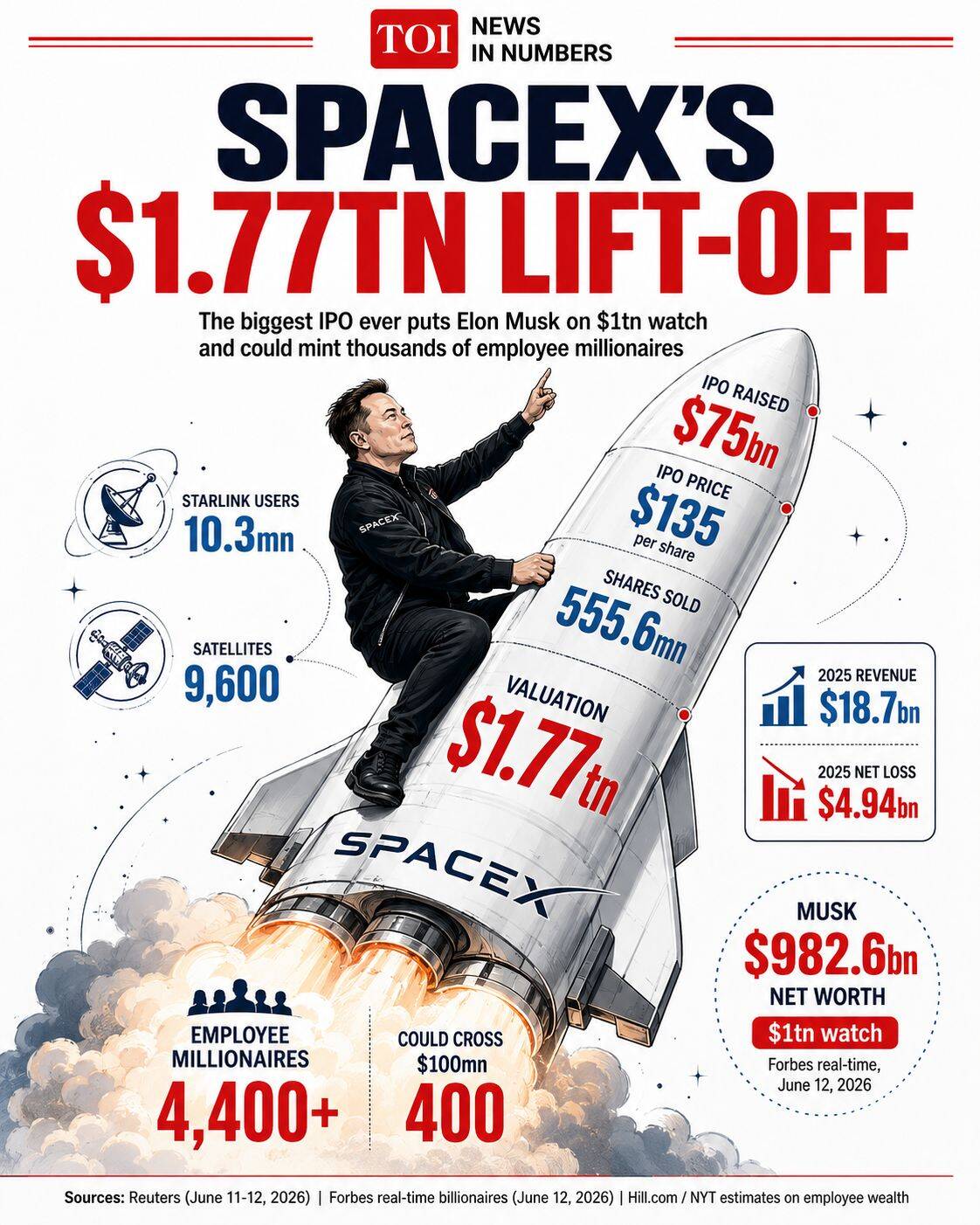

In 2011, Trevor Hise ignored his parents’ advice to take the “safe” job at General Electric and stuck with a scrappy rocket start-up instead. That start-up was SpaceX. Over 12 years, he accumulated more than 100,000 shares. With SpaceX expected to price around $135 a share, the New York Times reported that his stake is now worth roughly $13.5 million. “The magnitude of this has been ridiculous,” said the 37-year-old former launch engineer, who now calls himself semiretired.
He’s far from alone. A San Francisco investment platform, Hill.com, estimates more than 4,400 current and former SpaceX employees will cross the millionaire line in this IPO, and about 400 of them could be looking at $100 million-plus windfalls. “It’s uncommon to have 400 people at that threshold,” Hill.com’s Andrew Benson said. “It speaks to the enormous wealth that’s being created here.”Some employees took huge personal risks to get here.
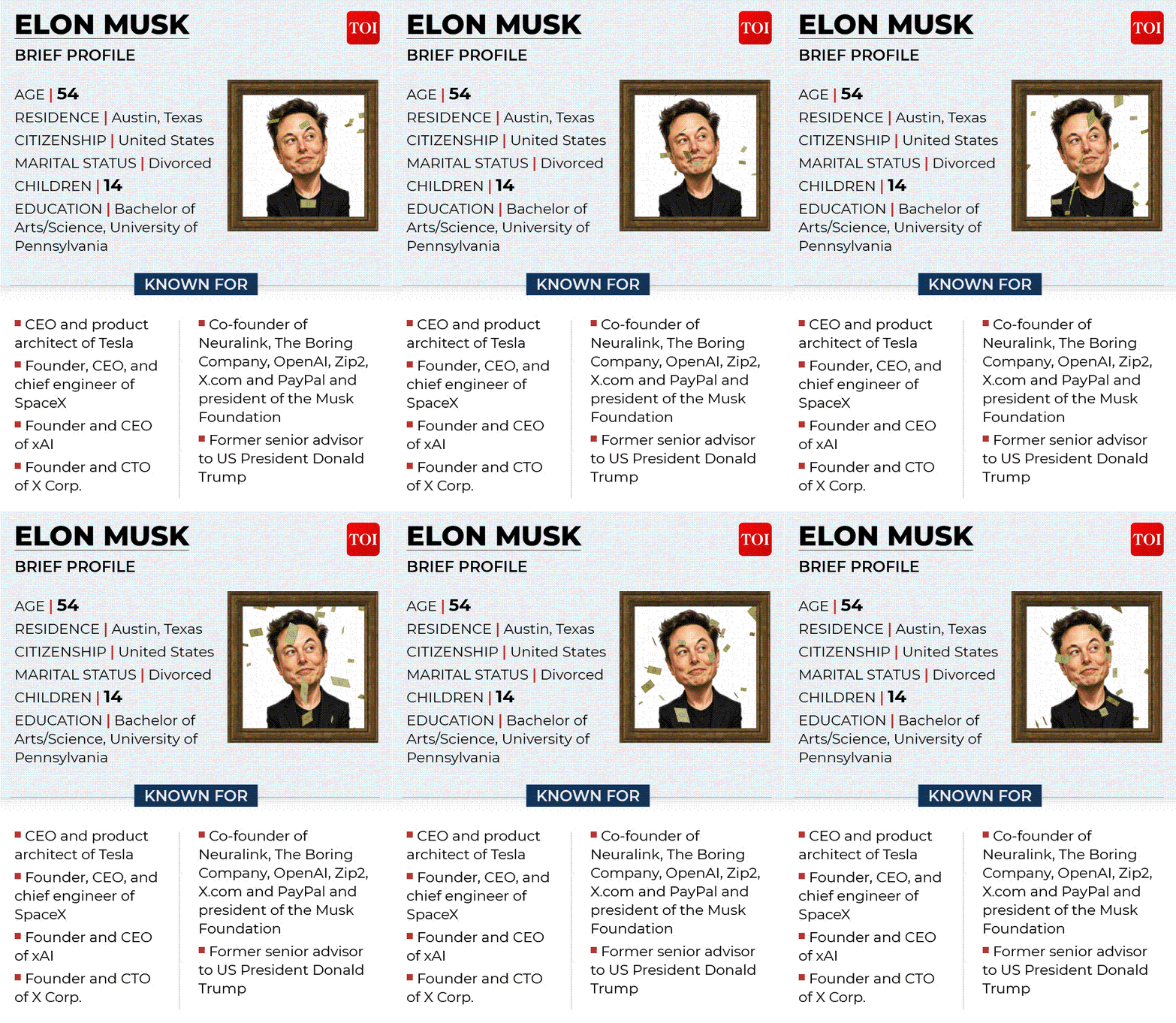

Zoom out from the anecdotes, and the scale gets staggering. SpaceX is targeting a valuation of about $1.8 trillion and raising some $75 billion, making this the biggest IPO in history. The Financial Times notes that the company’s roughly $1.78 trillion valuation drops it straight into the club of trillion-dollar giants, despite generating only a fraction of their revenue. SpaceX brought in $18.7 billion in 2025 but still lost $4.9 billion-and its own filing floats an eye-popping long-term revenue opportunity of more than $28.5 trillion.
But this isn’t a simple “buy the rockets” fairy tale. It’s also a governance experiment.
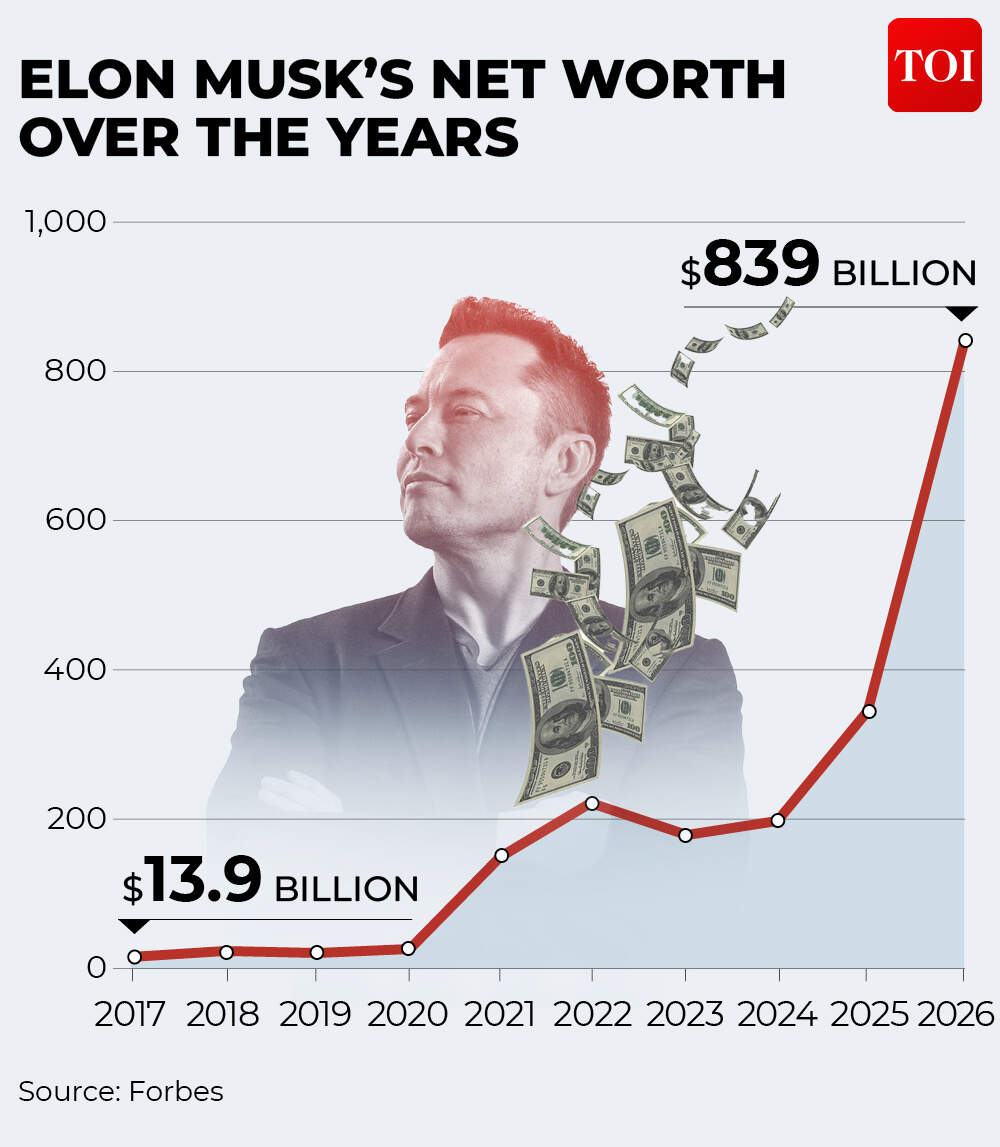

Investors are being asked to buy into a company deeply tied to one man. Musk is expected to serve as chief executive, chief technology officer and board chairman. He will also control the overwhelming majority of voting power through special stock, making him nearly impossible to remove. There is no clear successor. In other words, buying SpaceX means buying Musk’s vision, judgment, politics, distractions and risk appetite.
That may thrill some investors and unsettle others. But for now, the SpaceX IPO is surely a feel-good wealth story.
Google wants to release millions of mosquitoes. That’s not a horror plot
The good mosquito? The strange science of fighting disease with insects
Google’s life-sciences cousin Verily wants to release millions of mosquitoes into American neighborhoods. That sounds like the setup for a horror film. In reality, it’s part of a quiet revolution in how we fight infectious disease.
The company is seeking approval to release swarms of lab-reared male mosquitoes in parts of California and Florida. These insects are infected with Wolbachia, a naturally occurring bacterium that interferes with reproduction. When Wolbachia-infected males mate with wild females that don’t carry the bacterium, their eggs don’t hatch. Over time, the local mosquito population crashes.
Critics worry about unintended ecological effects and the optics of a tech-linked firm seeding insects over communities already skeptical of big platforms’ power. Supporters counter that doing nothing carries its own risks as dengue surges in new hotspots and health budgets strain.
Either way, the mosquito is being recast-from pure villain into a strange kind of ally. The next chapter of disease control may look less like a chemical fogging truck and more like a quiet algorithm deciding where, and when, to let the “good” mosquitoes fly.
Editor’s picks: Some of our most and must-read articles
19 TMC MPs join rebel group; Yusuf Pathan, Saayoni Ghosh, Mala Roy on list
Government summons top US diplomat over Oman ship attack that left 3 Indians missing
Indian-origin couple, 9-year-old son jump to death from 36th floor London flat
Disclaimer
Views expressed above are the author’s own.