The green-card exam after the exam
This week, TOI Bharat Abroad tracks three Indian-origin stories from three corners of the world: a US green-card ruling that could help extraordinary ability applicants challenge USCIS discretion; an Indian-American defence-tech founder whose autonomous boat helped rescue US military personnel near the Strait of Hormuz; and a London restaurant manager whose cricket-trained reflexes helped save a child falling from a window ledge.
Let’s go.
THE BIG STORY
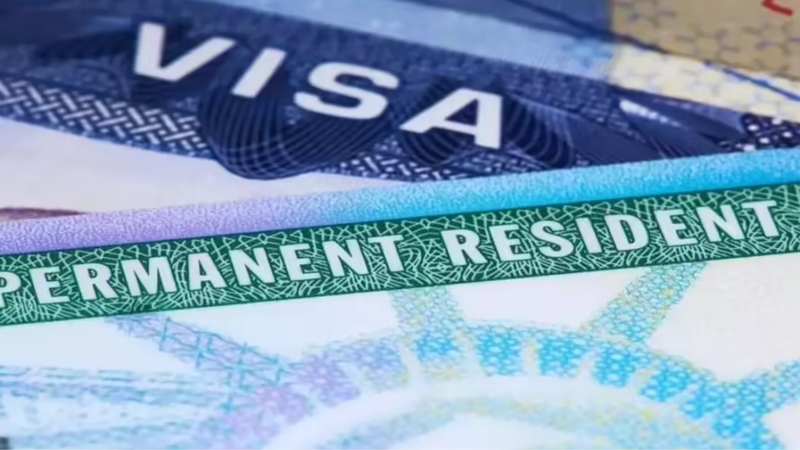

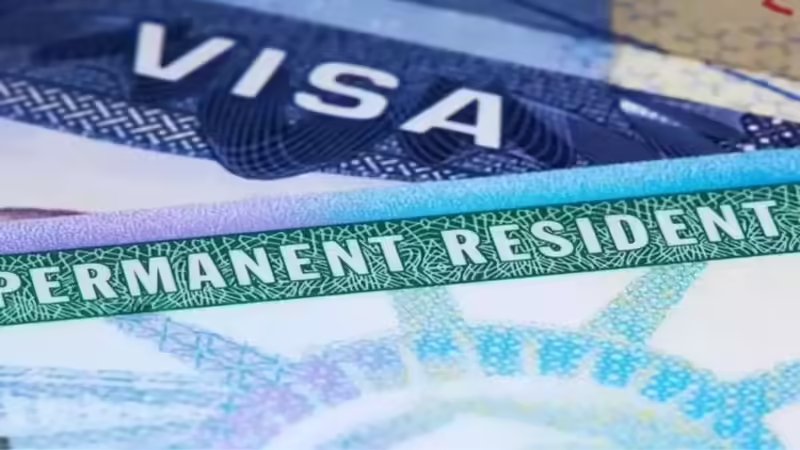
The green-card exam after the exam
For years, some of the most accomplished Indians in America have lived inside a strange immigration paradox: they can be extraordinary enough for their peers, their universities, their employers, their research, their awards and their industries — and still fail to convince USCIS that they are extraordinary.
That paradox sits at the heart of EB-1A, the elite green-card category meant for people of “extraordinary ability”. On paper, it is America’s fast lane for talent. In practice, it has often become another maze, only with more citations, awards, recommendation letters and legal bills.
The rules say an applicant can qualify by showing a major international award or meeting at least three of ten regulatory criteria — recognised prizes, published work, judging others’ work, original contributions, leading roles and so on. But clearing that test has not always meant approval. USCIS could still apply a second-stage review, the so-called “final merits determination”, and decide that while the applicant met the listed criteria, the total evidence did not prove sustained acclaim.
In plain English: you passed the exam, but the examiner still reserved the right to fail you.
Now, that discretion has taken a hit.
USCIS has withdrawn its appeal against a Nebraska district court ruling that struck down the agency’s use of the final merits framework in an EB-1A case involving an Indian applicant. The court had set aside the denial and directed the agency to approve the petition. USCIS appealed, then stepped back.
This will not rewrite America’s immigration system overnight. It is not binding precedent across the US. But it gives future EB-1A applicants and lawyers something valuable: a legal argument against vague, subjective denials after applicants have already cleared the stated criteria.
For Indians stuck in America’s green-card machine, even that matters.
Why it matters:
The EB-1A category is one of the few exits from the long green-card tunnel for high-achieving Indians in America.
Most Indian professionals in the US know the slower route too well: H-1B dependence, employer sponsorship, priority dates, backlogs, renewals, uncertainty. Careers are built, children are born, homes are bought, taxes are paid — while permanent residency remains suspended somewhere in the distance.
EB-1A offered a different promise. It allowed extraordinary ability applicants to self-petition without needing an employer to sponsor them. That made it especially attractive to scientists, researchers, founders, academics, executives, artists and professionals who could show national or international acclaim.
But the final merits test became the trapdoor.
Applicants could meet multiple official criteria and still be told that the overall evidence was not enough. That gave officers wide room to make subjective calls. It also created the familiar immigrant anxiety: the rules were written down, but the real standard seemed to live somewhere inside the officer’s head.
This case challenges that culture of discretion. The court found that USCIS had adopted the second-step review through internal memoranda without going through the notice-and-comment rulemaking required under the Administrative Procedure Act. For immigrants, that means something simple: an agency cannot keep inventing extra hurdles after an applicant has met the stated test.
Driving the news:
The case involved an Indian applicant whose EB-1A petition was denied even after USCIS accepted that she met five regulatory criteria — more than the minimum three normally required.
The denial came at the final merits stage, where the agency argued that she had not demonstrated sustained acclaim in more recent years. The district court disagreed, found the approach legally flawed, and ordered USCIS to approve the petition.
By withdrawing the appeal, USCIS avoids the risk of a higher court ruling that could have turned the lower court’s reasoning into binding precedent in that jurisdiction. But the district court judgment remains intact.
This is not the death of the final merits test. It does not mean every EB-1A applicant who meets three criteria will automatically get a green card. It does not strip USCIS of all discretion. But it does mean the discretion is no longer beyond challenge.
Context:
America likes to describe itself as a magnet for talent. Its immigration system often treats talent like a suspicious claim that must be proved again and again.
That is why this ruling speaks so sharply to the Indian diaspora. Indian professionals power American labs, hospitals, campuses, start-ups and boardrooms. Yet many spend years in legal limbo, trapped by a system that welcomes their work faster than it welcomes their permanence.
The EB-1A fight sits at the intersection of meritocracy and bureaucracy. The category is supposed to reward exceptional achievement. But when the government accepts that an applicant has met five official criteria and still says no through an additional subjective filter, the question becomes unavoidable: what exactly is the rule?
This ruling will not empty the backlog. It will not end green-card anxiety. It will not spare applicants from the exhausting ritual of evidence, denials, appeals and uncertainty.
But it marks a small shift in the balance of power.
For once, the message to immigrants is not simply: prove more.
It is also a message to USCIS: explain more.
And in America’s green-card maze, even that is a door opening slightly.
NRI WATCH
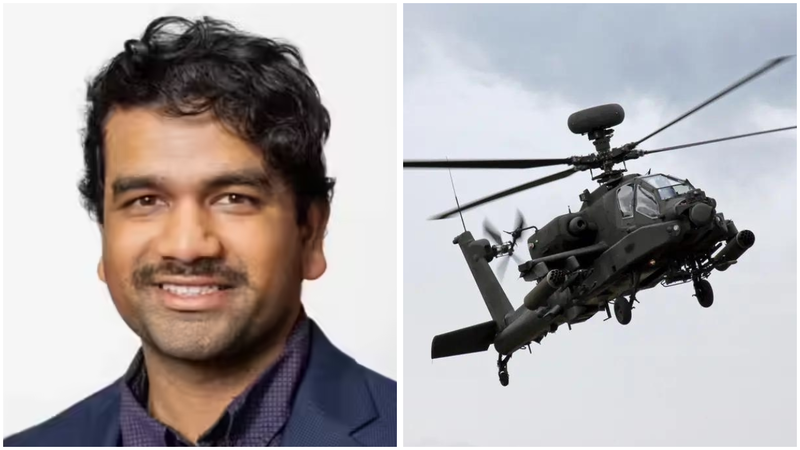
The Indian-American behind America’s drone-boat rescue
In the Strait of Hormuz, where oil, warships and global anxiety often pass within shouting distance of one another, an American military rescue has put Indian-American engineer Vibhav Altekar in the spotlight. Altekar is co-founder and CTO of Saronic Technologies, whose Corsair autonomous surface vessel helped rescue two US Army Apache crew members after their helicopter went down near the strategic waterway. It is a sharper, harder-edged version of the Indian-origin tech story: not consumer apps, not boardroom success, but defence technology, autonomous systems and machines built for some of the world’s most contested waters.
OFFBEAT

Cricket, fatherhood and one impossible catch in London
Every Indian who has ever played gully cricket knows the physics of the impossible catch: the ball drops faster than expected, and the hands move before the brain has finished negotiating with fear. On Ilford High Road in east London, Mohamed Jesil was not catching a cricket ball. He was catching a child. The Indian-origin restaurant manager and father of five-month-old twins helped save a three-year-old girl who fell from a window ledge, later saying his cricket background may have helped. It is the kind of line only the subcontinent can fully appreciate: somewhere between modesty, muscle memory and the afterlife of childhood cricket.
DID YOU KNOW?
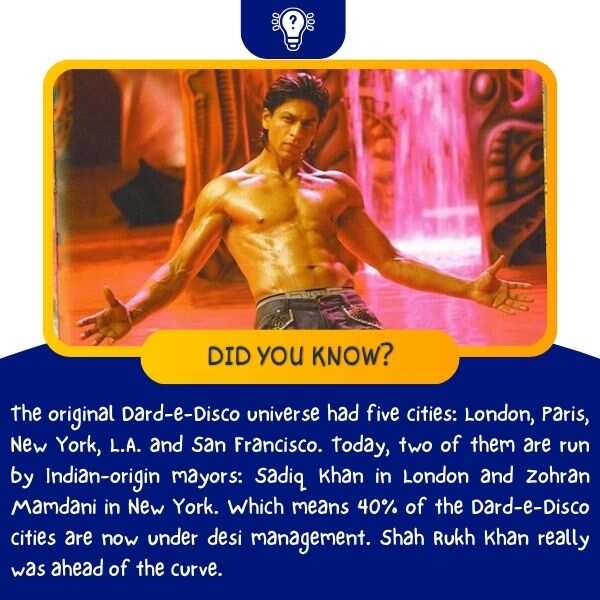

LEMONCHILLI.NEWS


News that hits like a meme, but sticks like a fact. For more, visit LemonChilli.News
Disclaimer
Views expressed above are the author’s own.