
Teenage orthopaedic implant silently migrated into a young woman’s pelvis years later; robotic surgery prevented a potentially catastrophic injury |
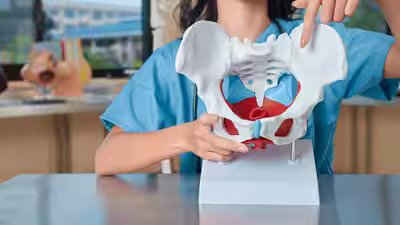
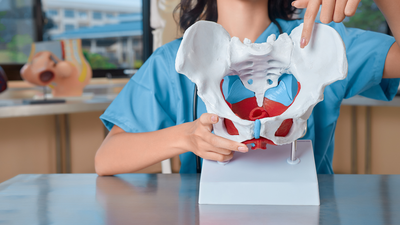
A young woman in her early twenties had undergone a routine orthopaedic procedure as a teenager in Ghana, during which an intramedullary metallic nail had been implanted to address a walking difficulty. Years later, one of the metallic components shifted position and migrated into her pelvic cavity, a rare complication that produced no dramatic symptoms but carried the potential for catastrophic injury if left unaddressed.A CT scan eventually revealed where the nail had travelled. It was lying adjacent to the iliac blood vessels, the ureter, the sigmoid colon, and the kidney. A millimetre of further movement in the wrong direction could have perforated the bowel, damaged the urinary tract, or ruptured a major vessel. She had consulted multiple doctors before the family decided to travel nearly 8,000 kilometres from Ghana to CK Birla Hospitals, CMRI, Kolkata.The challenge the surgical team faced was not just removing a foreign body, it was removing one from one of the most anatomically confined and vascularly dense regions of the abdomen, where the margin for error is close to zero.Dr Ajay Mandal, GI and Hepato-Biliary Surgeon, CK Birla Hospitals, CMRI, said, “The migrated metallic implant was lying adjacent to several critical structures inside the pelvis. Even the slightest error during removal could have caused serious injury to the bowel, ureter or major blood vessels. Meticulous planning and precise execution were essential.”The team chose robotic-assisted minimally invasive surgery for the procedure. The robotic platform provided a magnified three-dimensional view of the operative field and instrument control precise enough to dissect around the critical structures without disturbing them. Dr Mandal said, “In conventional surgery, reaching this area would have required a much larger incision with greater tissue trauma. The robotic platform allowed us to minimise surgical risk while ensuring complete removal of the foreign body.“The implant was removed without injury to any surrounding organ or blood vessel. The patient was discharged two days after surgery and returned to Ghana without complication.Migration of orthopaedic implants is uncommon, and most patients who experience it do not immediately connect their symptoms to a procedure performed years or even decades earlier. The case reinforces the clinical importance of evaluating unexplained abdominal or pelvic symptoms in patients with a history of implanted orthopaedic hardware, and of imaging the implant’s current location rather than assuming it remains where it was placed.