Tanzania planted 100,000 native trees along an elephant corridor; the 1,000 animals now have a route from savanna to rainforest |
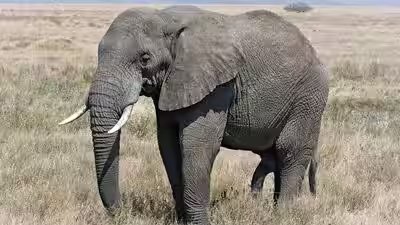
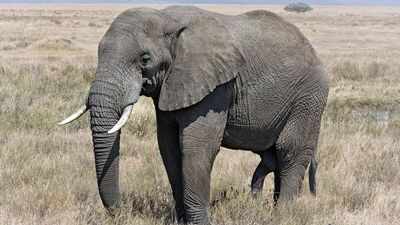
Tanzania has officially protected a narrow wildlife corridor linking Nyerere National Park’s savanna woodlands with the rainforests of the Udzungwa Mountains. The Nyerere-Udzungwa Wildlife Corridor crosses the Kilombero Valley, where farm fields had divided the elephants’ old natural path, making it harder for them to move between the savanna and rainforest. Around 1,000 elephants use this landscape, moving between lowland and mountain habitats. Since restoration began, local communities and conservation groups have planted 100,000 native trees and introduced measures to guide elephants away from farms. The corridor was formally recognised by Tanzania in April 2025, giving legal protection to the route.
How 100,000 native trees helped restore the landscape for the elephants
Restoring vegetation became an important part of making the corridor useful to wildlife. Southern Tanzania Elephant Program(STEP) reports that its partner Reforest Africa has planted 100,000 tree seedlings using indigenous species, alongside assisted natural regeneration.The World Land Trust says its 2025 Plant a Tree project is supporting restoration in the Greater Udzungwa-Kilombero landscape. The programme provided funding for 100,000 native trees to restore 100 hectares of degraded land in the Magombera Nature Forest Reserve. It also supports a nursery and training hub intended to help plant another 50,000 native trees across a further 50 hectares.Mongabay reported that the first 100,000 trees planted inside the corridor represent about 30 species. Some areas are being planted densely to recreate forest, while other sections are being kept more open to provide woodland habitat. Species have also been selected for the food they provide to different animals. Fruits from sycamore figs and wild mangoes, for example, are eaten by Sykes’ monkeys and trumpeter hornbills.The trees are already changing the appearance of parts of the valley. According to Mongabay, trees planted in late 2023 had grown above head height, with their expanding green cover visible in satellite images.
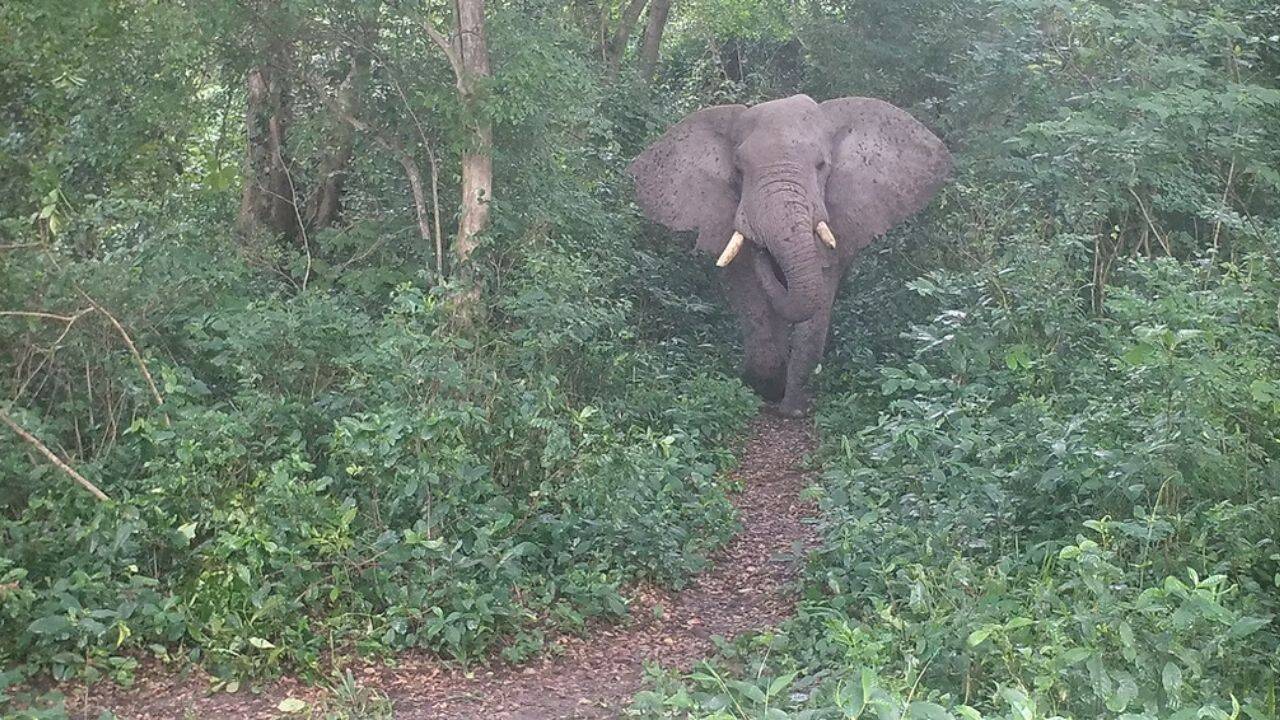
STEP reports that its partner Reforest Africa has planted 100,000 tree seedlings using indigenous species, alongside assisted natural regeneration. Image Credit: Southern Tanzania Elephant Program(STEP)
The elephant corridor connects savanna to rainforest
The corridor stretches for about 14 kilometres across the Kilombero Valley, linking Nyerere National Park and the Magombera Nature Forest Reserve in the east with Udzungwa Mountains National Park in the west. Mongabay reported that the route is only about 200 metres wide in places, making the protected strip a narrow passage through a heavily used agricultural landscape.STEP reports that the corridor reconnects habitats that had been separated after forests were cleared and land was converted to farms. The organisation began working with villages and the Tanzanian government in 2018 to restore the route. On 4 April 2025, the government officially designated it as Tanzania’s first wildlife corridor with this legal status.The route matters because elephants do not remain in one type of habitat throughout the year. Mongabay reported that elephants in this region move between mountain and lowland forests, miombo woodland and open bush. During dry periods, the mountains can provide food and water when lower areas become less suitable.
Why was the route needed after forests disappeared
The landscape was not always divided in the way it is today. According to Mongabay, about 50 years ago the valley was connected by lowland rainforest. Much of that forest was later cleared as agriculture expanded, leaving elephants to cross farmland along routes they had used for generations.That movement created problems for both wildlife and farmers. STEP reports that 3 villages involved in the corridor agreed to set aside about 7% of their village land. A total of 368 landowners were compensated for their farm plots, with roughly 2.2 billion Tanzanian shillings raised for direct compensation to households.
Measures to keep elephants away from farms
Trees alone cannot make the route safe. The project has also used fencing to guide elephants towards the corridor and reduce encounters with people. Fondazione Capellino reports the initiative as a 13-kilometre ecological corridor and says Tanzania’s first large-scale electric fencing system is being used to reduce human-elephant conflict.The foundation reports that elephants have increasingly remained within the corridor during daylight, gathering in shaded areas and near streams. It also says that residents in Upogoroni sub-village, who previously had to leave their fields in the afternoon because of elephant movements, can now work in their fields during the day.The fencing system is still being improved. Fondazione Capellino says severe flooding in early 2026 led to another technical planning phase, while a redesigned system is intended to cope better with seasonal floods. By early 2026, fencing had reached about 12.6 kilometres, with further work planned.
What has the corridor revealed about wildlife use
Monitoring has shown that the route is already being used by a range of animals. STEP says biodiversity monitoring recorded 26 species of large and medium-sized mammals in the corridor and detected increased elephant use.Mongabay reported that 59 camera traps installed across the corridor recorded at least 1,440 mammals during a 15-month period, including 529 elephants. The cameras also recorded species such as buffalo, bushbuck, serval, honey badgers, Sykes’ monkeys and Cape clawless otters. The corridor is serving a wider purpose than simply moving elephants between two protected areas.
Challenges for the restored corridor
The official designation has strengthened protection, but the project still faces practical challenges. Mongabay reported that elephants have not yet consistently used an underpass beneath a busy road near the Udzungwa Mountains. Crowds gathering to watch the animals can cause them to turn back, while planned development close to the corridor could create additional pressure.Fondazione Capellino reports that fencing, monitoring, patrols and community involvement remain ongoing rather than completed tasks.