Sydney’s bin-opening cockatoos: How 44 suburbs became part of a bird ‘culture’ through social learning
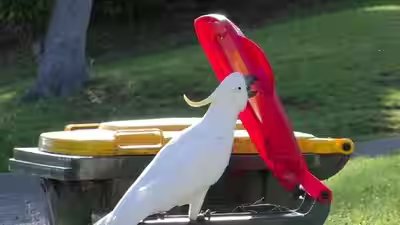
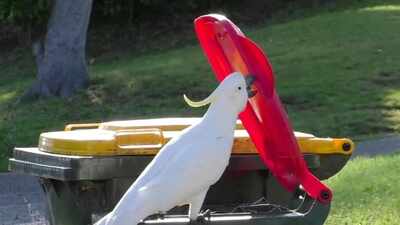
If you’re from Sydney and have ever found your garbage scattered everywhere after bin night, don’t always blame a hungry possum or a gust of wind. More likely: sulphur-crested cockatoos have figured out your rubbish bin.Yes, we’re talking about the sulphur-crested cockatoos, spread across Sydney, like a network. Here’s how it started: just a few years ago, in 2018, scientists noticed cockatoos in three Sydney suburbs lifting up bin lids to get at scraps. Per Science Blog, it wasn’t a widespread thing. By late 2019, though, the trick had exploded, as 44 suburbs had caught on. But it wasn’t just a random spread. In each neighborhood, the technique looked a little bit different. A cockatoo in one part of the city might grab, shift, and swing in a certain way, while another would adopt their own twist.What the researchers ended up seeing was a kind of “bird culture,” created not by instinct or genes, but by birds watching and copying each other. The behaviour jumped from backyard to backyard, neighbor to neighbor, like a human fad, but for wild animals.
How does a cockatoo open a garbage bin?
It’s honestly not an easy skill. First, the cockatoo has to grip the edge of the heavy, spring-loaded plastic lid with its beak, sometimes bracing with a foot. It lifts and walks along the rim, shifting its weight until the lid flips all the way over. There’s a knack to it and a huge reward in leftovers inside.For the unversed, ornithologist Richard Major first filmed it, sparking interest and leading to a citizen science project. Over 1,300 sighting reports later, the pattern was clear: Sydney’s cockatoos weren’t just clever; they were learning, spreading a trick through the whole city.
Bin-opening: Inside the neighborhood trend
The way the skill spread is what really got scientists excited. It didn’t just pop up everywhere at once. Instead, you’d see it in Bondi, then nearby suburbs, then travel from neighbor to neighbor. Researchers mapped every confirmed report, then used a technique called “network-based diffusion analysis” to figure out how the “culture” spread.The data pointed to social learning: plain and simple. Cockatoos in places close to an existing “bin opener” were way more likely to start doing it, too. Basically, one bird would do it, and others would watch and try it themselves. The researchers estimated over 90% of new suburbs picked up the trick through imitation, not by inventing it from scratch.
Not all cockatoos do it the same way
The cockatoos didn’t just all copy the same moves, either. Suburbs developed their own bin-opening “dialects.” Some birds climbed along the right side, others on the left. Some used one foot, some two, some switched beak grip styles. These subtle differences, clustered in certain areas, suggested the tradition was being tweaked and personalized, just like human cultural traditions.What’s wild is that this “bin-opening” know-how wasn’t passed down through genes. Even birds with the right build and strength needed to see it done; they needed a teacher. Young cockatoos would watch, practice, make mistakes, and finally master the trick. Success breeds success: it becomes normal, even expected, in that bird group.
But not every cockatoo gets it
Don’t picture every cockatoo in Sydney as a master bin thief. Detailed studies found that in every group, it was a minority of birds, usually males, who were stronger and more dominant, that could actually flip the lid. Some watched and then just took the free scraps. Others tried, failed, and moved on.That’s classic animal culture. You don’t need everyone to become an expert; you just need enough birds to pass on the know-how.
It wasn’t just one ‘genius’ bird
And this wasn’t a single clever cockatoo inventing the trick in year one and teaching the whole city. Researchers saw at least one other cluster, up in Narraweena, where it looks like bin opening got invented separately and then spread locally. Useful behaviors pop up more than once, but social sharing always helps them explode in popularity.
What the cockatoos are teaching us
For a long time, people thought “culture” was reserved for humans: maybe chimps and dolphins, at a stretch. But more and more, scientists find examples of animals inventing, copying, and improving behaviors: songs, tools, foraging tricks, and even communication gestures.What makes the Sydney cockatoos so unforgettable is that they’re doing it in real time, right in our own backyards, using items we throw away each week. They’re not just surviving in an urban world; they’re building up a shared toolbox of new tricks. The wheelie bin is, accidentally, a bird playground and a classroom.The cockatoo story isn’t just about clever birds or lost sandwiches. It’s a window into how knowledge moves through animal groups, how tradition forms, and how wildlife adapts to a human-ruled city. Sometimes it’s not tooth and claw, but memory and imitation that let a species thrive.