
Revolutionary Wind Turbine Blades Inspired by Humpback Whales Generate More Power |
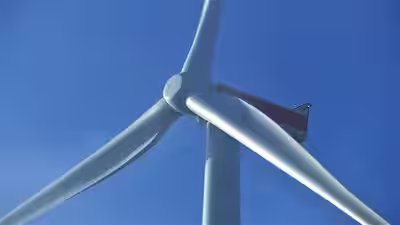
A team of engineers, inspired by humpback whales, tested a small wind turbine fitted with such blades. The conventional blades achieved a maximum power output of 13.72 watts; conversely, the modified blades reached 14.98 watts. The findings were reported in a study published on 21 May 2025, titled Aerodynamic Performance Investigation of a Biomimetic-Based Small-Scale Horizontal-Axis Wind Turbine. The researchers investigated whether the humpback whale’s flipper features could improve the aerodynamic performance of a small horizontal-axis wind turbine. Their experiments involved a side-by-side comparison of conventional blades with redesigned blades featuring wave-like edges and surface indentations. The tests took place in a wind tunnel at Rajshahi University of Engineering and Technology (RUET) in Bangladesh. The results provided experimental evidence that the modified blades can improve power generation under particular laboratory conditions. However, the design’s performance on full-sized turbines or its suitability for widespread commercial use was not addressed in the study.How whale-inspired features changed the blade designHumpback whales have tubercles, which are distinctive bumps along the leading edges of their flippers. This was the main inspiration for the research into how changes in surface geometry could influence airflow. However, rather than copying the whale’s flipper directly, the engineers tested a specific combination of modifications, placing the waves on the trailing edge instead- a deliberate divergence from the leading-edge placement found in nature. The redesigned blade integrated five sinusoidal waves along the trailing edge, with each one having an amplitude of 20 millimetres, along with inward-facing dimples, which measured 5 millimetres, on the upper surface. Based on the NACA 4412 aerofoil profile, these modified blades were then compared by researchers with conventional blades.To analyse the relationship between a blade’s chord line and the incoming airflow, researchers assessed the turbine at six angles of attack. The angles varied across 15, 20, 25, 30, 35, and 40 degrees. The objective was to examine how aerodynamic performance varied across different operating conditions, including wind speeds up to 11 metres per second. Moreover, at an angle of attack of 30 degrees, the modified turbine recorded a power coefficient of 0.096, compared to 0.062 for the conventional design. Based on these rounded values, the calculation shows that the modified blades achieved an increase of approximately 55%.
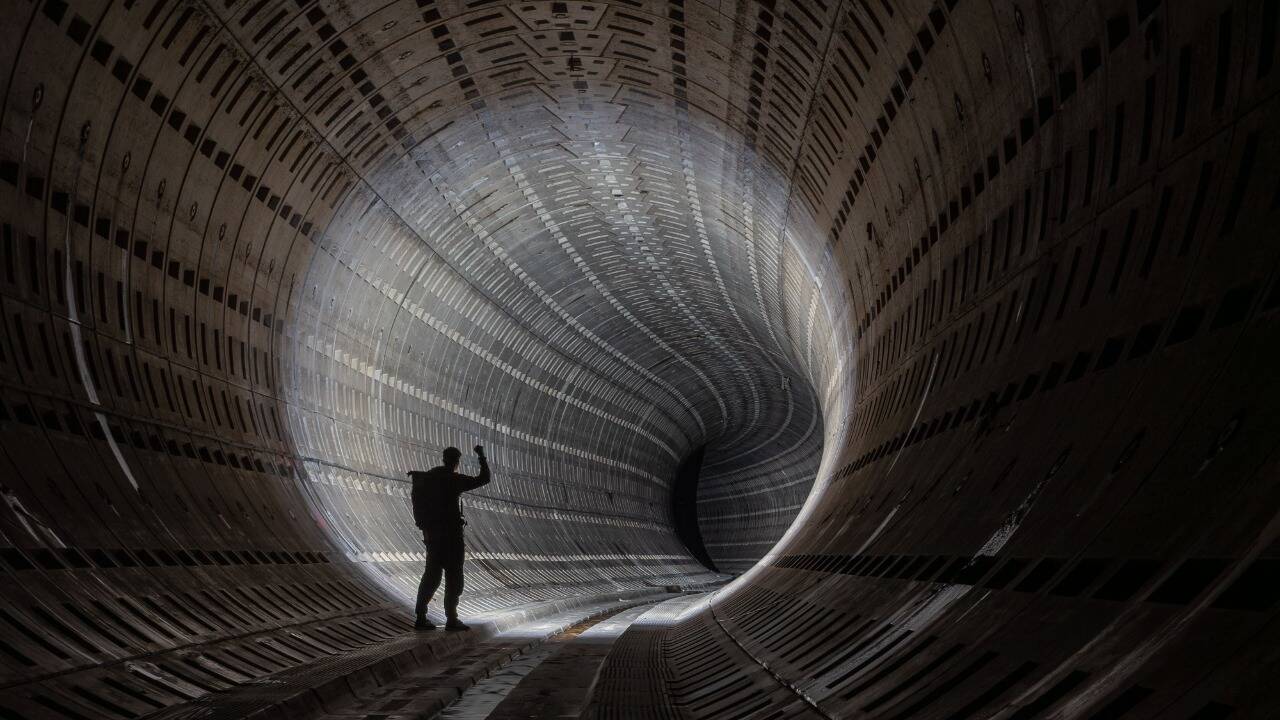
Representative image of wind tunnel engineering. (Image Credits: Pexels)
Noise reduction and the limitations of the experiment The study also investigated whether the redesigned blades could reduce the sound generated by airflow around the turbine. Its conclusion reported sound pressure levels of 79.2–89 decibels A-weighted (dB(A)) for the conventional blades and 77–86 dB(A) for the modified design. At an angle of attack of 30 degrees, a 2.99% reduction in sound pressure level was reported, a difference small enough that the measurement’s margin of error makes it hard to treat as definitive. When taken together, the power and noise measurements suggest greater output from the redesigned blades, while the lower aerodynamic noise remains tentative.However, there are limitations to be considered if these tests were to be applied beyond the laboratory. Because sound was measured through the NIOSH phone application instead of an external microphone, the reported accuracy of approximately ±2 dB(A) highlights the need to carefully note the precision of the reported noise differences. Furthermore, the study also does not apply a blockage correction for the wind tunnel’s influence on airflow around the turbine and notes that the frame positioned close to the turbine could affect the measured output.In addition, the limited dataset and test conditions, along with the relationship between noise reduction and increased power coefficient, are statistically weak. These qualifications mattered because a wind tunnel provides controlled conditions that do not fully reproduce outdoor operation. Larger turbines face different operating conditions, andthe study does not verify whether the same performance gains would occur at full scale.