
Ralph Lauren faces backlash over ‘embellishments’ that look a lot like India’s zardozi: ‘Name it when you use it’
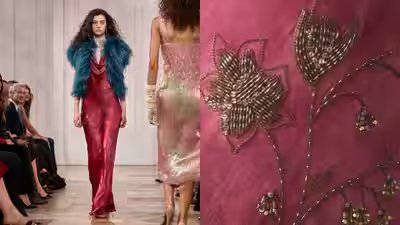
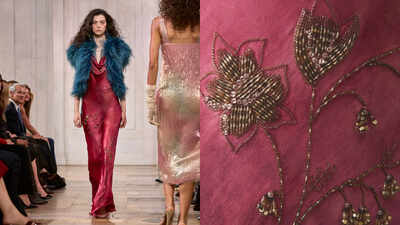
Ralph Lauren’s latest runway look is getting attention for a reason that has little to do with the gown itself.The American fashion house unveiled its Spring 2027 collection during New York Fashion Week, with one deep pink evening gown drawing particular attention online. The heavily embroidered dress has now become the centre of criticism, with people accusing the brand of using Indian craftsmanship without acknowledging where the embroidery comes from.The work on the gown bears a striking resemblance to zardozi, the intricate embroidery traditionally done with metallic threads, beads and other embellishments. And while Ralph Lauren described the craftsmanship in detail, India and zardozi were nowhere in the caption.On September 12, the brand shared pictures of the gown on Instagram, including a close-up of its embroidery. The caption described it as being made with shimmering silk-viscose and “hand-applied embellishments”, calling the eveningwear gown a cinematic statement.But for many viewers, the word “embellishments” wasn’t enough.
Why are people calling out Ralph Lauren?
Fashion designer Prakhar Rao Singh Chandel highlighted the issue in an Instagram post, pointing out that zardozi is a recognised traditional craft in the Lucknow region.He noted that the Lucknow zardozi cluster covers several districts and supports a large community of artisans. His criticism was less about a fashion brand using an old craft and more about what happens when the craft is used without naming or acknowledging the people and culture behind it.Ralph Lauren’s post, he pointed out, spends considerable space describing the fabric and the look, while the actual handwork is reduced to the vague word “embellishments”.And that distinction matters.Chandel also referred to a line attributed to Ralph Lauren in the same post, about wanting each piece to feel as though it carries its own history and character.That led him to ask a simple question: whose history and whose character?His post also brought up Prada’s 2025 controversy over footwear resembling Maharashtra’s Kolhapuri chappals. His argument was that Indian craftsmanship shouldn’t suddenly receive a name only after people online start questioning its origins.“Name it when you use it. Not when you get caught,” he wrote.
The internet isn’t impressed
The criticism quickly moved to the comments section, where several users called on the brand to acknowledge Indian craft.“Start acknowledging Indian art,” one person wrote.Another commented, “Indian embroidery inspired by Indian crafts,” while someone else wrote, “Indian art and it’s done by Indian artisan.”A few comments were much more blunt, accusing the fashion industry of repeatedly taking inspiration from Indian culture without giving credit to the communities that have preserved these techniques for generations.“Lol literally embellishments from India. Stop stealing craft,” one user wrote.Another called the situation “a level of audacity that needs to be studied”, while a separate comment said cultural appropriation this year had been particularly noticeable.
Not the first time Ralph Lauren has faced questions
The backlash also comes amid previous criticism of Ralph Lauren over designs that appeared to draw from Indian clothing and accessories.In August 2026, the brand was criticised online after a pre-draped saree-style garment appeared on its European website under the name “Botanical Embellished Draped Overlay Maxi Dress”, with a price tag of €198.Earlier, in March 2026, Ralph Lauren models were seen wearing bell-shaped earrings that viewers compared with traditional Indian jhumkas. The pieces were described by the brand as “authentic vintage accessories”.And the Ralph Lauren controversy isn’t happening in isolation.In 2025, Prada faced similar criticism after showing flat T-strap sandals that closely resembled Maharashtra’s iconic Kolhapuri chappals. The backlash eventually led to the Italian luxury house acknowledging the footwear’s roots in western India.For Indian designers, artisans and craft communities, the issue goes beyond whether a global fashion house can take inspiration from traditional techniques. It is about credit, visibility and who gets recognised when centuries-old craftsmanship appears on a major international runway.Because calling something an “embellishment” may describe what it looks like. It doesn’t necessarily tell the story of where the skill came from.