Rahul Gandhi ate it during a recent political protest: The story of the Kathi Roll and how Kolkata turned a kebab into India’s most portable meal
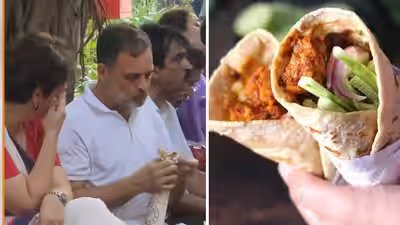
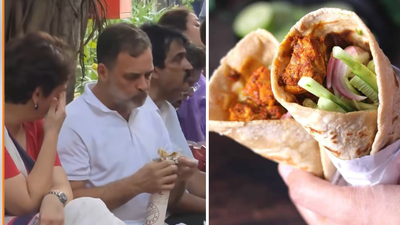
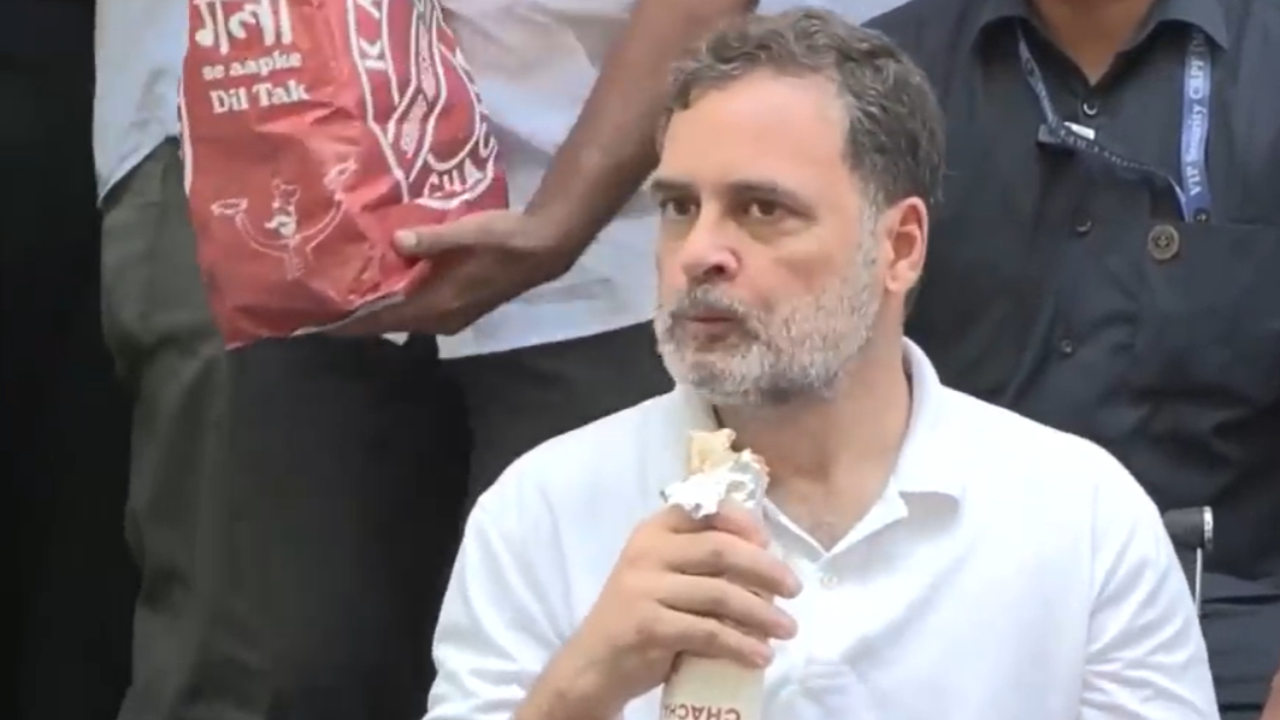
Rahul Gandhi’s recent protest lunch was a Kathi Roll, but the roll in his hand carried a story that goes back nearly a century. On October 7, Rahul Gandhi and other Opposition leaders were protesting against Chief Election Commissioner Gyanesh Kumar in Delhi when Gandhi was seen having a roll from Khan Chacha during the sit-in. As reported by The Indian Express, the moment when the Congress leader and other Opposition MPs continued their demonstration despite police barricades, the roll became part of the long protest day. The restaurant was Khan Chacha in Delhi. The politics were completely different from the colonial-era Calcutta in which the Kathi Roll’s origin story is set. But the basic idea was the same: a meal wrapped up and ready to eat wherever you happen to be. Let’s trace the curious journey of the Kathi Roll.
When a kebab became portable
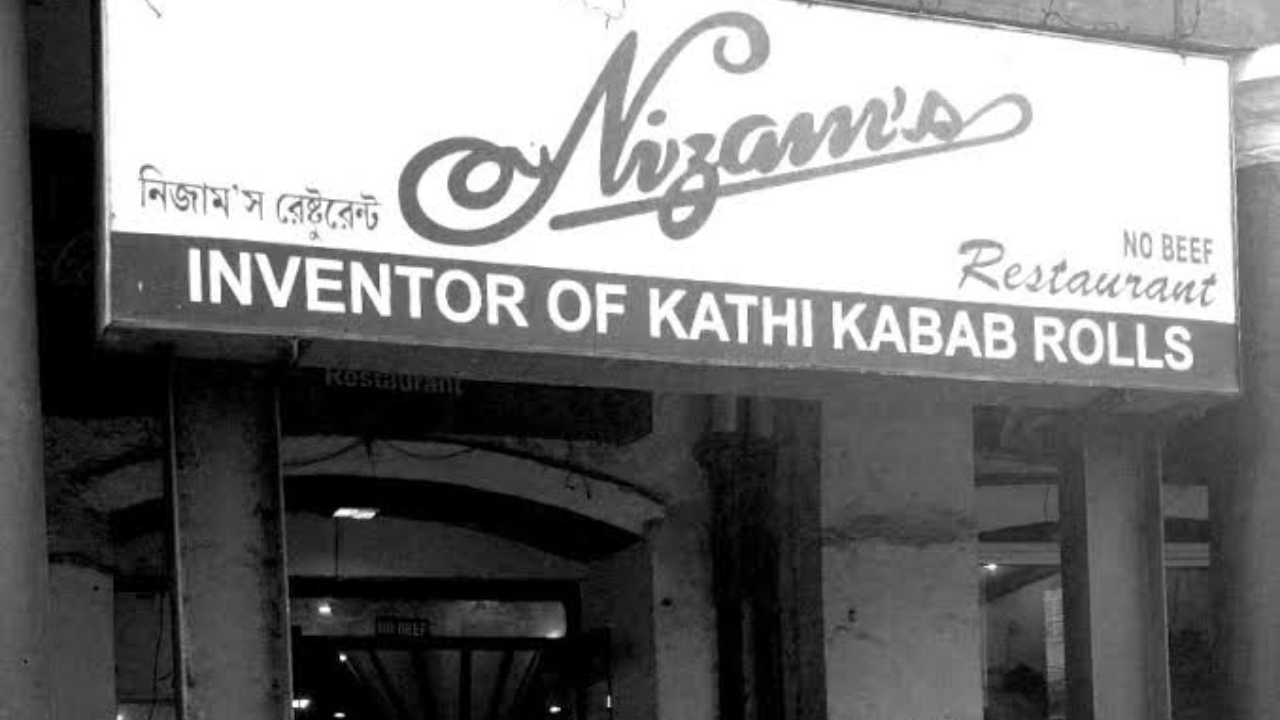
Founded in 1932 by Reza Hassan Saheb, Nizam’s became known for its kebabs and parathas.
There is something wonderfully democratic about a roll. It does not care whether you are a politician, an office-goer, a student rushing between classes, or someone who has exactly seven minutes before the next meeting. You hold it in one hand, peel back the paper and eat. That simple convenience is central to the story of Kolkata’s Kathi Roll.Go back to colonial-era Calcutta, to the New Market area and Nizam’s restaurant. Founded in 1932 by Reza Hassan Saheb, Nizam’s became known for its kebabs and parathas. According to the origin story preserved by Nizam’s, the problem was not the kebab itself. It was how to eat it. The kebabs were cooked on skewers and traditionally eaten with the hands. According to the origin story repeated by Nizam’s and later reported by Telegraph India, British customers working nearby found kebabs messy to eat by hand, prompting the restaurant to look for a more convenient way to serve them.So the kebab was placed inside a paratha. The paratha became the plate, wrapper and utensil at the same time. The idea was simple: instead of picking up a kebab from the skewer and eating it separately, a customer could hold the entire meal in one hand. According to a Telegraph India report on Nizam’s history, a British customer in a hurry wanted something light, dry and less spicy. The pieces of chicken from the day’s curry were deboned, the gravy was removed, and the meat was wrapped in paratha and served as a roll. The restaurant later applied the idea to its other kebabs.
So where did the name “Kathi” come from?
The word came later. Nizam’s originally used heavy iron skewers for its kebabs. These were replaced in 1964 by lighter, cheaper bamboo sticks. In Bengali, a stick is called a kathi. That change in the skewer eventually gave the roll its familiar name: Kathi Roll. As reported by Telegraph India, 1964 was also the year Nizam’s added chicken rolls alongside its existing mutton, beef and khiri varieties. So the name was not simply a description of the wrapped food. It was connected to the stick on which the meat was cooked.
What went inside the original roll?
The Kathi Roll did not remain a Kolkata-only food. It became popular in other Indian cities and eventually reached restaurants outside India.
The early roll was relatively straightforward. Kebabs were wrapped in paratha and accompanied by ingredients such as onion, green chilli and lime. These remain closely associated with the traditional Kolkata-style roll. As the dish became more popular, the combinations expanded. Nizam’s added chicken to its menu in the 1960s alongside mutton, beef and khiri rolls. Other shops developed their own versions, introducing eggs, different meats, sauces and other fillings. The roll no longer belonged to one fixed recipe. That flexibility helped it spread.
From Nizam’s to Kolkata’s streets
The Kathi Roll eventually moved beyond the restaurant where its origin is traditionally placed. It became part of Kolkata’s street-food culture and found a natural audience among office workers, students and people looking for a quick meal. The roll’s greatest advantage was not complicated. It could be eaten without a plate. The paratha held the filling together. Paper wrapped the outside. You could carry it away from the counter and eat it while continuing with whatever you were doing. That made the roll particularly suited to a city where lunch could be squeezed between work, travel and everything else.
The roll travelled far beyond Kolkata
The Kathi Roll did not remain a Kolkata-only food. It became popular in other Indian cities and eventually reached restaurants outside India. Nizam’s itself began exploring expansion beyond Kolkata, while other businesses developed their own version. The Kathi Roll spread from Kolkata to cities such as Delhi and Mumbai and eventually to Indian restaurants abroad, with versions of the food now found outside India as well.