
Quote of the day inspired by Homer’s Odyssey: ‘Men are so quick to blame the gods, they say that…’ — and why the worst disasters are always self-inflicted

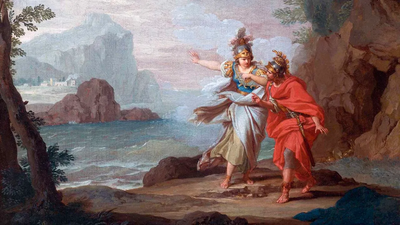
Consider an investor who ignores obvious warning signs, loses a fortune on risky cryptocurrency investments, and then blames the global financial system. Or a company executive who mismanages a major merger, drives the business toward bankruptcy, and blames unstable market conditions instead of poor leadership. The reaction is common: when things go wrong, people often look for someone or something else to blame instead of accepting responsibility for their own decisions.This tendency to avoid personal responsibility is not a modern habit created by stress or social media. It is one of the oldest ideas recorded in Western literature. Near the beginning of Book 1 of The Odyssey, Homer captures this human tendency through the words of Zeus, king of the Greek gods:“Men are so quick to blame the gods: they saythat we devise their misery. But theythemselves—in their depravity—designgrief greater than the griefs that fate assigns.”In Robert Fagles’ translation of the ancient Greek epic, Homer expresses a powerful psychological insight in just four lines. Life naturally brings unavoidable hardships, such as illness, physical limits, or unexpected misfortune. But people often create an even greater level of suffering through their own poor decisions. The passage clearly separates the hardships caused by fate from those people bring upon themselves.
Zeus, Aegisthus, and the opening of The Odyssey
Homer composed The Odyssey around the 8th century BCE, based on an oral storytelling tradition that stretched back to the Bronze Age. The quote appears during an important meeting of the gods on Mount Olympus at the beginning of the epic.Zeus is thinking about the recent death of Aegisthus, a ruler who seduced Clytemnestra, the wife of King Agamemnon, and helped murder Agamemnon after he returned from the Trojan War.Before Aegisthus carried out the murder, Zeus sent the messenger god Hermes to warn him. Hermes made it clear that if Aegisthus killed Agamemnon, Agamemnon’s son, Orestes, would eventually return and take revenge. Aegisthus ignored the warning, committed the crime, and was later killed by Orestes.When supporters of Aegisthus complained about his fate, Zeus expressed frustration. Aegisthus had been clearly warned about the consequences of his actions. His death was not a random punishment from the gods but the direct and predictable result of the choices he made.By placing these lines at the start of The Odyssey, Homer introduces one of the epic’s main themes. Odysseus faces many genuine challenges on his journey home, including monsters, storms, and other obstacles beyond his control. However, much of his crew’s suffering comes from their own actions, such as killing the sacred cattle of Helios despite repeated warnings. Their inability to control their desires ultimately leads to their destruction.
From ancient philosophy to modern psychology
The distinction Zeus makes between unavoidable fate and self-created suffering influenced later philosophers for centuries.The Stoic philosophers turned this idea into one of their central teachings. In his Enchiridion, written in the 1st century CE, the former slave and philosopher Epictetus echoed Homer by writing, “Men are disturbed not by things, but by the view which they take of things.” He argued that people cannot control external events, but they can control their own choices, reactions, and moral behaviour. To the Stoics, blaming outside circumstances for personal failures showed a lack of wisdom and self-discipline.Modern psychology describes a similar idea through the concept of “locus of control,” introduced by psychologist Julian Rotter in 1956.People with an external locus of control believe their successes and failures are mainly caused by outside forces such as luck, fate, or unfair systems. Those with an internal locus of control recognise that their own decisions and actions also play an important role in shaping outcomes.Research has repeatedly shown that although outside factors do influence life, maintaining an internal locus of control is linked to greater resilience, better decision-making, and lower levels of long-term anxiety. When people blame every setback on bad luck or powerful outside forces, they often give up the ability to improve their situation.
Blaming the algorithm in the modern world
Today, the “gods” often take the form of technology or large institutions.When financial algorithms contribute to market crashes or social media platforms encourage political extremism, business leaders sometimes claim they were powerless against the technology. Yet every automated system is ultimately built through human decisions, including design choices, cost-cutting measures, and regulatory compromises.The same pattern appears in personal finance, politics, and business. Blaming unavoidable bad luck often becomes an easy way to avoid taking responsibility.The repeated collapse of speculative investment bubbles offers a clear example. Many investors ignore warnings from financial regulators, risk experts, and lessons from history while chasing quick profits. When the market eventually crashes, the blame often shifts to regulators or market manipulation, while the risky decisions that led to the losses receive far less attention.The lesson Homer placed at the beginning of The Odyssey remains just as relevant today. People cannot control every challenge they face, but they are still responsible for the choices they make and for avoiding the mistakes that steer them toward disaster.