
Psychology says children who remember an embarrassing moment for years may be more affected by how others reacted than by the mistake itself

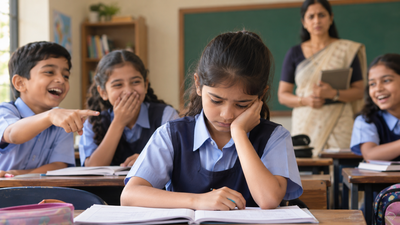
A child gives the wrong answer in class and hears a few classmates laugh. Another trips during a school assembly, while someone else mispronounces a word in front of relatives. The moment may last only a few seconds, but years later, the child may still remember exactly who laughed, what someone said and how everyone looked at them. Adults may see these incidents as small mistakes that should be easy to forget. For a child, however, the reaction from people around them can become an important part of the memory. The embarrassment may not come only from what happened, but also from feeling exposed, judged or laughed at.This does not mean every child who remembers an awkward moment has been deeply affected by it. But research on childhood embarrassment and shame suggests that other people’s reactions can influence how children experience and remember socially uncomfortable situations.
5 Oct 2026 | 12:06
Parents, when your child refuses to greet relatives, do you make them say hello or respect their choice?
It may be the laughter, not the mistake, that stays with them

Photo: Canva
Children gradually learn to understand how other people see them. As they grow, they become more aware that their actions can attract attention, approval, criticism or ridicule. A mistake that once seemed unimportant can feel much bigger when other people notice it. A 1988 study published in Child Development examined how 189 children aged 5, 7, 9 and 11 understood emotions including embarrassment and pride. The researchers found that an audience was important to children’s accounts of embarrassment. The findings suggest that being observed by others is a meaningful part of how children experience these moments. Think of a child who stumbles while reading aloud. They might forget the incident quickly if the teacher calmly helps them continue. If classmates laugh or an adult imitates the mistake later, the same incident may feel much harder to put behind them. The event is similar, but the social response is different.
Negative reactions can turn embarrassment into shame
There is a difference between feeling bad about something you did and feeling that something is wrong with you. Psychologists often describe the first as guilt and the second as shame. A child who feels guilty might think, “I should not have said that.” A child experiencing shame may instead think, “Everyone thinks I am stupid.” The second response can make a specific mistake feel like a judgement of the child’s whole self. A 2021 study examined how negative feedback affected feelings of shame and guilt among children aged 8 to 13. In the study, children responded to scenarios involving positive or negative feedback. They reported stronger feelings of both shame and guilt after negative feedback.The research did not examine memories of embarrassing incidents over several years. However, it offers useful context for understanding why a child’s experience may be shaped by the response they receive after a mistake. Critical comments, teasing or public correction can make an already uncomfortable moment feel more personal.
Why some children keep replaying the moment
A child may bring up an old incident long after everyone else has forgotten it. They might remember a classmate’s expression, a teacher’s comment or the sound of people laughing. Sometimes, they may even avoid a similar situation because they fear it will happen again. Research has examined a related process called post-event processing, in which people repeatedly review a socially stressful experience after it has happened. In a 2011 experimental study, researchers examined children aged 10 to 12 after a socially evaluative situation. Children with higher social anxiety were of particular interest because repeatedly reviewing an experience negatively may affect how they judge their own performance.
How parents can help a child move past an embarrassing moment

Photo: Canva
Parents cannot prevent every awkward experience. Children will make mistakes, say the wrong thing and occasionally become the centre of attention. What adults can influence is how safe a child feels when talking about what happened.
- Listen before reassuring them: Instead of immediately saying, “Nobody remembers that,” ask what happened and what upset them most. They may need to explain how others reacted before they can move on.
- Avoid making the incident a family joke. Repeating an embarrassing story at gatherings, even affectionately, can make a child feel that the experience is still being used against them.
- Separate the mistake from the child’s identity: A child who answers incorrectly is not unintelligent; a child who stumbles is not clumsy in every situation. Help them see the incident as one moment, not a definition of who they are.
- Model how to recover from awkward situations: Adults can admit their own mistakes, laugh gently at harmless mishaps and show that an uncomfortable moment does not have to dictate what happens next.
- Notice whether the memory is limiting them: If a child begins avoiding school activities, speaking in class or spending time with peers because of a past incident, take the concern seriously and consider seeking guidance from a qualified professional.
An embarrassing moment may be brief, but the way people respond can influence how a child makes sense of it. The aim is not to convince children that nothing awkward ever happened. It is to help them understand that making a mistake does not make them less capable, less worthy or less deserving of respect.