Promises and perils of CM Joseph Vijay
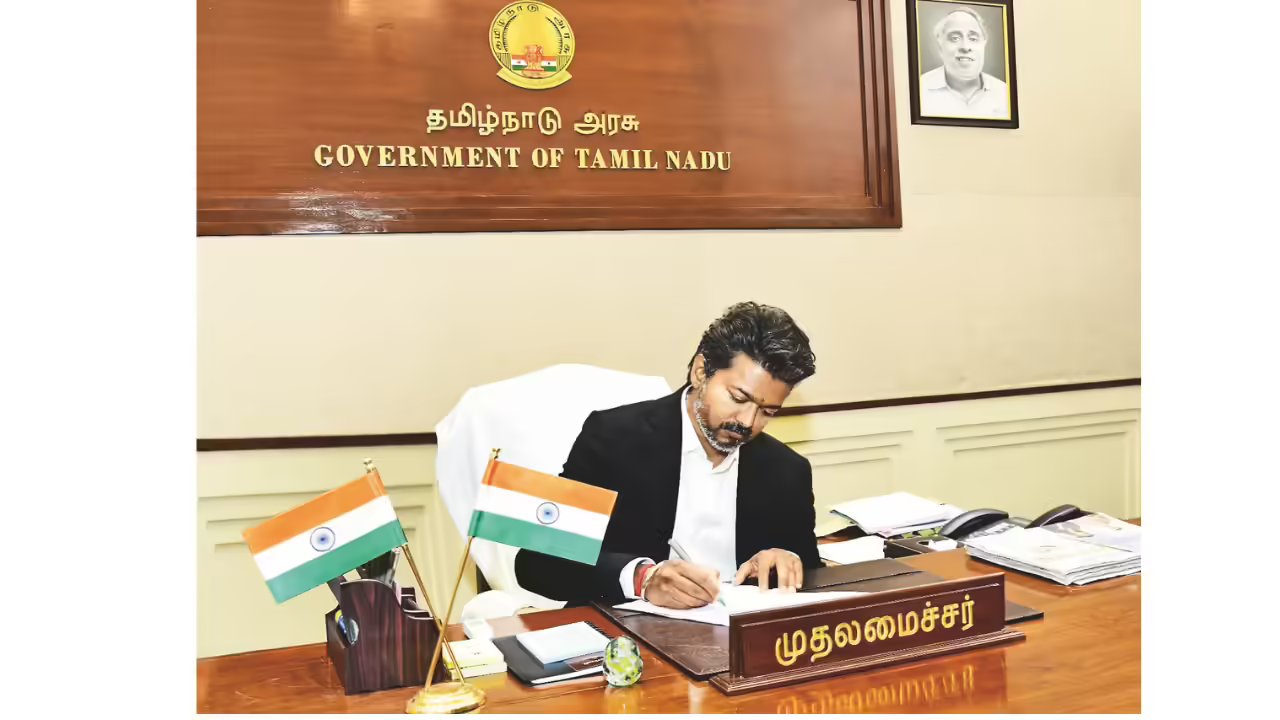

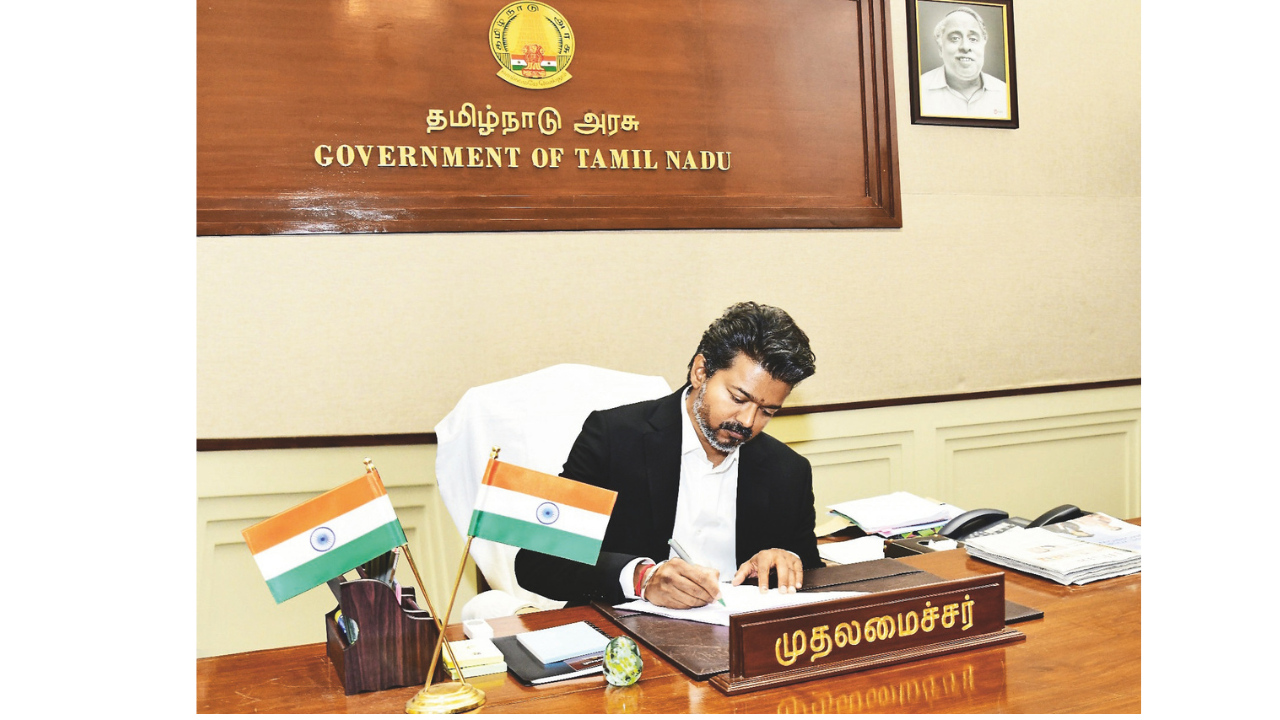
Whenever someone asks for my opinion on the performance of C Joseph Vijay’s govt, I look at the indelible mark on the tip of my nail and silently say, “It’s too early.” Maybe it isn’t.
One month is too short a period to judge a govt. But it is often enough to understand its instincts. The first few weeks reveal what a new administration considers urgent, what signals it wants to send, and where it believes its political future lies.
In its first month in office, TVK has attempted to do two things. The party is trying to expand by inducting leaders from rival parties, particularly AIADMK. At the same time, the TVK-led govt has undertaken a large-scale reshuffle of officials as an exercise to bring down corruption by dismantling entrenched networks.
Individually, both strategies have a logic. Together, however, they reveal a contradiction. The same system TVK is trying to dismantle administratively is the system from which it is recruiting politically. Like every new party that unexpectedly finds itself in power, TVK faces an organisational deficit. Winning an election is one thing; building a durable political movement is another. TVK’s rapid rise was driven by Vijay’s personal appeal, anti-incumbency against the Dravidian majors, and a broader public appetite for political change.
To survive and grow, TVK needs experienced politicians, district-level organisers, election managers and community influencers. Such people are rarely available in political nurseries. They usually come from existing parties. It is therefore unsurprising that TVK has opened its doors to people from other parties.
Not all political experience is equal. Some bring valuable organisational skills. Others bring baggage. If TVK begins distributing influential posts merely to attract more entrants, it risks importing the very culture it promised to replace. If TVK starts looking like a collection of recycled politicians wearing new colours, people will start looking elsewhere.
Closing the door on all defectors would be impractical, so recruitment must be done after rigorous screening for allegations of corruption, abuse of office and public conduct. Every entrant should not become a district secretary, office-bearer or candidate-in-waiting. TVK should absorb experience without adopting decay.
While the party is welcoming outsiders, the administration is removing insiders. The mass transfer of officials across departments, especially urban planners and engineers, is intended to send a message that entrenched interests will not be tolerated.
Bureaucratic systems often develop informal networks that outlast govts, and corruption, favouritism and inefficiency get institutionalised. Breaking these networks sometimes requires sweeping changes, yet transfers carry costs. When large numbers of officials are moved simultaneously, institutional memory weakens. New officers need time to understand their jurisdictions, build working relationships and identify local challenges.
This issue becomes particularly important in Chennai, a city whose governance is regularly tested by extreme weather events. Flood management, stormwater drainage, encroachment control and emergency coordination depend heavily on local knowledge. If many officials are new to the terrain, the learning curve could become visible during the next crisis.
Officers transferred from smaller towns and districts into a metro will need time to learn the terrain. Administrative competence is transferable; local familiarity is not. Whether the govt’s anti-corruption drive succeeds will depend not merely on removing officials but on ensuring that the replacements are clean and effective.
One month into office, therefore, Vijay finds himself navigating two parallel dilemmas. The party risks compromising its promise of clean politics in its eagerness to grow. The govt risks sacrificing administrative continuity in its eagerness to clean the house.
Neither problem is insurmountable. But both require careful calibration.
Disclaimer
Views expressed above are the author’s own.