Pamela Anderson returned to her family’s 7-acre Canadian estate and built a 15,000-square-foot garden; its harvest now feeds neighbours, churches and food banks |
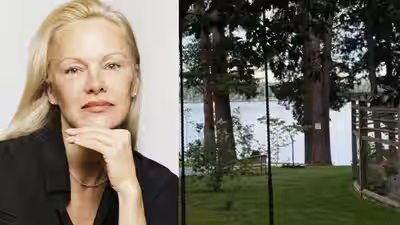
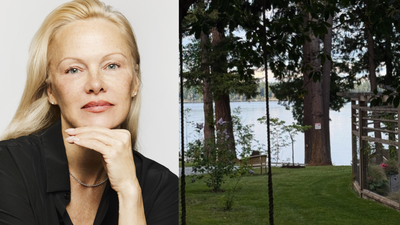
Pamela Anderson’s return to her family’s Canadian estate has grown into something far more personal than a gardening project. At Arcady, the seven-acre property she bought decades ago, she has developed a 15,000-square-foot garden filled with vegetables, flowers and herbs, drawing inspiration from British, French and Japanese traditions. The garden has become a family effort, with her sons Brandon and Dylan helping shape its design and character. Its harvests also extend beyond the estate, reaching neighbours, friends, churches, soup kitchens and food banks. Alongside the produce, Arcady has become a place where Anderson’s family history, creativity and love of nature meet.
Pamela Anderson’s Arcady garden grows into a 15,000-square-foot space
Anderson’s interest in growing food began long before the garden reached its present scale. She recalls realising as a child that berries and fruit could be picked directly from plants and trees, an early introduction to the idea that food could come from the ground rather than a shop.When she returned to the family property around the beginning of the pandemic, she decided she wanted to build a substantial garden. The project has since gone through several versions. What began as a smaller growing area was expanded, eventually requiring deer fencing and a much larger layout. Her sons helped with the redesign, turning what might have remained a private patch of vegetables into a sizeable part of the estate.According to Architectural Digest (AD), the garden covers about 15,000 square feet of vegetable-growing space. Its produce does not stay within the household either. Anderson says food from the garden has been shared with food banks, soup kitchens, churches, neighbours, family and friends.
Inside the family teamwork behind Pamela Anderson’s Arcady garden
The family connection to the garden is unusually hands-on. Brandon has become closely involved in its planning, producing drawings, grids and planting plans and recording the Latin names of plants. He has also worked on gardens for friends, while Dylan contributes in a less technical way, with Anderson describing his strength as knowing when a space feels visually right.Their involvement has helped give the garden its own character. There are vegetable boxes, trellises and fencing, but Anderson does not describe the space as highly formal. She prefers a looser arrangement in which flowers, herbs and vegetables can sit together.In an interview with AD, she shared her preferred description that is “Provençal”, a mixture of wildflowers, herbs and edible plants rather than a garden built around strict geometry. Straight lines, she says, are not really her thing.
A garden shaped by British, French and Japanese influences
Anderson draws inspiration from several very different gardening traditions. She has spoken about following British gardener Monty Don through his books and videos, while the gardens associated with Versailles have also influenced her imagination.Her sons have their own interests. They have travelled with their father to see bonsai gardens, giving them an appreciation for Japanese gardening that differs from their mother’s more relaxed approach. The family therefore shares an interest in gardens without necessarily approaching them in the same way.The property sits on a bank overlooking the ocean, and Anderson has described Vancouver Island as a rainforest with considerable biodiversity. She also values experiencing the full range of seasons there, including snow.
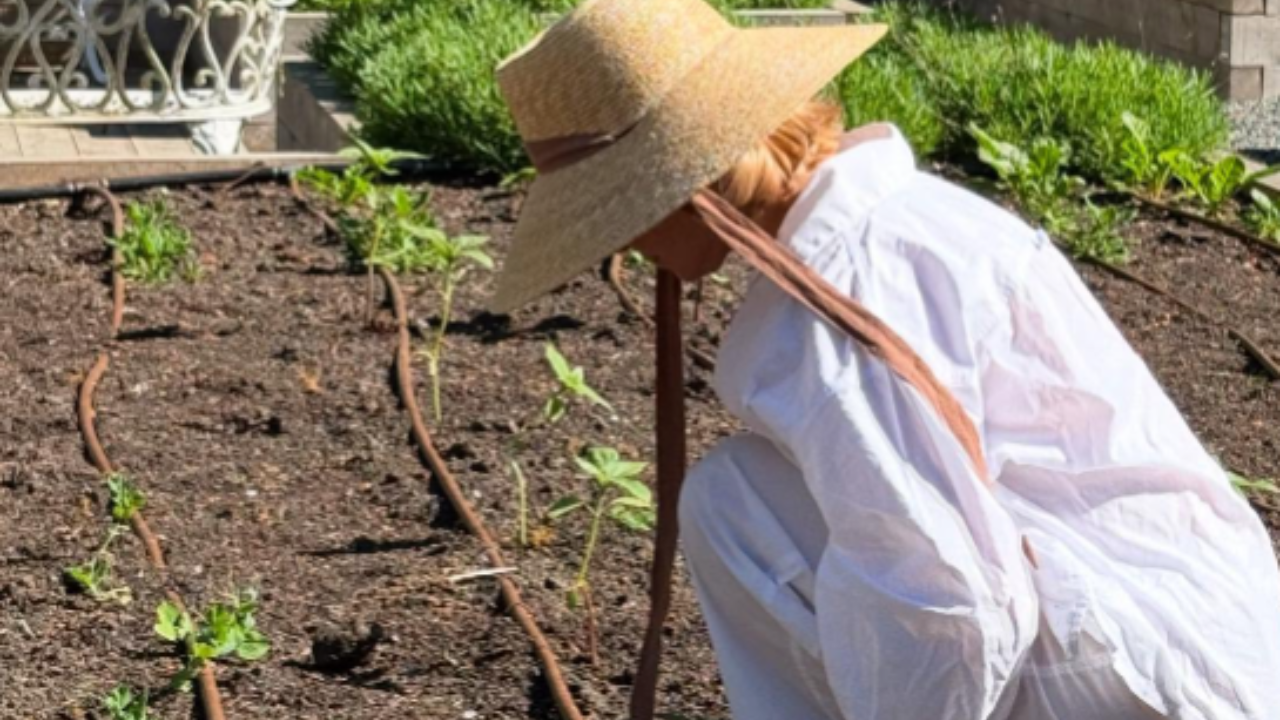
PC: Instagram
Anderson turns garden harvests into food and beauty
The growing areas have become closely connected to Anderson’s cooking. Her plant-based cookbook, I Love You, drew inspiration from the garden, where she grows heirloom tomatoes among many other crops.At the time of the Architectural Digest interview, beets, radishes and lettuces were being harvested. Roses have their own place in the garden. Anderson particularly likes her Yves Piaget roses and collects their rose hips, which she uses in homemade face oils and other beauty preparations.The connection between growing and cooking is practical rather than decorative. An heirloom tomato salad is one of her favourite examples of what the garden can provide, and the vegetables are grown on a scale large enough to supply people beyond the property.
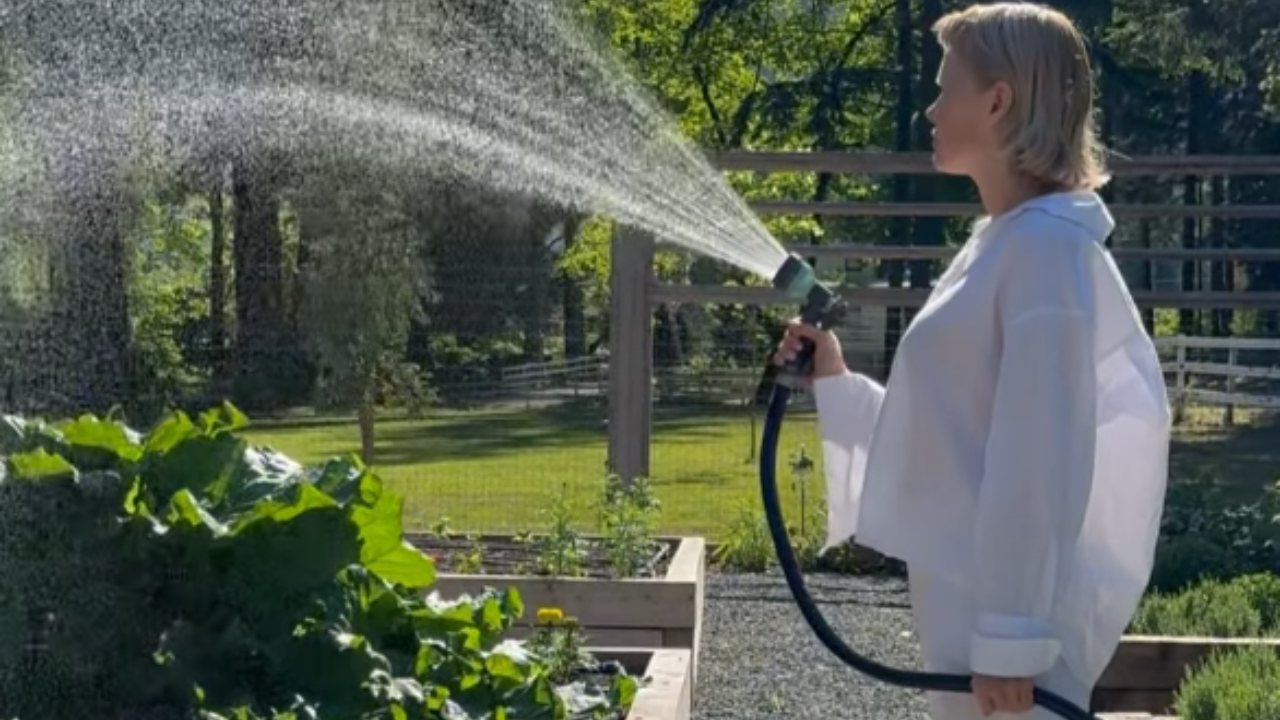
PC: Instagram
Her parents have returned to the estate
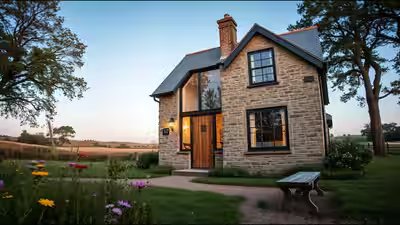
Arcady has also become a place where Anderson has brought different parts of her family history together. She renovated one of the cabins for her parents and moved them into the same building where they had lived when they were newly married.Anderson had anticipated this possibility when she acquired the property. She wanted to have her parents nearby as they grew older, while still maintaining some distance within the sizeable estate.The buildings and garden are connected to specific periods in the family’s history, from her parents’ early married life to her sons’ childhood and now Anderson’s own return to gardening.
A working garden rather than a finished display
There is little sense in Anderson’s description of the garden that it was designed as a finished landscape. It has been enlarged, rearranged and adapted as she learned more about growing.She keeps gardening tools in several of the cabins and uses a mixture of specialist equipment and ordinary hardware-store supplies. Even gardening gloves, she says, wear out quickly. The practical details sit alongside the more sentimental ones, including a visor that once belonged to her grandfather and which she found in the basement.The garden continues to change with the seasons. For Anderson, that appears to be part of its appeal. She sees gardening as a process of planting, moving and trying again rather than something that has to remain fixed.